
An enclosure does three jobs: it separates the front and rear radiation, it sets the low-frequency alignment, and it controls resonance. Wall material, thickness and bracing decide how much of the driver's energy leaves as sound and how much leaves as cabinet vibration; the two are measured together, because a rigid box with a ringing panel is worse than a slightly flexible box with good damping.
With speaker enclosure design, the difference between a sample and a shipment is the test record, so each section below names the check that produces it.
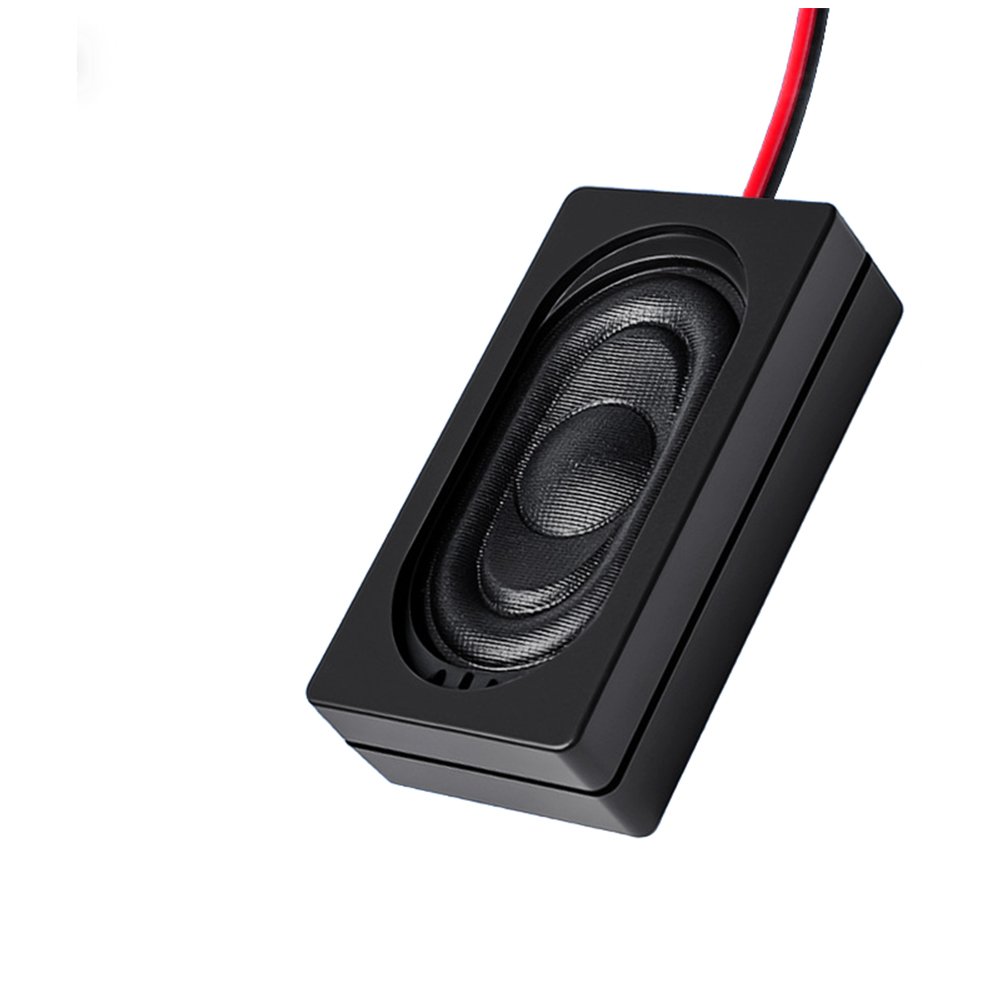
The Fundamental Role of the Enclosure: More Than Just a Box
A speaker driver operating in free air suffers from acoustic short-circuiting . When the cone moves forward, it compresses air in front while rarefying air behind it. At low frequencies, these pressure waves easily cancel each other out around the edges of the cone, devastating bass output. The primary function of an enclosure is to isolate the front radiation from the rear, preventing this cancellation.
However, the enclosure’s role rapidly evolves from simple isolator to an active acoustic component . The air trapped inside acts as a spring, opposing the motion of the driver cone. This increases the system’s overall stiffness, which in turn raises its resonant frequency. A key design task is managing this compliance (the inverse of stiffness). A poorly designed enclosure can make bass response peaky and uneven, while a properly tuned one ensures linear extension and control. The Thiele/Small parameters—specifications like Vas (equivalent air volume), Qts (total driver Q factor), and Fs (resonant frequency)—are the mathematical language that describes this interaction between driver and enclosure. Designing without them is akin to engineering in the dark.
Enclosure Types: Choosing the Right Tool for the Bass Job
Selecting an enclosure type is a series of trade-offs between size, efficiency, low-frequency extension, and power handling. Each design manipulates the rear wave of the driver in a distinct way to achieve a desired bass characteristic.
- Sealed (Acoustic Suspension) Enclosures: The sealed box is the classic purist’s choice. It traps the rear wave completely, using the internal air spring to control the driver’s movement. Its response falls off gradually at a rate of 12 dB per octave below its system resonance, yielding tight, accurate, and well-damped bass prized for musicality. It is forgiving of design variances and smaller in size than some alternatives, though it demands more amplifier power for deep bass and lacks the ultimate low-end extension of ported designs.
- Ported (Bass Reflex) Enclosures: By adding a precisely tuned port or duct, the ported enclosure harnesses the energy of the rear wave. At the tuning frequency (Fb) , the port’s air mass resonates, producing sound in phase with the front wave, effectively extending the low-frequency output. This results in higher efficiency and 3-5 dB more output near the tuning frequency compared to a sealed box of similar size. The trade-off is a steeper 24 dB/octave roll-off below tuning, requiring careful design to avoid “chuffing” port noise and ensure transient response isn’t compromised.
- Bandpass Enclosures: A more complex design featuring a sealed chamber behind the driver and a ported chamber in front, with the driver mounted between them. The bandpass acts as an acoustic filter , allowing only a specific, often very narrow, band of frequencies to pass through the port. These designs can be extremely efficient and loud within their passband (ideal for specific SPL competition goals) but sacrifice bandwidth and transient accuracy, making them less versatile for full-range music reproduction.
- Transmission Line (TL) Enclosures: A sophisticated design where the rear wave is guided through a long, damped labyrinthine path. The goal is to delay the wave so it emerges from the terminus in phase with the front wave at the lowest frequencies, while attenuating higher-frequency rear energy. A well-executed TL can offer remarkable low-frequency extension from a small driver with low distortion, but the designs are large, complex, and highly sensitive to exact construction and damping material placement.
Wall behaviour, bracing and damping
Damping fill absorbs the standing waves inside the box. Polyester or glass wool at 0.5-1.0 lb per cubic foot is the usual starting point; too little leaves a mid-bass colouration, too much reduces the effective volume and raises Fc. The fill is stapled or bonded so that it cannot block the port or touch the driver's rear vent.
Materials & Construction: The Foundation of a Silent Structure
Modern speaker design has moved far beyond simple particle board. The ideal material has high density (to resist vibration), high internal damping (to convert vibrational energy to heat), and rigidity. Here’s a comparison of common and advanced materials:
| Material | Density/Damping | Pros | Cons | Best For |
|---|---|---|---|---|
| MDF (Medium-Density Fiberboard) | Moderate Density, Good Damping | Low cost, isotropic (uniform in all directions), easy to work with, good damping. | Heavy, susceptible to moisture, requires significant bracing for larger panels. | The industry standard for most consumer and pro-audio cabinets. |
| Birch Plywood (Baltic Birch) | High Strength-to-Weight, Lower Damping | Extremely strong and stiff, lighter than MDF, durable edges. | More expensive than MDF, grain can cause anisotropic properties, requires more damping treatment. | High-end DIY, touring professional loudspeakers, where weight and strength are critical. |
| Concrete/Stone Composites | Very High Density, High Damping | Exceptionally inert and massive, virtually no resonant colorations. | Extremely heavy, difficult to fabricate and modify, fragile. | Extreme high-end static installations, subwoofer plinths. |
| Laminated Bamboo | High Strength, Sustainable | Very stiff, environmentally sustainable, attractive finish. | Can be costly, availability can be limited. | Design-conscious, high-performance consumer products. |
| Advanced Composites (Carbon Fiber/Kevlar) | Exceptional Stiffness/Weight Ratio | Maximum stiffness for minimal weight, can be molded into complex shapes. | Very high cost, requires specialized manufacturing. | Aerospace-influenced high-end audio, ultra-premium portable systems. |
Regardless of material, internal bracing is non-negotiable. A well-braced cabinet with strategic cross-members, windowpane, or matrix bracing turns large, resonant panels into a collection of small, rigid ones, pushing panel resonances far above the passband of the woofer.
Tuning, Damping, and the Quest for Clean Output
Once the structure is solid, the interior environment must be tuned. Polyfill or acoustic fiberglass isn’t just for sound absorption; it acoustically enlarges a sealed box by slowing the speed of sound within the enclosure, making the driver “think” it’s in a larger space, typically by 10-15%. This can lower the system’s resonant frequency.
In ported designs, port geometry is critical. A flared port (using a hyperbolic or cylindrical flare) minimizes turbulence and chuffing noise at high air velocities, allowing for greater linear output. Computational Fluid Dynamics (CFD) software is now routinely used by top manufacturers to model airflow and optimize port shape.
Advanced passive radiators (drone cones) offer a compelling alternative to ports, especially in compact wireless speakers. They provide the tuning benefits of a port without the concern for air noise, though their behavior must be meticulously matched to the active driver.
Finally, the system integration is key. Using a DSP (Digital Signal Processing) platform like a miniDSP or integrated amplifier-based solution allows for precise parametric EQ to correct for room-mode-induced peaks, set high-pass filters to protect drivers, and time-align crossovers. In 2024, DSP is the most powerful tool for achieving flat, extended bass in a real-world listening environment, making the synergy between acoustic design and digital correction the state of the art.
Covers, mesh and acoustic transparency
A grille is an acoustic element. Woven fabric with 60 % open area attenuates 1-2 dB above 5 kHz; a perforated steel mesh with 40 % open area and 1 mm holes attenuates 2-3 dB and adds a reflection at 6-8 kHz. Both are acceptable if the voicing is set with the grille in place, which is why the final tuning sample must include the production grille and its adhesive.
FAQ
Does MDF sound better than plastic for a small speaker?
MDF is better damped per millimetre, plastic allows thinner walls with ribs. Below 100 mm drivers the difference is small; above 100 mm MDF wins on panel resonance unless the plastic housing is heavily ribbed and filled.
How do I choose between a sealed and a ported box?
Use EBP: above 100 favours ported, below 50 favours sealed. Also check the space: a port needs 2-3 times the driver's displacement volume and a clear path at both ends.
What open area should a speaker grille have?
At least 40 % for metal mesh and 50-60 % for fabric, measured over the diaphragm area; below that the high-frequency loss becomes audible and cannot be corrected without changing the crossover.
Related reading
- A Guide to Enclosure Materials in High-End Speaker Design
- Ported vs. Sealed Enclosure: A Speaker Design Debate
- Portable Speaker Design Trends
More on Enclosure Design.
