
Ingress protection is a test result, not a material property. IPX7 means immersion at 1 m for 30 minutes; IPX5 means a 6.3 mm jet at 12.5 L/min for 3 minutes; IP68 is defined by the depth and duration the manufacturer declares, so an IP68 logo without those two numbers says nothing. The test report, including the acoustic sweep before and after, is the only useful evidence.
With custom waterproof speakers, the difference between a sample and a shipment is the test record, so each section below names the check that produces it.
The Rising Demand for Integrated Audio in the Outdoor Adventure Market
The modern outdoor enthusiast seeks more than just gear; they crave immersive experiences . As activities like hiking, camping, kayaking, and overlanding evolve, audio has become a non-negotiable part of the adventure. This isn’t about bringing a fragile, generic Bluetooth speaker into the wild. It’s about tight, durable, and context-aware sound that complements the equipment they already trust.
The global outdoor Bluetooth speaker market is projected to grow significantly, driven by a consumer base that values durability, brand synergy, and ecosystem integration.
For an outdoor brand, a custom speaker is more than an accessory; it’s a brand touchpoint . Every time a customer plays music around the campfire or listens to a podcast on a fishing boat using your speaker, it reinforces brand identity and loyalty.
Beyond Waterproofing: The Pillars of Effective Custom Speaker Design
Customization goes far beyond slapping a logo on a generic OEM speaker. To truly resonate with the outdoor market and reflect a brand’s core values, design must be holistic and purposeful.
- Durability as a Foundation: “Waterproof” is just the entry ticket. The standard is IP67 (dust-tight, immersible up to 1m for 30 minutes) or the more extreme IP68/IPX8. But for outdoor brands, consideration must extend to shock resistance (MIL-STD-810G testing), UV resistance to prevent sun fading, and corrosion-resistant materials for marine environments. The goal is for the speaker to be as rugged as the kayak, cooler, or off-road vehicle it accompanies.
- Acoustic Performance for Open Spaces: Outdoor acoustics are challenging—competing with wind, water, and ambient noise. 360-degree sound dispersion is key for group settings around a campfire or on a beach.
- Custom solutions can integrate larger, high-density batteries, often exceeding 24 hours of playtime. Modern features like USB-C power delivery (PD) mean the speaker can double as a power bank to charge a GPS or satellite messenger—a critical value-add. Integration of the latest Bluetooth 5.3+ chips ensures stable connections and low power consumption, with some brands exploring additional connectivity like walkie-talkie radio functions.
- Purpose-Driven Form & Integration: This is where true brand magic happens. The speaker’s form should feel native to the activity.
- For a cooler brand , it could be a speaker that magnetically docks into the lid, drawing power from the cooler’s battery system.
- For a backpacking brand , it could be a lightweight, low-profile speaker that clips securely to a backpack strap or tent loop.
- For a marine brand , it could feature integrated mounts for fishing rod holders or cleats, with controls easily operable with wet hands.
- The use of materials —whether recycled plastics matching a sustainability pledge, or rubberized coatings complementing a tool brand—further deepens the integration.
Ports, buttons and charging contacts
Charging contacts need a sealed interface or a wireless solution. A USB-C connector rated IPX7 exists but depends on the plug's own seal and on the flap being closed; a magnetic charging contact with a gold-plated pad and an O-ring is more predictable, at the cost of a proprietary cable.
Technical Specifications & Partnership Models: A Practical Guide
Entering the audio space requires clear technical understanding and choosing the right manufacturing partnership. Below is a comparative framework for common outdoor-grade speaker specifications and the typical pathways to market.
| Aspect | Off-the-Shelf Private Label | Collaborative Custom Design (ODM) | Ground-Up Custom Development (OEM) |
|---|---|---|---|
| Description | Selecting an existing speaker model from a manufacturer’s catalog and adding your logo. | Modifying an existing platform (chassis, electronics) with custom colors, materials, grilles, and tuned audio. | Designing a completely unique product from scratch to meet specific brand and functional needs. |
| Time-to-Market | 3-6 months | 6-12 months | 12-18+ months |
| Development Cost | Low | Medium | High |
| MOQ (Minimum Order Quantity) | Lower (1,000-5,000 units) | Medium (5,000-20,000 units) | High (20,000+ units) |
| Brand Differentiation | Low | High | Maximum |
| Ideal For | Brands testing the market or adding a simple accessory. | Most outdoor brands seeking a unique, purpose-built product. | Established brands with clear IP goals and high-volume potential. |
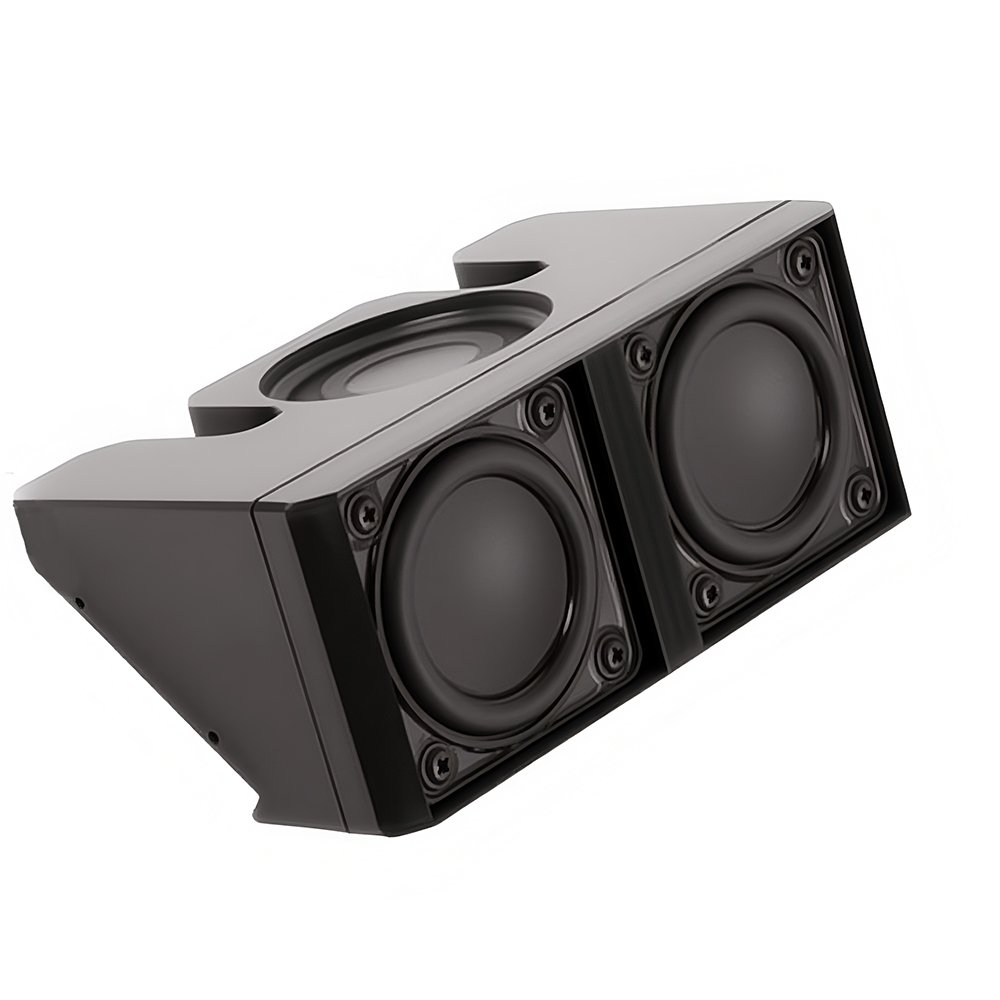
- Driver & Enclosure Design: Size and type (e.g., full-range vs. tweeter/woofer combo) directly impact sound quality and physical size.
- Battery Chemistry & Management: Li-ion or Li-Po?
- Software & UI: Custom voice prompts, EQ app control, and firmware update capabilities require software partnership.
- Compliance & Certification: Beyond IP ratings, certifications like FCC, CE, UL (for battery safety), and REACH are necessary for global sales.
The Collaborative Process: From Concept to Trail
- Strategic Briefing: It starts with your brand’s “why.” What activity is this for? Who is the user? What existing products should it complement? What brand values (sustainability, premium, tactical) must it embody? This brief becomes the project’s North Star.
- Key criteria include their engineering capability, quality control processes (ask for audit reports), sample quality, and communication transparency.
- Prototyping & Refinement: This involves multiple rounds of prototypes (EVT, DVT, PVT) to test form, function, sound, and durability. Real-world field testing with your brand ambassadors is invaluable—they’ll find flaws no lab test can reveal.
- Production & Quality Assurance: Once the final prototype is approved, tooling is created. A reputable partner will conduct rigorous in-line and final random inspections, providing detailed QC reports before shipment.
Measuring ROI: More Than Just Speaker Sales
The investment in a custom speaker program should be evaluated on a broader strategic canvas:
- Direct Revenue: Sales of the speaker itself, often at strong margins due to its unique value proposition.
- Average Order Value (AOV) Increase: Bundling the speaker with a tent, a kayak, or a cooler package.
- Brand Perception & Loyalty: Becoming a holistic “adventure partner” increases emotional connection and reduces price sensitivity.
- Marketing & Content Engine: The product itself becomes a content star—perfect for demo videos, adventure photos, and social media campaigns.
- Competitive Differentiation: In crowded markets like coolers or backpacks, a unique audio solution can be a decisive differentiator.
The Future of Outdoor Audio: Integration and Intelligence
The next frontier is connected intelligence . Future custom speakers for outdoor brands will feature:
- Integrated Voice Assistants (offline-capable for remote areas) for hands-free control.
- Environmental sensors that could trigger volume adjustment based on wind noise or provide weather alerts.
- Mesh Networking for multi-speaker setups across a large campsite without needing a central phone.
- Enhanced Locator Features (built-in Tile or similar tech) to find a speaker left on a trailhead.
- Solar Integration , moving beyond passive solar charging to high-efficiency panels for true off-grid power independence.
For forward-thinking outdoor equipment brands, the question is no longer if they should explore audio, but how strategically they can integrate it. A custom waterproof speaker is not merely a product extension; it is a powerful tool for deepening customer relationships, defining a category, and ensuring your brand is not just seen on the adventure, but heard .
Ageing: UV, salt and thermal cycling
Thermal cycling between -20 and 60 degrees C moves the seal by the difference in expansion between the plastic and the metal insert. A 100-cycle test with an immersion check every 20 cycles finds the designs that rely on compression rather than adhesion; the latter fail at the first cold cycle.
FAQ
What is the difference between IPX7 and IP67?
IPX7 covers water only: immersion at 1 m for 30 minutes. IP67 adds dust tightness (the 6) to the same immersion test. Neither covers jets, which is IPX5, so outdoor products often need both.
Can a waterproof speaker keep its bass?
Yes, but a sealed housing loses the port gain and a membrane costs high-frequency output. The usual solution is a passive radiator, which moves the tuning without an opening, plus a membrane only over the driver.
How should an IP rating be verified?
Test the complete product, not a bare driver, and repeat the acoustic sweep after immersion. A unit that passes the water test but shifts 3 dB at 1 kHz has a leak into the cavity that will fail in the field.
Related reading
- Top Waterproof Speakers Manufacturers for Outdoor Gear Brands
- How to Test the IPX Rating of Waterproof Speakers
- Custom Promotional Bluetooth Speakers for Brands
More on Waterproof Audio.
