
The differentiation has moved to the parts that are hard to copy: the acoustic tuning, the sealing stack, the thermal design and the reliability data. A new enclosure colour is copied in a season; a 100-hour power test with published compression figures is not.
The notes below apply to sustainable speaker manufacturing, with the measurement conditions and production checks that decide whether a claimed figure survives a shipment.
Introduction: The Sound of Sustainability
As consumers become increasingly environmentally conscious, speaker manufacturers are responding by fundamentally rethinking how products are designed, built, and delivered. Sustainable speaker manufacturing is no longer a niche concern but a central driver of innovation, combining acoustic excellence with ecological responsibility. This shift addresses the significant environmental footprint of electronics manufacturing—from resource-intensive mining for rare-earth magnets and plastics derived from fossil fuels to energy-hungry production and complex end-of-life waste. Today, leading brands and pioneering startups are proving that high-fidelity sound and environmental stewardship can harmonize, setting new trends that are reshaping the market. This article explores the most impactful sustainable manufacturing trends, supported by real-time data and analysis, providing a step-by-step overview of the industry’s green change.
Trend 1: Innovation in Eco-Conscious Materials and Components
The foundation of sustainable manufacturing lies in the materials. The industry is moving away from virgin plastics and conflict minerals toward novel, low-impact alternatives.
Bio-Based and Recycled Polymers: Traditional speaker enclosures (cabinets) often use ABS or MDF from non-renewable sources. The trend now is toward high-grade recycled plastics (like post-consumer recycled PET) and biopolymers. For instance, companies like House of Marley extensively use REGRIND™ silicone , recycled aluminum , and FSC®-certified bamboo . More radically, Gomi designs portable Bluetooth speakers from 100% flexible plastic waste that would otherwise be non-recyclable.
Manufacturers are experimenting with materials like organic flax fibers, hemp, cellulose from sustainably managed forests, and even mycelium (mushroom-based) composites. Paper-based cones , a classic choice, are being revisited with responsibly sourced, unbleached pulp.
Magnets and Electronics: Rare-earth elements (like neodymium) in magnets pose ethical and environmental mining concerns. The trend is toward:
- Using recycled neodymium from existing electronic waste.
- Developing ferrite magnets where performance allows, though they are larger.
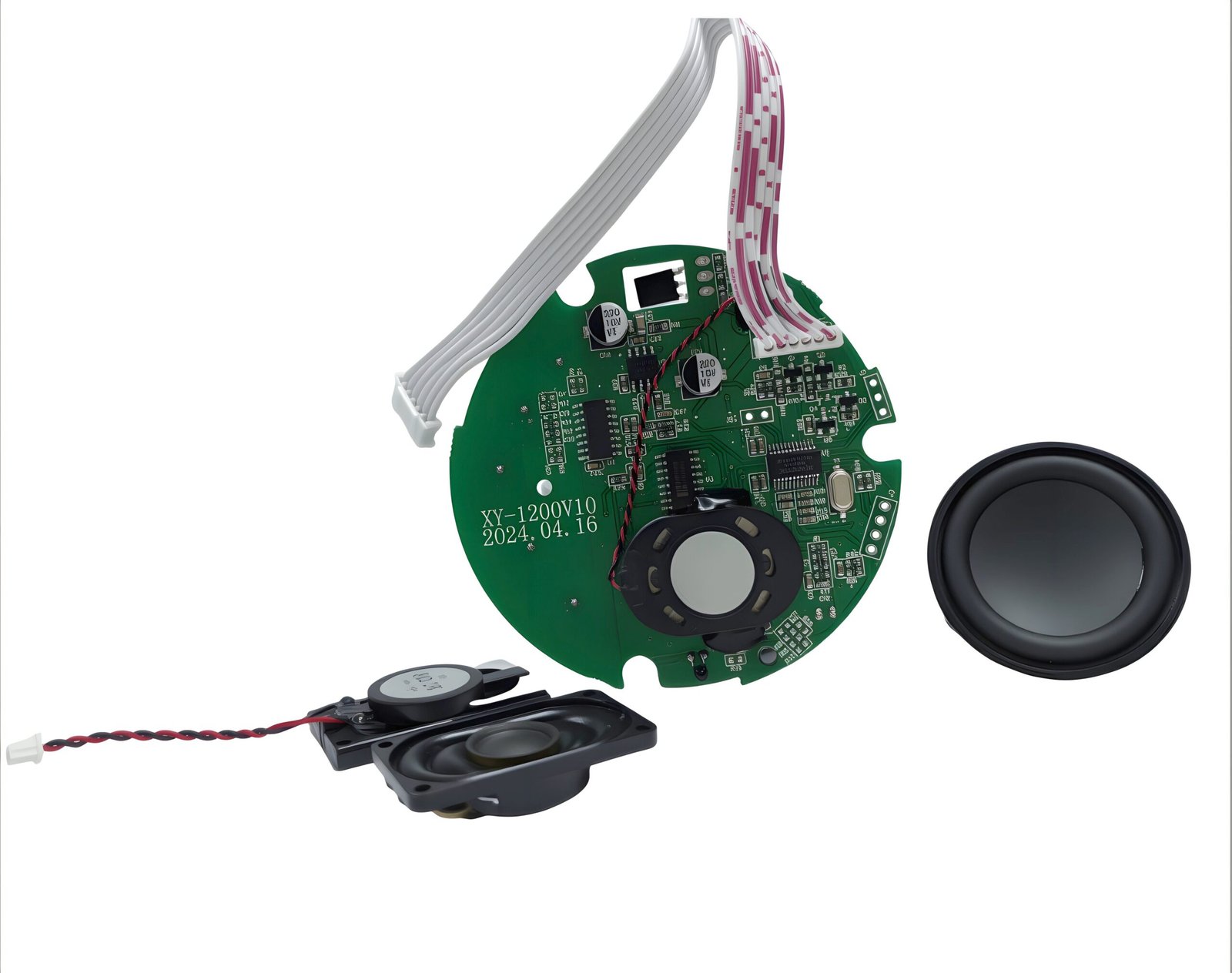
- Supporting responsible mining initiatives with traceable supply chains. Circuit boards are seeing a push for halogen-free flame retardants and lead-free solders , while cables are increasingly using biodegradable or recycled rubber jackets .
| Component | Traditional Material | Sustainable Alternative | Key Benefit |
|---|---|---|---|
| Enclosure | Virgin ABS Plastic, MDF | Recycled Plastic, FSC Wood, Bamboo | Reduces waste, uses renewable/ recycled resources. |
| Driver Cone | Polypropylene, Synthetic Fabrics | Flax, Hemp, Recycled Paper | Biodegradable, lower embodied energy. |
| Magnet | Virgin Neodymium | Recycled Neodymium, Ferrite | Reduces mining impact, e-waste recovery. |
| Packaging | Expanded Polystyrene (EPS) Foam | Molded Pulp, Recycled Cardboard | Fully recyclable/ compostable, non-toxic. |
| Finishes | Solvent-Based Paints, Vinyl Wraps | Water-Based Paints, Natural Fabric | Lower VOC emissions, renewable materials. |
Sourcing implications
Supply continuity is the other risk. A single-source Bluetooth module or a custom cell can add 8-12 weeks to a reorder; qualifying a second source costs a sample approval and a small test programme, and it is cheaper than a missed season. Ask for the module's lifecycle status and the factory's last-time-buy notice before the design is frozen.
Trend 2: Energy-Efficient and Low-Emission Production
Sustainability extends deep into the factory. The “how” of manufacturing is as important as the “what.”
Renewable Energy in Facilities: Leading manufacturers are powering production with renewable energy. Google’s hardware division (which includes Nest speakers) has committed to 100% carbon-free energy for its operations. Many contract manufacturers in Asia are installing solar panels to reduce grid reliance.
Process Innovation and Waste Reduction: Advanced manufacturing techniques like additive manufacturing (3D printing) allow for precise, on-demand production of components, minimizing material waste. Lean manufacturing principles are being applied to reduce energy and water consumption per unit. AI and IoT sensors optimize assembly line efficiency, predicting maintenance needs and reducing downtime and energy spikes.
Carbon Accounting and Offsetting: Companies are increasingly conducting full Life Cycle Assessments (LCAs) to understand their products’ true impact from cradle to grave. Brands like Bang & Olufsen have published detailed LCAs for products like the Beosound Level , identifying hotspots for improvement. While not a substitute for reduction, high-quality carbon offset projects are used to neutralize unavoidable emissions for certified carbon-neutral products .
Trend 3: Designing for Longevity, Repairability, and End-of-Life
The most sustainable product is the one that lasts for decades. The trend is shifting from a linear (“take-make-dispose”) to a circular economy model.
Modular and Repairable Design: The fight against “planned obsolescence” is intensifying. Framework has inspired the electronics sector with its modular laptops, and the philosophy is entering audio. Speakers designed with standardized screws (not glue), easily replaceable drivers, and modular amplifier boards extend lifespan. iFixit collaborations , like the one with Fairphone , are setting a precedent for repairable electronics, providing consumers with repair guides and spare parts.
Software Longevity and Upgradeability: Sustainability includes software. Brands are committing to long-term software support and firmware updates that keep older hardware secure and functional, adding new features years after purchase. This prevents premature obsolescence driven by software incompatibility.
End-of-Life Strategies: Responsible manufacturers are establishing take-back and recycling programs . For example, Sonos’ Trade-Up program encourages proper recycling of old devices while offering customer credit. Advanced disassembly protocols and material recovery partnerships ensure that at a product’s end-of-life, precious metals, magnets, and plastics are recovered and fed back into the manufacturing cycle, closing the loop.
Conclusion: The Future Sounds Green
The trends in sustainable speaker manufacturing paint a picture of a maturing, responsible industry. While challenges remain—such as scaling bio-materials, managing the true cost of recycled components, and combating consumer desire for frequent upgrades—the trajectory is clear. The future of audio is not just about louder or clearer sound, but about a sound conscience. For manufacturers, embracing these trends is becoming a competitive necessity; for consumers, it offers a way to enjoy premium audio while aligning with planetary well-being. The ultimate goal is a harmonious ecosystem where great sound and a healthy planet are inseparable.
What buyers check before they listen
Runtime, charging time, ingress rating and codec list are the first four questions in most sourcing meetings. Each has a test condition that the supplier should state: runtime at 50 % volume, charge time from 0 to 80 %, the IP test level, and the codec per model. A datasheet without those conditions is a marketing sheet.
FAQ
What runtime should a portable speaker claim?
The measured runtime at 50 % volume, with the codec and the light mode stated.
Is LE Audio worth specifying now?
Yes for products launching in 2026: it lowers power at equal quality and supports multi-stream and hearing-aid profiles. It adds a test matrix, so confirm the module's LE Audio support before the design freeze.
How do I differentiate without a new tool?
Custom grille, colour, packaging and a tuned EQ on an existing platform. The tuning file and the golden sample are the assets that make the product repeatable.
Related reading
- OEM vs ODM Speaker Manufacturing Explained
- Low MOQ Speaker Manufacturing for Startups
- Cost Factors in Speaker Manufacturing
More on OEM Manufacturing.
