
Sensitivity, signal-to-noise ratio and acoustic overload point are measured at 1 kHz against a 1 Pa reference, which is 94 dB SPL. Any datasheet that omits the drive level, the load impedance and the test distance cannot be compared with another part, and a 3 dB sensitivity error at the design stage turns into a 3 dB channel mismatch once the array is built.
The notes below apply to custom microphone supplier, with the measurement conditions and production checks that decide whether a claimed figure survives a shipment.
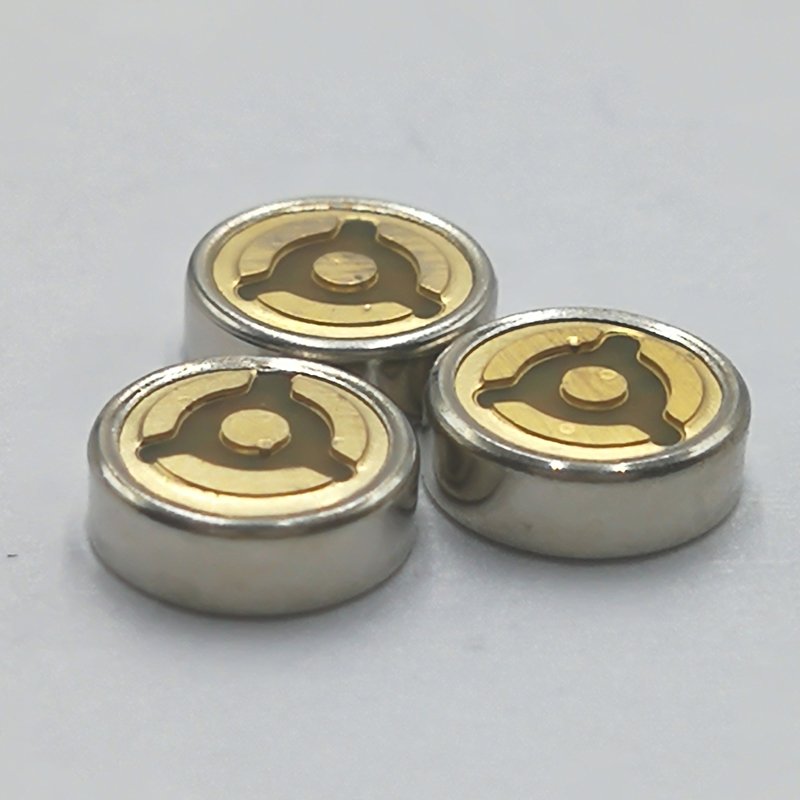
This article breaks down what a well-managed custom microphone program looks like for earbuds, smartwatches, smart speakers, laptops, and other consumer devices.
Why Custom Microphones Are Now a Consumer Electronics Requirement
Voice interfaces, active noise cancellation, hear-through modes, and always-listening wake words have raised the bar for microphone performance. That growth is driven by TWS earbuds, smart home devices, wearables, and automotive voice systems.
- Package height or footprint does not match the industrial design.
- Acoustic performance does not meet the required SNR, AOP, or sensitivity tolerance.
- Power consumption is too high for always-on voice activity detection.
At Zehsm, custom microphone design starts with the application requirements, not with an existing capsule. That approach prevents many late-stage acoustic and reliability problems.
Table 1: Typical Microphone Performance Targets by Consumer Device
| Device Category | Common Microphone Type | SNR Target | AOP Target | Key Package Constraint |
|---|---|---|---|---|
| TWS earbuds | MEMS, PDM/I²S | 64–68 dB(A) | 120–130 dB SPL | Height below 2.0 mm |
| Smartwatches and wearables | MEMS, analog/PDM | 62–66 dB(A) | 120 dB SPL | Low power, small footprint |
| Smart speakers | MEMS/ECM array | 65–72 dB(A) | 120–130 dB SPL | Multi-mic matching |
| Laptops and tablets | MEMS, analog/PDM | 64–68 dB(A) | 120 dB SPL | Side- or top-port options |
| Remote controls and IoT | Electret condenser | 58–64 dB(A) | 110–120 dB SPL | Cost-sensitive design |
These targets are not universal, but they reflect common consumer electronics requirements. The right supplier should help you decide whether a MEMS or electret condenser microphone makes more sense for your product.
Design Phase: Specs That Actually Matter
A custom microphone program should begin with a disciplined specification freeze. The most important parameters include sensitivity, signal-to-noise ratio, acoustic overload point, power supply rejection, current consumption, and output format. Package dimensions, port location, and tape-and-reel orientation matter just as much for manufacturing.
Suppliers should also review the acoustic path. A microphone is never tested in free air inside a final product. The gasket, mesh, port tube, enclosure volume, and PCB hole all change the frequency response and noise performance. Early simulation and 3D acoustic modeling prevent the common problem of a microphone that measures well in the lab but sounds muffled or noisy inside the device.
The MEMS microphone portfolio at Zehsm is built around this kind of application-level design work. The goal is not to ship a component; it is to ship a stable electroacoustic interface that works in your mechanical design.
Reading sensitivity, SNR and AOP correctly
Sensitivity is quoted at 94 dB SPL, 1 kHz, with a stated load. For an analog electret the unit is dBV/Pa, so -38 dBV/Pa means 12.6 mV at 1 Pa; for a digital MEMS the unit is dBFS, and the full-scale reference is fixed by the part, not by the codec. Comparing the two numbers directly is the most common specification error in a sourcing meeting.
Prototyping and Validation
After the design phase, the supplier should produce golden samples for evaluation. These samples are not just for checking sensitivity. They should be measured for frequency response, noise, distortion, power supply rejection, and directivity if the product uses an array.
Validation should also include environmental and mechanical stress testing. Consumer electronics microphones face heat, humidity, shock, drop, and ESD during assembly and daily use. A custom microphone should be validated to the same level as the finished product.
A proper acoustic test and reliability process uses reference-grade measurement systems such as Audio Precision analyzers and follows relevant standards such as IEC 60268-4 for microphone measurements. Ask your supplier for the full test report, not just a one-page summary.
Table 2: Typical Custom Microphone Development Timeline
| Phase | Key Activities | Typical Duration |
|---|---|---|
| Specification freeze | Sensitivity, SNR, AOP, package, output format | 1–2 weeks |
| Feasibility design | MEMS/ECM design, simulation, ASIC matching | 3–5 weeks |
| Prototyping | Hand samples, acoustic tuning, initial verification | 2–4 weeks |
| Validation | ESD, thermal cycling, humidity, drop, acoustic stress | 3–6 weeks |
| Pilot run | Process capability, CPK, traceability, packaging | 3–5 weeks |
| Volume delivery | Production ramp, outgoing test, shipment | 4–6 weeks after pilot |
Total development time is usually four to five months for a fully custom microphone. Some programs can move faster if the design is a modification of an existing platform.
From Pilot to Delivery
A custom microphone is only successful if it can be manufactured consistently. During pilot production, the supplier should measure critical parameters across the full lot and report CPK values. Parameters with low CPK indicate process control problems that will show up in mass production.
Look for a supplier that provides traceability at the unit or lot level. Consumer electronics brands now expect full material traceability, especially for products shipping into global markets. The supplier should also control packaging so that the microphone orientation, moisture sensitivity level, and tape-and-reel format match your SMT line.
Table 3: Production Data to Request Before Mass Delivery
| Test or Data Point | Why It Matters | Common Pass Criterion |
|---|---|---|
| Sensitivity distribution | Confirms gain staging and consistency | ±1 dB at 1 kHz |
| SNR distribution | Controls noise floor in quiet rooms | ≥64 dB(A) for premium mics |
| AOP / THD | Avoids distortion in loud environments | 10% THD at ≥120 dB SPL |
| PSRR | Rejects power supply noise | ≥70 dB at 1 kHz |
| ESD repeatability | Protects assembly and field use | IEC 61000-4-2 level 4 |
If your supplier cannot provide this data before delivery, that is a red flag. The cheapest microphone can become expensive after field returns and production line rework.
Choosing the Right Custom Microphone Supplier
The best supplier relationship starts before the first sample. A strong supplier will ask about your product use case, mechanical stack, power budget, and production volume. They will not simply send a data sheet and wait for a purchase order.
You should also evaluate communication speed. Acoustic problems are difficult to solve through email chains that take three days per reply. The supplier should assign an application engineer who can respond quickly during prototyping and pilot build.
Finally, ask about post-delivery support. A good supplier helps you interpret test data, adjust the acoustic path, and improve yield. If you need a design review or a second source plan, they should be able to support that conversation.
For teams ready to move beyond off-the-shelf limitations, talk to an engineer at Zehsm. The earlier you involve the microphone supplier, the fewer acoustic compromises you will make later.
Port sealing, array spacing and production test
Array spacing sets the upper frequency the beamformer can use: elements spaced 60 mm apart begin to alias above roughly 2.8 kHz at half wavelength, so the band above that is handled by a single element or a shorter pair. Production test follows the same logic: sensitivity at 1 kHz, SNR from the noise floor, and a sweep for rub or blockage, recorded per unit against the golden sample.
FAQ
Which sensitivity should I specify for a voice product?
For far-field voice at 2-4 m, -26 to -32 dBFS for a digital MEMS part, or -38 dBV/Pa for an analog capsule, with the load and the reference level stated. Tighter bins cost more, so specify only the spread the array can tolerate.
Does a MEMS microphone need a gasket?
Yes, if it is a bottom-port part. The gasket seals the port to the housing and sets the front volume; without it the low-frequency response depends on the assembly gap and varies from unit to unit.
How is the acoustic overload point measured?
At 1 kHz, raising the level until total harmonic distortion reaches 10 %, with the supply and load stated. A single number without the distortion criterion is not an AOP.
Related reading
- From Design to Production: Speaker ODM Service
- Custom Speaker OEM Service from Concept to Mass Production
- How to Design Custom Speaker Covers that Enhance Acoustic Transparency
More on OEM Manufacturing.
