
서브우퍼를 제작하거나 업그레이드할 때, 드라이버는 시스템의 핵심입니다. 이는 문자 그대로 공기를 움직여 우리가 듣는 것만큼이나 느끼는 깊고 물리적인 베이스 음을 생성하는 부품입니다. 최신 앰프, 특히 카 오디오 시스템과 고출력 홈 시어터 설정에서 최대 성능을 추구하는 애호가들에게, 고출력 4옴 스피커 드라이버는 중요한 엔지니어링 선택을 의미합니다. 이 사양은 단순한 숫자가 아니라, 전기적 호환성, 열 관리 및 기계적 성능 간의 의도적인 균형으로, 전력을 권위 있고 왜곡 없는 저주파 에너지로 변환하도록 설계되었습니다.
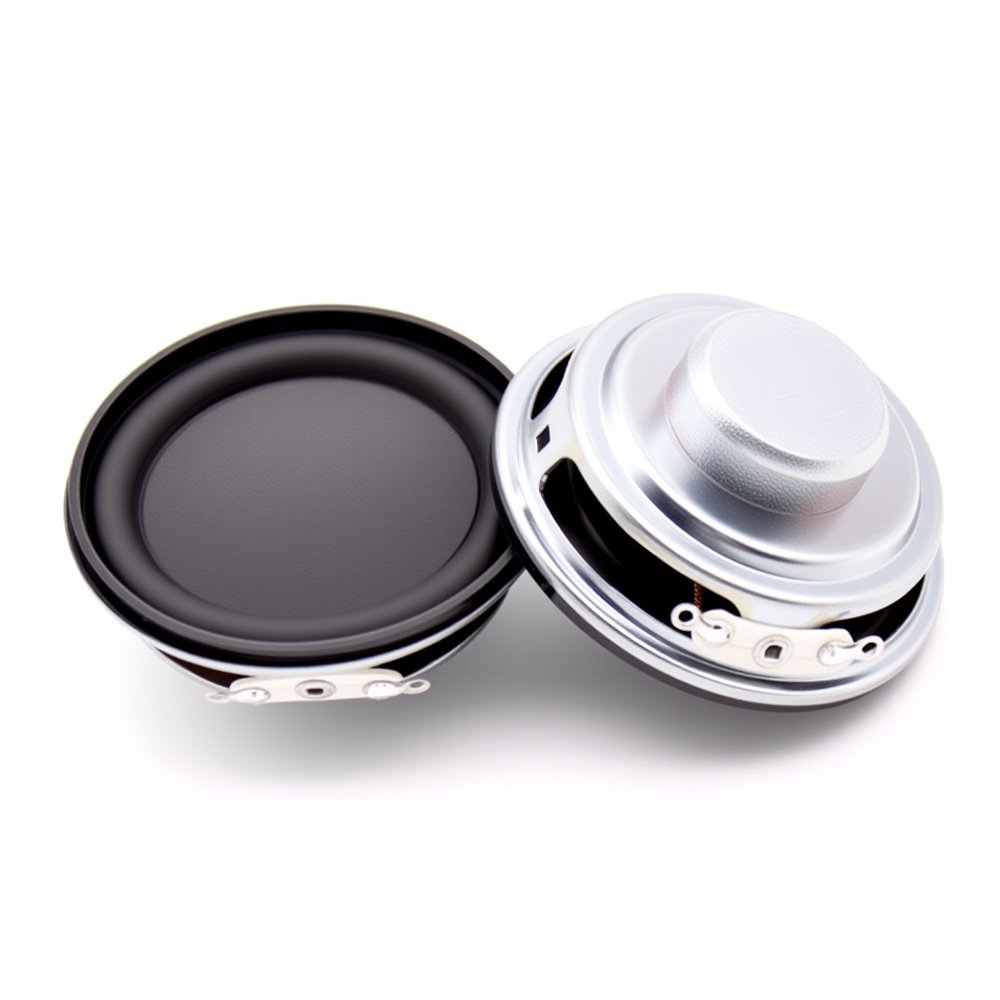
이 가이드는 시장에서 선도적인 고출력 4옴 서브우퍼 드라이버를 살펴보고, 이를 탁월하게 만드는 기술을 분석하며, 다음 베이스 프로젝트를 위한 정보에 기반한 결정을 내리는 데 필요한 데이터를 제공합니다.
4옴의 장점: 고출력 설계에서 임피던스가 중요한 이유
스피커 설계에서 임피던스는 옴(Ω) 단위로 측정되며, 앰프에서 공급되는 전류에 대한 전기적 저항을 나타냅니다. 일반적으로 2옴, 4옴, 8옴 등급을 찾을 수 있지만, 4옴 표준은 고성능 서브우퍼에서 지배적인 최적 지점 이 되었습니다. 그 이유는 실용적인 앰프 호환성과 전력 효율성에 기반합니다.
대부분의 최신 멀티채널 및 모노블록 앰프는 4옴 부하에서 최대 전력 출력. 을 제공하도록 설계되었습니다. 4옴 드라이버는 8옴 드라이버보다 저항이 낮아 앰프가 더 많은 전류를 공급하고, 결과적으로 스피커에 더 많은 전력(와트)을 전달할 수 있습니다. 이 관계는 옴의 법칙(전력 = 전압² / 저항)으로 정의됩니다. 더 낮은 2옴 부하와 비교할 때, 4옴 드라이버는 일반적으로 앰프의 전원 공급 장치에 부담이 적고, 더 시원하게 작동하며, 종종 왜곡이 더 낮습니다. 이는 앰프의 전기 부품을 절대 열 한계까지 밀어붙이지 않으면서 앰프에서 강력한 전력을 끌어내어 앰프와 드라이버 모두의 장기적인 신뢰성을 촉진하는 최적의 균형을 이룹니다.
드라이버 자체의 경우, “고출력” 4옴 설계는 견고한 엔지니어링을 필요로 합니다. 보이스 코일은 4옴 공칭 임피던스를 충족하도록 정밀하게 권선되어야 하며, 수백 또는 수천 와트의 전력으로 발생하는 상당한 열을 방출할 수 있도록 충분히 커야 합니다(종종 알루미늄, 구리 또는 캡톤 포머와 같은 고온 재료 사용). 모터 구조(자석 및 탑 플레이트)는 콘의 움직임을 정밀하게 제어하기 위한 강력한 자속을 제공하도록 대형이고 효율적이어야 합니다. 본질적으로, 고출력 4옴 드라이버는 엄청난 에너지의 효율적이고 내구성 있는 변환기로 처음부터 설계됩니다.
중요한 사양: 드라이버의 고성능을 결정짓는 요소 해독
모든 4옴 드라이버가 동일하게 제작되는 것은 아닙니다. 진정한 고출력 모델을 식별하려면 기본 임피던스 등급 이상을 살펴보고 성능과 내구성을 정의하는 주요 매개변수를 검토해야 합니다. 다음은 필수 사양입니다:
- 연속 전력 처리 용량(RMS): 이는 드라이버의 고출력 능력을 결정짓는 척도입니다. 드라이버가 열적 또는 기계적 고장 없이 연속적으로 처리할 수 있는 평균 전력량(와트)을 나타냅니다. 오늘날 시장에서 “고출력”으로 분류되려면 500와트에서 시작하여 2000와트를 초과하는 RMS 등급. 을 찾으십시오. 피크 전력 등급은 마케팅 수치이며, RMS는 신뢰할 수 있는 기준입니다.
- 보이스 코일 크기 및 재질: 더 큰 직경의 보이스 코일(2.5인치, 3인치, 4인치)은 열을 발산할 표면적이 더 넓습니다. 듀얼 보이스 코일(DVC) 설계는 배선 유연성(한 쌍의 4옴 코일에서 2옴 또는 8옴을 제시 가능)을 제공하지만, 전력 처리 용량 증가를 위해 고출력 모델에서도 일반적입니다. 구리 피복 알루미늄 와이어(CCAW) 또는 평권 구리와 같은 재료는 효율성과 열 탄력성을 위해 사용됩니다.
- 모터 강도(BL 제품): 자기장 강도(B)와 보이스 코일 길이(L)의 곱입니다. 더 높은 BL 값은 더 강력하고 효율적인 모터 를 나타내며, 콘을 더 잘 제어하여 더 타이트하고 정확한 베이스와 높은 진폭에서의 왜곡 감소를 제공합니다.
- 서스펜션 컴플라이언스(Vas) 및 공진 주파수(Fs): 이러한 틸/스몰 매개변수는 이상적인 인클로저 유형을 결정하는 데 도움이 됩니다. 낮은 Fs(자유 공기 공진)와 높은 Vas(컴플라이언스)를 가진 드라이버는 일반적으로 깊은 확장을 위해 대형 밀폐형 또는 포트형 인클로저에 적합한 반면, 더 높은 Fs와 낮은 Vas는 더 작고 펀치감 있는 밀폐형 박스에 적합할 수 있습니다.
- Xmax: 최대 선형 콘 진폭(피크-투-피크)으로, 일반적으로 밀리미터 단위로 측정됩니다. 높은 Xmax(종종 20mm 이상)는 고출력 서브우퍼에 필수적, 이며, 드라이버가 왜곡 없이 더 많은 공기량을 움직일 수 있게 하여 크고 깨끗하며 매우 낮은 주파수의 사운드를 생성하는 핵심입니다.
다음 표는 오늘날 최고 수준의 고출력 4옴 서브우퍼 드라이버를 이러한 중요한 차원에서 비교합니다:
| 브랜드 및 모델 | 임피던스 | RMS 전력(W) | 보이스 코일 | Xmax (mm, p-p) | Fs (Hz) | 주요 특징 하이라이트 |
|---|---|---|---|---|---|---|
| JL Audio 12W6v3 | 4 Ω (DVC) | 600 | 3.0″ CCAW | 28.0 | 26.3 | 상승된 프레임 냉각, DMA 최적화 |
| Kicker CompRT 43TCWRT102 | 4 Ω (DVC) | 500 | 2.0″ | 18.6 | 34.5 | 얕은 장착 설계, 고온 보이스 코일 |
| Rockford Fosgate P3D4-12 | 4 Ω (DVC) | 600 | 2.5″ | 17.8 | 37.6 | VAST 서라운드, 양극 산화 알루미늄 콘 |
| Sundown Audio SA-12 v2 | 4 Ω (DVC) | 750 | 3.0″ | 28.0 | 33.8 | Fiber Composite Cone, Ultra-Sturdy Basket |
| Dayton Audio RSS315HO-4 | 4 Ω | 500 | 2.5″ | 15.3 | 25.0 | High-Output Design, Perfect for Home Theater |
| 0인치 구리 | 4 Ω | 1000 | 4.0″ Copper | 30.0+ | 26.5 | Massive Motor, Extreme Linear Excursion |
Data sourced from manufacturer specifications as of Q4 2023. Always verify with the manufacturer for the latest specs.
Leading Contenders: A Breakdown of Top High-Power 4-Ohm Drivers
Let’s delve into what makes some of the models in the table above, and other notable contenders, stand out in the crowded field.
For the Car Audio Purist: JL Audio 12W6v3
The W6 series is legendary for its musicality and output. The v3’s 4-ohm DVC design, combined with JL’s proprietary DMA (Dynamic Motor Analysis) optimization, creates a motor structure of exceptional linearity and control. Its Elevated Frame Cooling system actively channels air over the voice coil, directly addressing the thermal limit of high-power operation. This driver is engineered for those who demand both seismic output and nuanced, accurate bass reproduction in a relatively compact enclosure.
The Output King: Sundown Audio SA-12 v2
Sundown Audio has a cult following in the competitive SPL (Sound Pressure Level) world. The SA-12 v2 embodies this philosophy with a straightforward mission: handle immense power and move a lot of air. Its 3-inch high-temperature voice coil and massive motor structure are built to take abuse. The high Xmax and rigid fiber composite cone allow it to play loudly and deeply in a properly tuned ported enclosure, making it a favorite for those chasing maximum decibels on a budget.
The Shallow-Mount Specialist: Kicker CompRT
Not every installation has room for a massive basket. Kicker’s CompRT series solves this with a super-shallow mounting depth (under 4 inches for the 10″ model) without sacrificing the core tenets of a high-power driver. It features a 4-ohm DVC configuration, a robust motor, and a high-temperature voice coil. It proves that you can get serious, powerful bass from behind a seat or in a tight truck enclosure.
The Home Theater Benchmark: Dayton Audio RSS315HO-4
High-power 4-ohm drivers aren’t exclusive to cars. The Dayton Audio RSS315HO (High Output) is a staple in the DIY home theater community. Its 4-ohm impedance matches perfectly with many pro-style and plate amplifiers. With a long-throw design, a rigid aluminum cone, and a ventilated pole piece for cooling, it’s engineered to deliver reference-level, room-shaking bass for movies and music in a home setting, often outperforming commercial subwoofers costing twice as much.
Selecting and Implementing Your Driver: From Specs to Sound
Choosing the right driver is only half the battle; implementation is everything. Your amplifier must be capable of delivering clean power at 4 ohms. Always match or exceed the driver’s RMS rating with your amplifier’s 4-ohm RMS output to avoid clipping, which is the primary cause of speaker failure.
Next, the enclosure is paramount. The driver’s T/S parameters are a blueprint. Use software like WinISD or BassBox Pro to model the driver’s response in different enclosure types (sealed, ported, bandpass).
- Sealed Enclosures: Generally smaller, offer tighter, more accurate bass with a gradual roll-off. They are forgiving of minor design errors.
- Ported/Vented Enclosures: Tuned to a specific frequency (often near the driver’s Fs), they provide significantly higher output (+3 to +6 dB) around the tuning frequency, ideal for dramatic home theater or SPL car audio. They require more precise design and volume.
Finally, ensure all supporting components are up to the task: heavy-gauge OFC (Oxygen-Free Copper) wiring, robust terminals, and a solid, well-braced enclosure that doesn’t resonate or flex. A high-power driver will reveal every weakness in your system’s infrastructure.
Professional Q&A: Your High-Power 4-Ohm Questions Answered
Q1: Can I wire two 4-ohm DVC subwoofers to a 1-ohm final load?
A: Yes, this is a common configuration for maximizing power from a 1-ohm stable amplifier. Each 4-ohm DVC driver has two separate 4-ohm voice coils. First, wire the coils on each driver in parallel (positive to positive, negative to negative), which presents a 2-ohm load per driver. Then, wire the two drivers themselves in parallel to the amplifier. This halves the resistance again, resulting in a final nominal load of 1 ohm. Always consult your amplifier’s manual to confirm it is rated for 1-ohm operation.
Q2: Is a 1000-watt RMS 4-ohm driver overkill for a daily driver car audio system?
A: Not necessarily. “Overkill” depends on your goals. A high-power driver doesn’t have to be played at its limit. In fact, using a driver with a power handling rating well above your amplifier’s output ensures the driver operates with very low distortion and high reliability, as it’s never being stressed. The extra thermal and mechanical headroom translates to cleaner, more dynamic sound at all volume levels. The key is to provide it with adequate, clean power and a proper enclosure.
Q3: Why do I see fewer high-power 4-ohm drivers in professional PA systems?
A: Professional live sound (PA) systems often use 8-ohm drivers. The primary reason is amplifier load management. Power amplifiers in live sound racks frequently drive multiple speakers per channel. Using 8-ohm drivers allows technicians to wire two in parallel for a 4-ohm load or four for a 2-ohm load, giving flexibility while keeping the amplifier within a safe operating impedance. The focus is on efficiency (SPL per watt) and reliability over extreme, sustained peak power handling in a way that differs from car audio or dedicated home subwoofer design.
Q4: How critical is the “break-in” period for a new high-power subwoofer driver?
A: Break-in, or mechanical conditioning, is real and generally recommended. The spider (the rear suspension) and surround are stiff when new. Gently playing the driver at moderate volumes for 10-20 hours allows these components to soften and become more flexible, allowing the driver to reach its designed excursion (Xmax) more easily and linearly. This can result in slightly deeper bass response and reduced distortion. Playing heavy bass tones at low to moderate volume is an effective break-in method. Avoid immediately subjecting a new driver to maximum power.