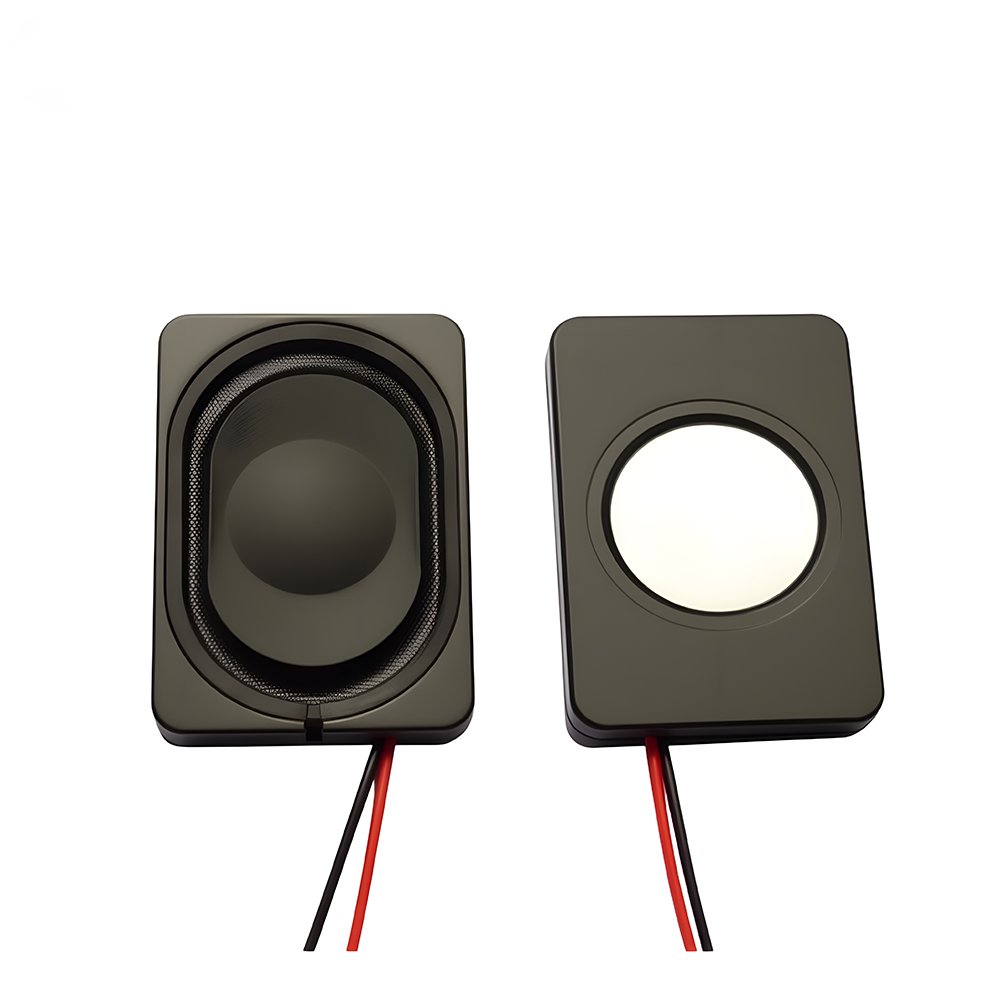
لماذا تعتبر الدقة في التصنيع الميكروي أمرًا أساسيًا لجودة السماعات الصغيرة

جدول المحتويات

在消费者既追求强劲音质又崇尚极简设计的时代,小型扬声器——从便携式蓝牙设备到纤薄条形音箱及紧凑型家庭影院卫星箱——无处不在。然而,在其时尚外观之下,隐藏着一个深刻的工程学真理: 感知到的音频质量几乎完全取决于其微制造工艺的精度。. 对于较大的扬声器,微小的公差或许尚可容忍,但在微型声学的受限领域中,微米级的偏差就可能成为清晰细腻音频与浑浊失真噪音之间的分水岭。本文探讨了先进制造精度与小型扬声器系统的声学性能、耐用性及市场成功之间的内在联系。.
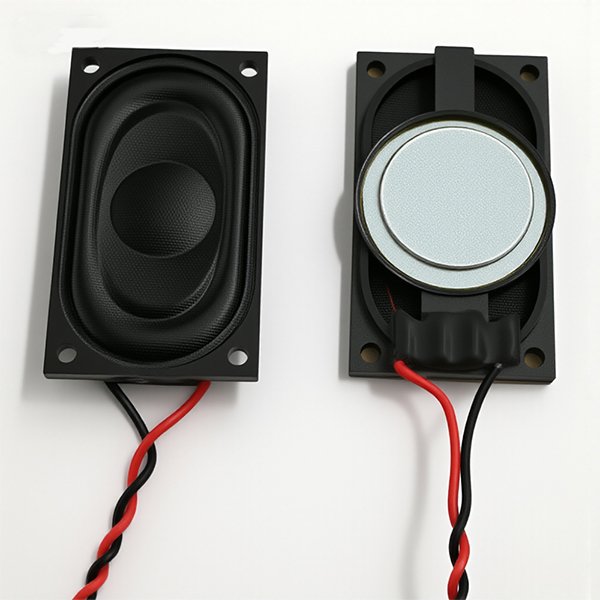
مكبر صوت مدمج بفتحة تثبيت مقاس 20×35 مم، 8 أوم، 1.5 واط

小空间的物理学:为何精度不容妥协

مكبر صوت صغير مدمج مقاس 20×30

小型扬声器设计的根本挑战在于物理定律。更小的箱体和驱动单元意味着更少的空气排量,需要将电能极其高效地转换为机械运动,进而转换为声压波。从音圈和磁路组件到定心支片、折环以及振膜本身,每一个部件都在一个极度受限的空间内运作。.
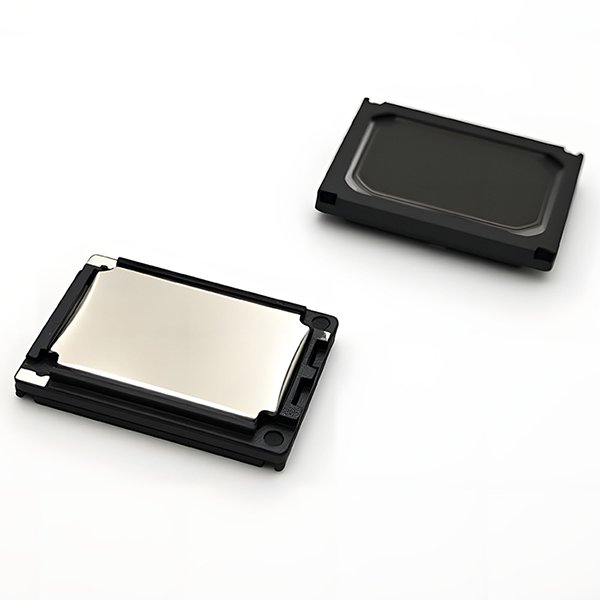
مكبر صوت داخلي مقاس 18×13، 8 أوم، 0.8 واط

  • 公差成为关键: 在一个总磁隙仅为0.5毫米的驱动单元中,即使50微米(0.05毫米)的音圈偏移或摆动,也可能导致灾难性的擦圈和失真。精密制造确保音圈以完美的线性活塞式运动运行。.
  • 箱体完整性: 微型密封或倒相箱体必须具有声学惰性。亚毫米级的缝隙或粘合缺陷可能导致漏气,破坏预期的声学调谐,降低低音响应,并产生不必要的倒相口气流噪声。.
  • 材料一致性: 振膜(通常为聚合物、纤维素或复合材料的混合物)等材料的特性必须高度均匀。肉眼不可见的厚度或密度变化,会产生共振和分割振动模式,从而渲染音色。.

真实世界数据点: 音频工程学会(AES)2023年的一项研究发现,将40毫米微型驱动单元关键部件的制造公差仅降低30%,即可在参考输出电平下实现 总谐波失真(THD)降低55%。 这直接转化为更纯净的声音。.

涟漪效应:微精度如何影响听者体验

制造精度不仅满足工程师的检查清单;它还为最终用户创造了切实、可闻的益处。.

  1. 提升清晰度与细节: 精确的对齐和平衡的组件最大限度地减少了非线性失真。这使得音乐中的细微细节——歌手的呼吸、镲片的余音——得以再现而不被掩盖。.
  2. 扩展频率响应: 对振膜质量和磁路强度的精确控制,使设计者能够突破小型扬声器可用频率范围的极限,尤其是在关键的高频区域,该区域更早出现指向性和分割振动。.
  3. 更高声压级(SPL)与更低失真: 完全对称的磁路系统允许驱动单元在达到破坏性失真水平之前处理更大的功率和冲程。这意味着一个精密制造的小型扬声器可以比一个制造粗糙的较大扬声器听起来更响亮、更清晰。.
  4. 增强的一致性与可靠性: 微制造精度确保生产线上第10,000个单元与第一个单元性能完全相同。这建立了品牌信任。此外,完美对齐带来的机械应力降低,极大地提高了长期可靠性,防止了音圈疲劳或随时间推移产生的擦圈。.

行业工具:实现精度的先进制造技术

达到这种精度水平,只有借助现代化的计算机控制制造技术才能实现。.

制造工艺精度能力在小型扬声器中的关键应用对质量的影响
精密注塑成型关键特征 ± 0.01毫米振膜、复杂箱体部件、被动辐射器创建复杂、轻量且完美可重复的声学结构。.
数控加工与微铣削± 0.005毫米高端驱动单元框架(盆架)、原型箱体、波导允许使用金属或复合材料制造超刚性、共振优化的部件。.
激光切割与焊接± 0.001毫米切割振膜坯料、焊接音圈引线实现精细、无毛刺的切割和可靠的微连接,且无热应力。.
自动光学检测(AOI)亚微米级测量音圈对齐、振膜同心度的100%检测实时捕捉微观缺陷,确保零缺陷驱动单元离开生产线。.
3D打印(增材制造)层分辨率低至约0.025毫米格栅、箱体及定制波导的快速原型制作Accelerates design iteration for optimal acoustics before mass-production tooling.

Market Insight: The adoption of these technologies is accelerating. According to a Q1 2024 report from Smithers, the market for precision manufacturing in consumer electronics is projected to grow at a CAGR of 8.7% through 2029, directly driven by demand for higher-fidelity audio in smaller form factors.

The Cost vs. Quality Equation: Navigating the Business Reality

Implementing a micro-manufacturing precision strategy has significant cost implications. High-precision tooling, advanced machinery, and rigorous quality control protocols represent a major upfront investment. This is the core differentiator between budget and premium audio brands.

  • Budget Segment: Often relies on older tooling with wider tolerances. Performance is “good enough” for casual listening but lacks the refinement, consistency, and dynamic range of precision-made counterparts. Compromises are often made in enclosure sealing and driver symmetry.
  • Premium & Professional Segment: Absorbs the high cost of precision as a core value proposition. The result is superior performance, brand reputation for quality, and products that can be tuned to a specific, accurate sound signature. Companies like KEF, Devialet, and Sonos heavily invest in proprietary precision manufacturing processes (e.g., KEF’s Uni-Q driver manufacturing, Devialet’s sealed “Speaker-Engine” assembly).

The Future: Smart Integration and Material Science

The pursuit of precision is now merging with other technological trends. The rise of smart speakers و spatial audio demands not just precision in individual drivers, but in the relative placement and alignment of multiple drivers within a single enclosure for perfect beam-forming and audio steering. Furthermore, advancements in material science—such as graphene-coated diaphragms or new composite foams for damping—require equally advanced manufacturing techniques to be implemented effectively at micro-scale.

الخلاصة

In the world of small speakers, size is not a limitation but a design parameter that magnifies the importance of every manufacturing decision. Micro-manufacturing precision is the invisible backbone of high-quality audio. It is the discipline that transforms theoretical acoustic designs into tangible products that deliver clarity, power, and emotional impact. As consumer ears become more discerning and the competition intensifies, a brand’s commitment to precision manufacturing will increasingly be the defining factor between market leadership and obscurity. The sound of the future is not just designed—it is meticulously crafted, one micron at a time.


Professional Q&A on Micro-Manufacturing and Speaker Quality

Q1: In micro-manufacturing for speakers, what single component tolerances are most critical to control?
أ: ال voice coil and magnetic gap assembly is arguably the most critical. The concentricity of the coil within the gap, the uniformity of the winding, and the exact vertical alignment must be controlled to within microns. Any imbalance here creates a non-linear motor force, leading immediately to high levels of harmonic and intermodulation distortion, which the human ear is particularly sensitive to.

Q2: With the rise of sustainable materials, how does micro-manufacturing precision adapt to bio-based or recycled composites for diaphragms?
أ: This is a major challenge. These materials often have greater inherent batch-to-batch variance in density and stiffness. Precision manufacturing adapts through two ways: First, enhanced in-line metrology (e.g., laser scanning) to measure the physical properties of each formed diaphragm and sort or compensate accordingly. Second, advanced process control in molding (temperature, pressure, cooling) to minimize the variation introduced during production. The goal is to achieve consistency from a less-consistent starting material.

Q3: For a startup aiming to build a high-quality compact speaker, where should they prioritize their manufacturing budget for the biggest acoustic payoff?
أ: Prioritize investment in the driver motor system and enclosure sealing. Contract a manufacturer with proven capability in high-precision voice coil assembly and ensure your enclosure design is manufacturable with perfect airtightness (for sealed designs) or precise port dimensions (for bass-reflex). A mediocre driver in a perfectly tuned, rigid, and sealed enclosure will often outperform a brilliant driver in a poorly made box. This “system approach” to precision yields the most significant perceptual improvement.

رائع! شارك على: