China has been the world’s loudspeaker workshop for decades. That’s not just because of cheap labor — it’s because the country built a massive ecosystem of magnet suppliers, voice coil producers, cone paper manufacturers, CNC machining shops, and acoustic engineers. If you’re an audio brand looking for a loudspeaker manufacturer China that can handle OEM speaker manufacturing with true acoustic expertise, the options are overwhelming. The challenge is finding a partner who actually understands sound, not one who simply assembles parts.
Let’s talk about what real OEM sound engineering looks like, what data matters, and how to choose a factory that can take your idea from a sketch to a production-ready speaker — without losing your mind.
Why China Remains the Global Hub for Loudspeaker Manufacturing
There are three reasons China stays on top: scale, supply chain density, and experience. High-end driver manufacturers, cabinet makers, and crossover specialists are often located within a few hours of each other in Guangdong and Zhejiang. That means shorter prototyping cycles and easier communication during development.
The latest industry numbers back this up. In 2024, Grand View Research estimated the global loudspeaker market at roughly USD 45.6 billion, with Asia-Pacific — led by China — holding the largest production share. Another 2024 analysis from Mordor Intelligence suggests China’s loudspeaker and audio component exports still exceed $10 billion annually. This isn’t a market that’s shrinking; it’s evolving.
Table 1: China Loudspeaker Manufacturing at a Glance
| Metric | Value / Trend |
|---|---|
| Global loudspeaker market size (2024) | ~USD 45.6 billion |
| China share of global manufacturing capacity | 60%+ by some industry estimates |
| Typical OEM prototype lead time | 2–5 weeks for a compact two-way speaker |
| Typical production lead time for 1,000 units | 4–6 weeks after sample approval |
| Common certifications | CE, RoHS, ISO 9001, UL |
What OEM Speaker Manufacturing Actually Includes
Too many brands think OEM means “send a drawing and wait for boxes.” Real OEM speaker manufacturing is much more hands-on. It involves driver selection, crossover design, cabinet damping, port tuning, compression driver matching, and final acoustic testing. The factory should treat your project like an engineering collaboration, not a piece order.
A serious partner will assign a project engineer, share measurement data, and propose value engineering changes that keep your product competitive. Some factories also offer ODM services, where you pick a proven platform and simply add your branding. Others focus on component-level OEM, meaning they’ll produce drivers or crossovers for your own assembly line.
Table 2: Common OEM Service Categories
| Service Type | What It Means |
|---|---|
| Full OEM | Your own design gets manufactured to exact mechanical and electrical specs. |
| ODM | Factory adapts a proven base design with your cabinet color, logo, and custom driver tuning. |
| Component Manufacturing | Factory ships drivers, crossovers, or complete speaker kits to your own facility. |
| Joint Development | Both sides share R&D cost and expertise under an exclusive product agreement. |
Acoustic Expertise Is the Real Differentiator
This is where the “expertise” part comes in. Any factory can glue, screw, and solder. But acoustic expertise requires measurement equipment, listening tests, and iterative tuning. When you evaluate a loudspeaker manufacturer in China, ask about their anechoic chamber, Klippel distortion analyzer, and laser vibrometer. Those tools tell you whether the factory can prove a speaker performs to spec, or if they’re just guessing.
A well-equipped factory uses simulation software like LEAP, FEM, or BEM to predict frequency response and directivity before cutting wood. That saves weeks of physical trial-and-error. And when samples do need tweaks, they can adjust crossover values quickly and show you before/after test curves.
Table 3: Acoustic Tests to Expect from a Serious OEM Factory
| Test | Why It Matters |
|---|---|
| On-axis frequency response | Shows tonal balance and overall voicing |
| Harmonic distortion (THD) | Reveals driver or port at limits |
| Impedance / phase plot | Verifies crossover and driver compatibility |
| Waterfall / spectral decay | Exposes cabinet resonances and ringing |
| Power compression test | Proves performance under continuous high power |
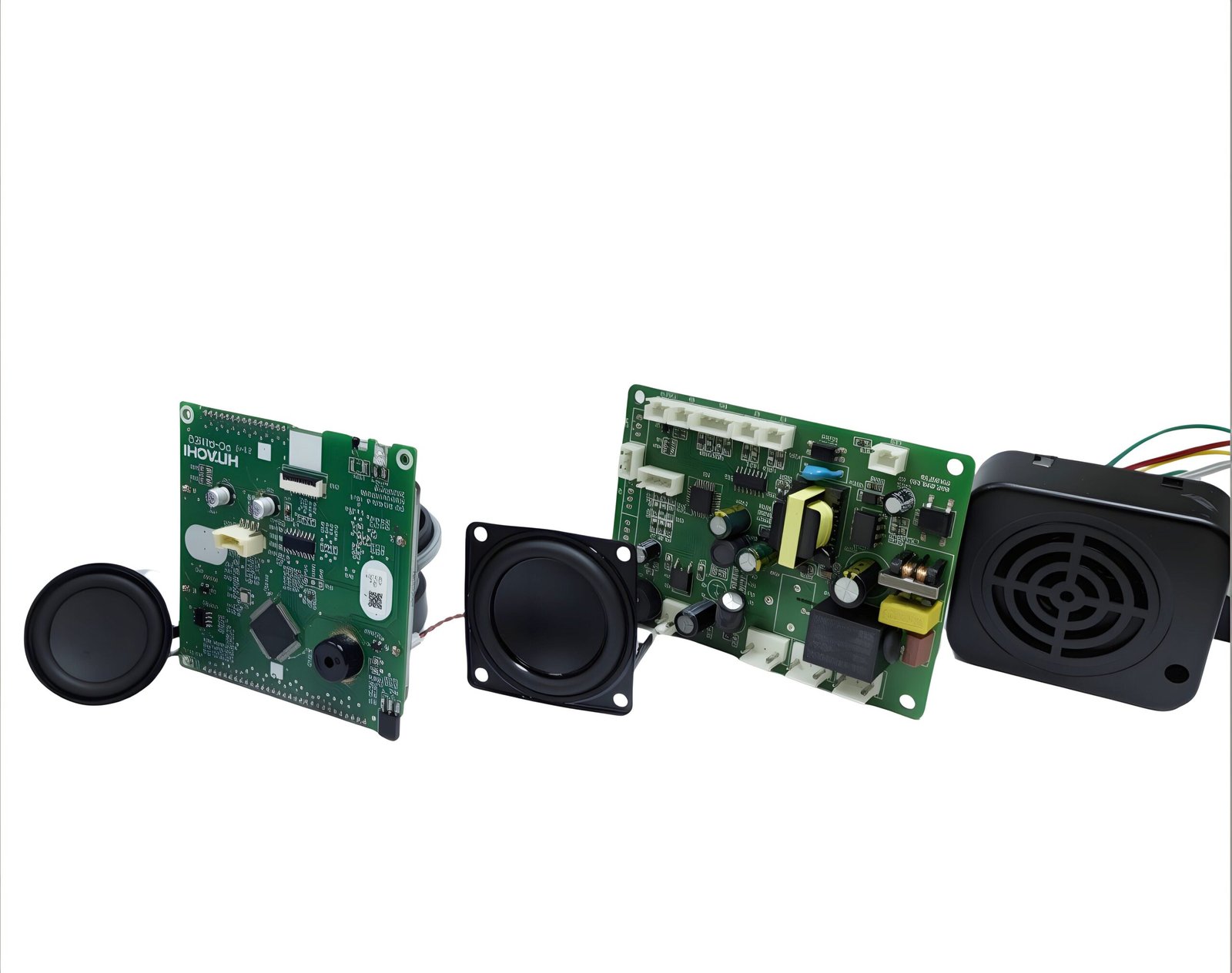
If you want to see how a China loudspeaker manufacturer with an in-house acoustic engineering team handles this, ask for production test reports. Most serious factories will share non-confidential data with qualified buyers.
Quality Control and Production Transparency
OEM speaker manufacturing isn’t just about how good the sample sounds. It’s about how well the factory controls every batch. A reliable loudspeaker manufacturer in China will give you a written quality control plan before production. It should cover incoming material inspection, mid-production checks, final frequency response testing, and burn-in time.
Also ask about traceability. If a voice coil supplier changes, will you know? If impedance fails on a production run, what’s their limit? The best factories will be honest about subcontracted parts and audit their suppliers the same way you audit them.
If you’re evaluating whether a factory is serious, check for ISO 9001 certification and product-level approvals like CE, RoHS, UL, and REACH. These aren’t just stickers — they show a system exists for consistent manufacturing.
How to Choose the Right Partner for OEM Speaker Manufacturing
Start with engineering depth, not price. Ask about the R&D team’s background, how many engineers hold audio-related degrees, and how many new OEM projects they do per year. Then check the lab. If they don’t have measurement equipment, it’s hard to call them an acoustic manufacturer.
Next, think about communication. A factory with English-speaking project managers can be the difference between a smooth 8-week project and a frustrating 6-month one. You also need a clear IP protection path. Sign an NDA before sending simulation files or crossover schematics, and make sure the contract states who owns the tooling and final designs.
At our factory in China, we publish our speaker OEM product lines openly because we’ve found that serious buyers appreciate transparency. Our acoustic engineering setup includes measurement labs and experienced engineers who speak both loudspeaker math and plain English. If you have a custom project in mind, you can get a free OEM consultation here.
Final Thoughts
China remains the best place in the world for OEM loudspeaker manufacturing. But raw capacity doesn’t mean acoustic expertise. The right factory will treat your project as an engineering challenge, not a shipping container order. Look for someone with the right tools, the right processes, and the right people — because a speaker is only as good as the decisions made before the glue dries.
FAQs About OEM Loudspeaker Manufacturing in China
1. What is the MOQ for OEM speaker manufacturing?
For a simple two-way speaker, most factories ask for 300 to 1,000 units per model. Some flexible ODM factories accept lower quantities with standard cabinets, but custom tooling and injection molding will push the minimum higher.
2. Can a Chinese manufacturer design a loudspeaker from scratch for my brand?
Yes. This is often called ODM. The factory will propose a driver and cabinet concept, build trial samples, and tune the crossover until the measured response matches your target. Just make sure the IP and tooling ownership are written clearly in the contract.
3. How long does a typical OEM speaker project take?
Allow four to eight weeks for engineering prototypes. After sample approval, production usually takes another four to six weeks for typical order sizes. A realistic project timeline is around 8 to 14 weeks from start to shipping.
4. What certifications should I ask for when importing speakers from China?
For Europe, request CE, RoHS, and REACH documentation. For the US, UL or ETL is common for active electronics, while passive speakers often only need CE and RoHS. If you’re selling in the UK or Middle East, additional country-specific compliance may be needed.