
When building or upgrading a subwoofer, the driver is the heart of the system—the component that literally moves air to produce those deep, physical bass notes we feel as much as hear. For enthusiasts seeking maximum performance from modern amplifiers, particularly car audio systems and high-output home theater setups, high-power 4-ohm speaker drivers represent a critical engineering choice. This specification isn’t just a number; it’s a deliberate balance between electrical compatibility, thermal management, and mechanical prowess, designed to turn electrical power into authoritative, distortion-free low-frequency energy.
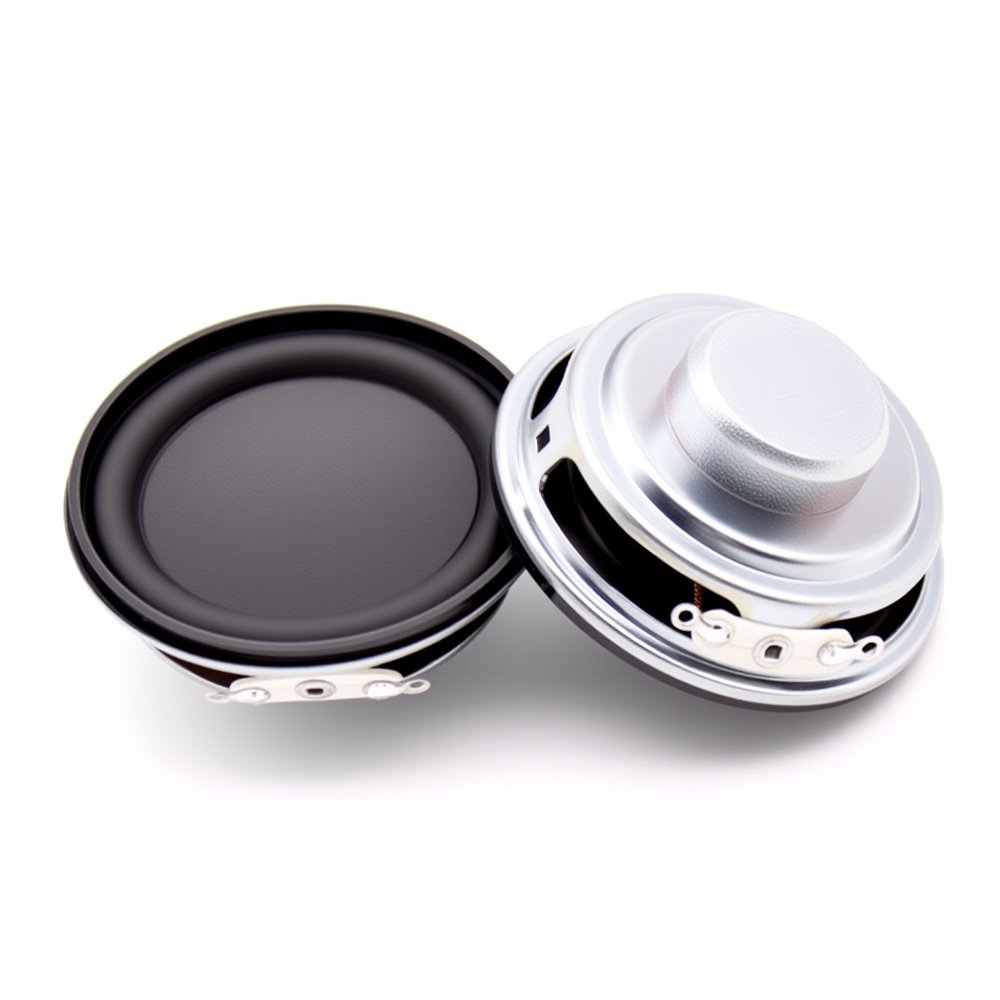
This guide explores the leading high-power 4-ohm subwoofer drivers on the market, dissecting the technologies that make them exceptional and providing the data you need to make an informed decision for your next bass project.
The 4-Ohm Advantage: Why Impedance Matters in High-Power Designs
In speaker design, impedance, measured in ohms (Ω), is a measure of electrical resistance to the current supplied by the amplifier. While you’ll find common ratings of 2, 4, and 8 ohms, the 4-ohm standard has become a dominant sweet spot for high-performance subwoofers. The reason is rooted in practical amplifier compatibility and power efficiency.
Most modern multi-channel and monoblock amplifiers are engineered to deliver their maximum power output into a 4-ohm load. A 4-ohm driver presents less resistance than an 8-ohm driver, allowing the amplifier to deliver more current and, consequently, more power (Watts) to the speaker. This relationship is defined by Ohm’s Law (Power = Voltage² / Resistance). Compared to a lower 2-ohm load, a 4-ohm driver is generally easier on the amplifier’s power supply, runs cooler, and often results in lower distortion. It strikes an optimal balance: it extracts strong power from the amplifier without pushing the amp’s electrical components to their absolute thermal limits, promoting long-term reliability for both the amp and the driver.
For the driver itself, a “high-power” 4-ohm design necessitates robust engineering. The voice coil must be wound to precise specifications to hit that 4-ohm nominal impedance while being large enough (often using high-temperature materials like aluminum, copper, or Kapton formers) to dissipate the substantial heat generated by hundreds or thousands of watts of power. The motor structure (magnet and top plate) must be massive and efficient to provide strong magnetic flux for precise control over the cone’s movement. In essence, a high-power 4-ohm driver is built from the ground up to be an efficient, durable transducer of immense energy.
Critical Specifications: Decoding What Makes a Driver High-Performance
Not all 4-ohm drivers are created equal. To identify truly high-power models, you must look beyond the basic impedance rating and examine the key parameters that define performance and durability. Here are the non-negotiable specs:
- Continuous Power Handling (RMS): This is the definitive measure of a driver’s high-power capability. It indicates the average amount of power, in watts, the driver can handle continuously without thermal or mechanical failure. For a “high-power” designation in today’s market, look for RMS ratings starting at 500 watts and extending beyond 2000 watts. Peak power ratings are marketing figures; RMS is the trustworthy benchmark.
- Voice Coil Size and Material: A larger-diameter voice coil (2.5″, 3″, 4″) has more surface area to shed heat. Dual voice coil (DVC) designs offer wiring flexibility (able to present 2 or 8 ohms from a pair of 4-ohm coils) but are also common in high-power models for increased power handling. Materials like copper-clad aluminum wire (CCAW) or flat-wound copper are used for efficiency and thermal resilience.
- Motor Strength (BL Product): The product of magnetic field strength (B) and voice coil length (L). A higher BL value indicates a stronger, more efficient motor that provides better control over the cone, resulting in tighter, more accurate bass and reduced distortion at high excursions.
- Suspension Compliance (Vas) and Resonance (Fs): These Theile/Small parameters help determine the ideal enclosure type. A driver with a low Fs (free-air resonance) and high Vas (compliance) is generally suited for large sealed or ported enclosures for deep extension, while a higher Fs and lower Vas may favor smaller, punchier sealed boxes.
- Xmax: The maximum linear cone excursion (peak-to-peak), usually measured in millimeters. High Xmax (often 20mm+) is essential for high-output subwoofers, as it allows the driver to move a greater volume of air without distorting, which is the key to generating loud, clean, very low-frequency sound.
The following table compares some of today’s top-tier high-power 4-ohm subwoofer drivers across these critical dimensions:
| Brand & Model | Импеданс | RMS Power (W) | Voice Coil | Xmax (mm, p-p) | Fs (Hz) | Key Feature Highlight |
|---|---|---|---|---|---|---|
| JL Audio 12W6v3 | 4 Ω (DVC) | 600 | 3.0″ CCAW | 28.0 | 26.3 | Elevated Frame Cooling, DMA Optimization |
| Kicker CompRT 43TCWRT102 | 4 Ω (DVC) | 500 | 2.0″ | 18.6 | 34.5 | Shallow Mount Design, High-Temp Voice Coil |
| Rockford Fosgate P3D4-12 | 4 Ω (DVC) | 600 | 2.5″ | 17.8 | 37.6 | VAST Surround, Anodized Aluminum Cone |
| Sundown Audio SA-12 v2 | 4 Ω (DVC) | 750 | 3.0″ | 28.0 | 33.8 | Fiber Composite Cone, Ultra-Sturdy Basket |
| Dayton Audio RSS315HO-4 | 4 Ω | 500 | 2.5″ | 15.3 | 25.0 | High-Output Design, Perfect for Home Theater |
| Stereo Integrity SQL-12 | 4 Ω | 1000 | 4.0″ Copper | 30.0+ | 26.5 | Massive Motor, Extreme Linear Excursion |
Data sourced from manufacturer specifications as of Q4 2023. Always verify with the manufacturer for the latest specs.
Leading Contenders: A Breakdown of Top High-Power 4-Ohm Drivers
Let’s delve into what makes some of the models in the table above, and other notable contenders, stand out in the crowded field.
For the Car Audio Purist: JL Audio 12W6v3
The W6 series is legendary for its musicality and output. The v3’s 4-ohm DVC design, combined with JL’s proprietary DMA (Dynamic Motor Analysis) optimization, creates a motor structure of exceptional linearity and control. Its Elevated Frame Cooling system actively channels air over the voice coil, directly addressing the thermal limit of high-power operation. This driver is engineered for those who demand both seismic output and nuanced, accurate bass reproduction in a relatively compact enclosure.
The Output King: Sundown Audio SA-12 v2
Sundown Audio has a cult following in the competitive SPL (Sound Pressure Level) world. The SA-12 v2 embodies this philosophy with a straightforward mission: handle immense power and move a lot of air. Its 3-inch high-temperature voice coil and massive motor structure are built to take abuse. The high Xmax and rigid fiber composite cone allow it to play loudly and deeply in a properly tuned ported enclosure, making it a favorite for those chasing maximum decibels on a budget.
The Shallow-Mount Specialist: Kicker CompRT
Not every installation has room for a massive basket. Kicker’s CompRT series solves this with a super-shallow mounting depth (under 4 inches for the 10″ model) without sacrificing the core tenets of a high-power driver. It features a 4-ohm DVC configuration, a robust motor, and a high-temperature voice coil. It proves that you can get serious, powerful bass from behind a seat or in a tight truck enclosure.
The Home Theater Benchmark: Dayton Audio RSS315HO-4
High-power 4-ohm drivers aren’t exclusive to cars. The Dayton Audio RSS315HO (High Output) is a staple in the DIY home theater community. Its 4-ohm impedance matches perfectly with many pro-style and plate amplifiers. With a long-throw design, a rigid aluminum cone, and a ventilated pole piece for cooling, it’s engineered to deliver reference-level, room-shaking bass for movies and music in a home setting, often outperforming commercial subwoofers costing twice as much.
Selecting and Implementing Your Driver: From Specs to Sound
Choosing the right driver is only half the battle; implementation is everything. Your amplifier must be capable of delivering clean power at 4 ohms. Always match or exceed the driver’s RMS rating with your amplifier’s 4-ohm RMS output to avoid clipping, which is the primary cause of speaker failure.
Next, the enclosure is paramount. The driver’s T/S parameters are a blueprint. Use software like WinISD or BassBox Pro to model the driver’s response in different enclosure types (sealed, ported, bandpass).
- Sealed Enclosures: Generally smaller, offer tighter, more accurate bass with a gradual roll-off. They are forgiving of minor design errors.
- Ported/Vented Enclosures: Tuned to a specific frequency (often near the driver’s Fs), they provide significantly higher output (+3 to +6 dB) around the tuning frequency, ideal for dramatic home theater or SPL car audio. They require more precise design and volume.
Finally, ensure all supporting components are up to the task: heavy-gauge OFC (Oxygen-Free Copper) wiring, robust terminals, and a solid, well-braced enclosure that doesn’t resonate or flex. A high-power driver will reveal every weakness in your system’s infrastructure.
Professional Q&A: Your High-Power 4-Ohm Questions Answered
Q1: Can I wire two 4-ohm DVC subwoofers to a 1-ohm final load?
A: Yes, this is a common configuration for maximizing power from a 1-ohm stable amplifier. Each 4-ohm DVC driver has two separate 4-ohm voice coils. First, wire the coils on each driver in parallel (positive to positive, negative to negative), which presents a 2-ohm load per driver. Then, wire the two drivers themselves in parallel to the amplifier. This halves the resistance again, resulting in a final nominal load of 1 ohm. Always consult your amplifier’s manual to confirm it is rated for 1-ohm operation.
Q2: Is a 1000-watt RMS 4-ohm driver overkill for a daily driver car audio system?
A: Not necessarily. “Overkill” depends on your goals. A high-power driver doesn’t have to be played at its limit. In fact, using a driver with a power handling rating well above your amplifier’s output ensures the driver operates with very low distortion and high reliability, as it’s never being stressed. The extra thermal and mechanical headroom translates to cleaner, more dynamic sound at all volume levels. The key is to provide it with adequate, clean power and a proper enclosure.
Q3: Why do I see fewer high-power 4-ohm drivers in professional PA systems?
A: Professional live sound (PA) systems often use 8-ohm drivers. The primary reason is amplifier load management. Power amplifiers in live sound racks frequently drive multiple speakers per channel. Using 8-ohm drivers allows technicians to wire two in parallel for a 4-ohm load or four for a 2-ohm load, giving flexibility while keeping the amplifier within a safe operating impedance. The focus is on efficiency (SPL per watt) and reliability over extreme, sustained peak power handling in a way that differs from car audio or dedicated home subwoofer design.
Q4: How critical is the “break-in” period for a new high-power subwoofer driver?
A: Break-in, or mechanical conditioning, is real and generally recommended. The spider (the rear suspension) and surround are stiff when new. Gently playing the driver at moderate volumes for 10-20 hours allows these components to soften and become more flexible, allowing the driver to reach its designed excursion (Xmax) more easily and linearly. This can result in slightly deeper bass response and reduced distortion. Playing heavy bass tones at low to moderate volume is an effective break-in method. Avoid immediately subjecting a new driver to maximum power.