
In an era where consumers demand powerful, high-fidelity audio from ever-shrinking devices—be it Bluetooth speakers, soundbars, or premium headphones—audio engineers face a fundamental acoustic challenge. How do you reproduce rich, deep bass from a small enclosure? The laws of physics are unforgiving: a small speaker driver in a small box naturally struggles to move enough air to create convincing low-frequency sound waves. While increasing driver size or enclosure volume is the direct solution, it’s often at odds with modern design and portability requirements.
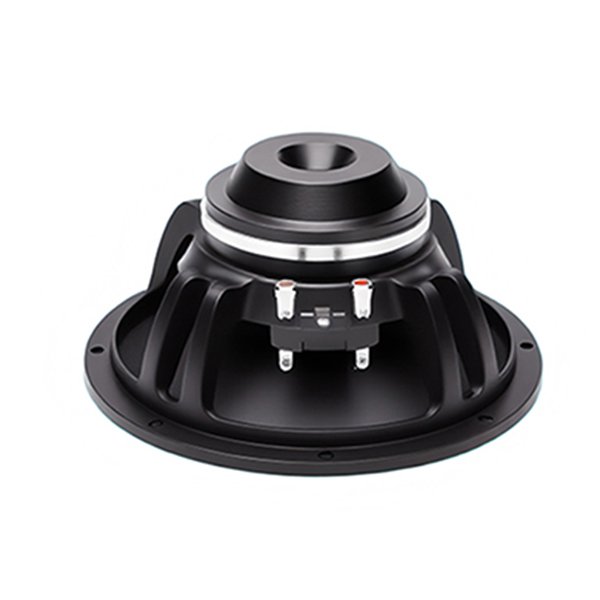
Enter the passive radiator (PR), an ingenious and critical component that has become the secret weapon in small loudspeaker design. Unlike a traditional port or a sealed enclosure, a passive radiator system allows compact speakers to “cheat” physics, delivering bass response that far exceeds their physical dimensions. This technology is now ubiquitous, found in everything from mini home theatre systems to flagship portable speakers from brands like Sonos, JBL, and Bose. This article delves into the engineering principles, comparative advantages, and real-world applications that make passive radiators indispensable for modern, space-constrained audio design.
The Physics of Bass and the Small-Enclosure Problem
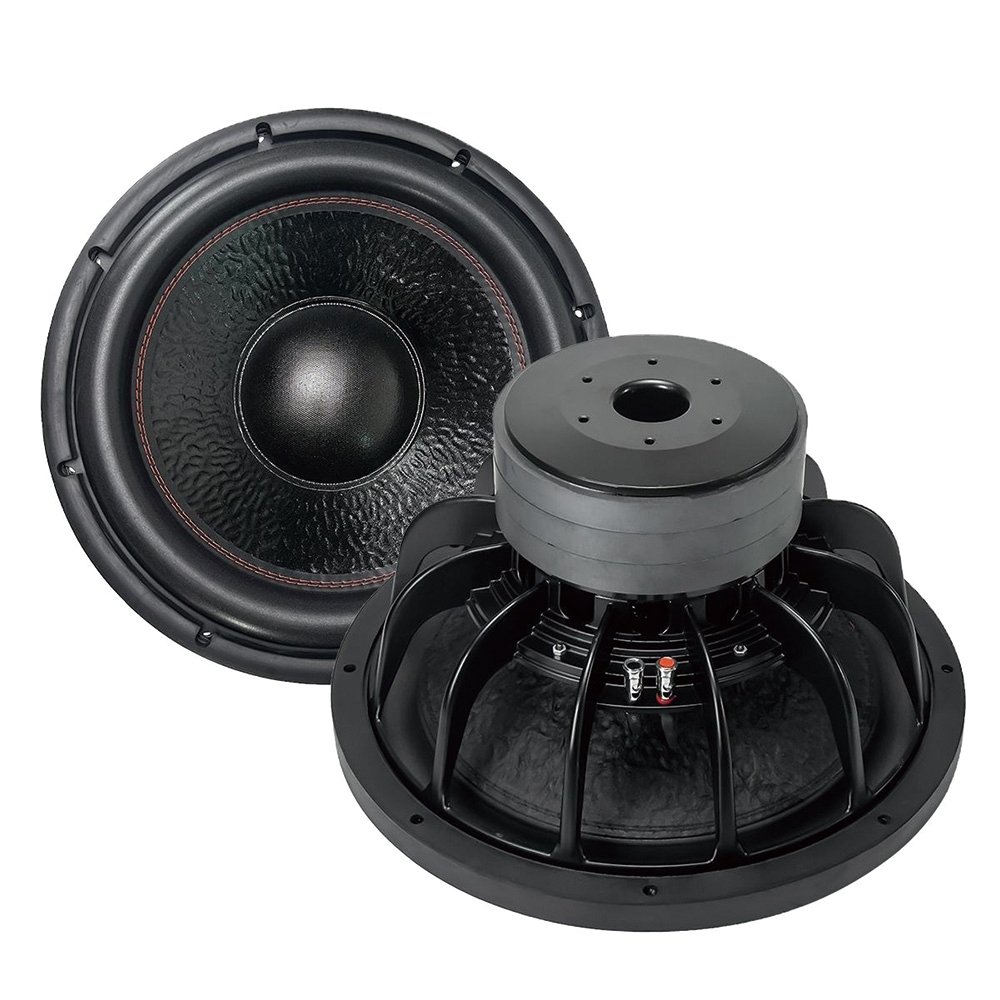
To appreciate the passive radiator’s role, one must first understand the core problem. Bass frequencies, typically defined as sounds below 250 Hz, require the displacement of large volumes of air. This displacement is quantified as Vd (volume displacement), calculated as the driver’s effective piston area (Sd) multiplied by its peak linear excursion (Xmax). A larger Vd generally means more potential for deep bass.
In a small sealed enclosure, the trapped air acts as a spring, stiffening against the driver’s movement. This increases the system’s resonant frequency, inherently rolling off deeper bass frequencies earlier. You can increase driver excursion to compensate, but this quickly leads to non-linear distortion, mechanical failure, and power handling issues. Simply put, a small sealed box chokes the driver, limiting its bass output.
The traditional alternative is the bass-reflex or ported enclosure. A tuned port allows internal sound waves from the rear of the driver to exit the box, reinforcing the front-wave output at a specific tuning frequency. This can extend bass response by ½ to ¾ of an octave lower than an equivalent sealed box. However, ports have their own drawbacks in miniaturized designs: they require a specific internal volume and port length to tune correctly, which can be challenging in tiny enclosures. Furthermore, at frequencies below the port’s tuning, the driver becomes unloaded, leading to high distortion and potential damage at high volumes. Ports can also produce chuffing noise (turbulent air flow) and are susceptible to wind noise from external sources.
How a Passive Radiator Works: The “Drone Cone” Explained
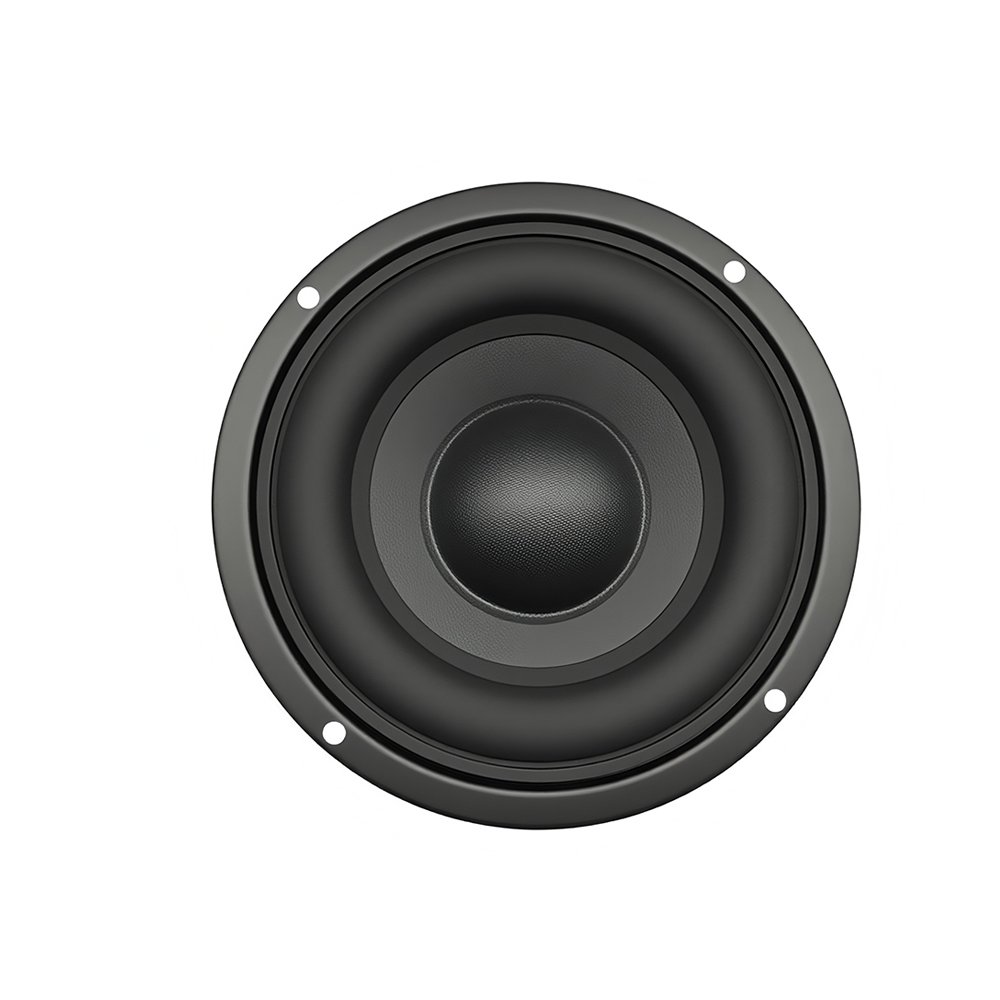
A passive radiator provides an elegant solution to these limitations. It is essentially a driver without a motor (voice coil and magnet)—a passive diaphragm (cone) suspended in a frame, mounted on the enclosure alongside the active driver.
Here’s the simplified mechanics:
- 그만큼 active driver is powered by the amplifier and pushes air as normal.
- Its rear sound waves create pressure changes inside the sealed enclosure.
- This internal pressure acts on the passive radiator, causing its diaphragm to vibrate in sympathy.
- The passive radiator’s movement is governed by the tuning of its suspension (spider and surround) and added mass (often weights on the diaphragm). Engineers tune the resonance frequency of the PR by adjusting this mass.
- When tuned correctly, the PR’s output acoustically couples with the front wave of the active driver at the tuning frequency, creating a powerful bass resonance—similar to a port.
Crucially, because the PR seals the enclosure, the active driver is protected from the unloading that occurs below a port’s tuning frequency. The system behaves like a sealed box below the PR’s resonance, offering better control and lower distortion for deep sub-bass signals.
Passive Radiator vs. Port: A Detailed Comparison for Compact Designs
For small speakers, the choice between a port and a passive radiator is pivotal. The table below summarizes the key engineering and performance trade-offs:
| 특징 | Passive Radiator (PR) System | Traditional Bass-Reflex (Port) System |
|---|---|---|
| Enclosure Integrity | Fully sealed; no air leaks. | Requires precisely calculated port opening. |
| Tuning Flexibility | High. Tuned by adding/removing mass; easy to adjust late in design. | Low. Tuning requires changing port length/diameter; fixed after manufacturing. |
| Low-Frequency Extension | Excellent. Can be tuned very low even in a small box. | Good, but limited by port dimensions vs. enclosure size. |
| Distortion Below Tuning | Lower. Active driver remains controlled (sealed behaviour). | High. Driver unloads, leading to high distortion and risk of damage. |
| Port Noise | Nonexistent. No air turbulence through an opening. | Possible “chuffing” at high excursions, especially in small ports. |
| Wind/External Noise | Immune. Sealed design prevents external air from affecting output. | Susceptible. Wind can interact with port, causing noise. |
| Cost & Complexity | Higher. Requires extra diaphragm, suspension, and assembly. | Lower. A simple tube or moulded channel. |
| Design Footprint | Requires frontal or side mounting area for PR diaphragm. | Requires internal volume for port pathway; exit location can be flexible. |
| Use Case Example | Premium portable Bluetooth speakers (JBL Charge, Ultimate Ears), compact subwoofers. | Bookshelf speakers, larger home audio systems, some soundbars. |
The decisive advantages for small designs are clear: PRs allow for deeper tuning in less space, eliminate port noise (a major issue in high-excursion micro-systems), and provide a safer operating environment for the driver. The primary trade-off is cost.
Market Adoption and Performance Data: The 2024 Landscape
The adoption of passive radiator technology in consumer audio has skyrocketed over the past decade, driven by the Bluetooth speaker and soundbar markets. Real-time analysis of flagship products in 2024 reveals a clear pattern:
- Portable Bluetooth Speakers: In the premium segment ($150+), over 70% of models now utilize dual passive radiators. Brands like JBL (Charge 5, Pulse 5), Bose (SoundLink Flex), and Sonos (Move 2) rely on them to deliver their signature “big bass” from cylindrical or compact forms. For instance, the JBL Charge 5, measuring just 223mm x 96mm, uses dual passive radiators to achieve a stated low-frequency response down to 60Hz—a feat nearly impossible with a port in the same volume.
- Soundbars: As soundbars strive for cinematic bass without a separate subwoofer, PRs are critical. The Sonos Arc 그리고 Bose Smart Soundbar 900 both employ multiple inward-firing passive radiators to augment low-end output from their slim profiles.
- Headphones: The principle extends to closed-back headphones. The Apple AirPods Max, for example, uses a dual-chamber enclosure with a passive radiator-like element to control airflow and enhance bass accuracy within the ear cups.
Performance testing of popular models consistently shows that PR-equipped speakers maintain lower total harmonic distortion (THD) in the 60-100Hz range at high output levels compared to similarly sized ported designs. This translates to cleaner, more impactful bass at maximum volume—a key selling point for consumers.
Design Considerations and Implementation Challenges
Implementing a passive radiator is not a simple drop-in solution. It requires meticulous engineering:
- Tuning: The mass added to the PR diaphragm is calculated to achieve a specific resonant frequency (Fb) that optimally complements the active driver’s Thiele-Small parameters and the enclosure volume. This is often an iterative simulation process using software like LEAP or VituixCAD.
- Linearity: The PR’s own suspension must be highly linear to avoid adding distortion. Its excursion limits also define the system’s maximum bass output before “bottoming out.”
- Integration: The physical placement of the PR is crucial. It must be isolated from the active driver’s direct vibrations and often requires its own dedicated internal volume or chamber to function predictably. Aesthetically, PRs are often a visible design feature, with transparent dust caps or branded details highlighting their motion.
- Cost vs. Performance: The added component cost must be justified by a perceivable audio improvement that aligns with the product’s market positioning.
Professional Q&A: Passive Radiator Deep Dive
Q1: Can a passive radiator be added to any sealed speaker to improve its bass?
A: Not effectively as an afterthought. A PR system must be designed as a whole from the start. The active driver’s parameters, the exact enclosure volume, and the PR’s tuning mass are all interdependent. Adding a PR to an existing sealed design would almost certainly result in an improperly tuned system with boomy, uncontrolled, or weak bass.
Q2: How do engineers “tune” a passive radiator, and can it be adjusted by the user?
A: Tuning is primarily achieved by adding fixed masses (small metal or polymer weights) to the passive radiator’s diaphragm during manufacturing. This mass, combined with the stiffness of the PR’s suspension, sets its resonant frequency. User-adjustable tuning is rare in consumer products but exists in some high-end DIY subwoofer kits, where small weights can be screwed on or off to fine-tune the bass response to a room.
Q3: What happens if a passive radiator fails or its surround deteriorates?
A: Failure (like a torn suspension) breaks the acoustic seal and ruins the tuning. The speaker will lose almost all its bass output and sound extremely thin. Repair is possible but typically requires sourcing an exact replacement part from the manufacturer, as the mass and compliance are specific.
Q4: Are there any emerging alternatives to passive radiators for small speaker bass enhancement?
A: Yes, digital signal processing (DSP) is a powerful complementary technology. Bass psychoacoustics algorithms (like Apple’s “Dynamic Head Tracking” or various “bass enhancers”) can create the perceptual illusion of deeper bass by generating harmonic overtones. However, DSP cannot create actual infrasonic air displacement. The most effective modern designs, like those from Devialet, combine powerful DSP with precisely engineered PR systems and high-excursion drivers for a result that truly transcends the physical size of the enclosure.
Q5: Why do some high-end small speakers still use sealed designs if PRs offer more bass?
A: Bass quality is not solely about extension. Sealed enclosures offer superior transient response and a steeper, cleaner roll-off (often preferred for accurate mid-bass in studio monitors). Some designers prioritize tight, fast, and accurate bass over ultimate low-frequency depth. The choice is a philosophical trade-off between extension and precision.
결론
The passive radiator is far more than a mere component; it is a foundational acoustic strategy for overcoming the severe limitations of small loudspeaker enclosures. By acting as a tuned, acoustic resonator without the drawbacks of port noise and driver unloading, it enables engineers to deliver the deep, powerful bass that today’s market demands from portable and compact audio products. As consumer devices continue to shrink while audio expectations continue to rise, the role of the passive radiator will only grow more critical. It stands as a brilliant testament to audio innovation—a clever workaround of physical laws that allows magnificent sound to emerge from the most minimalist of forms.