
In the world of high-fidelity audio, the magic isn’t just in the design—it’s in the making. The difference between a good speaker and a transcendent listening experience often comes down to the precision, technology, and craftsmanship embedded in the manufacturing process. While boutique workshops may rely on artisanal skill, advanced loudspeaker manufacturers blend that human touch with cutting-edge industrial technology to achieve repeatable, measurable perfection.
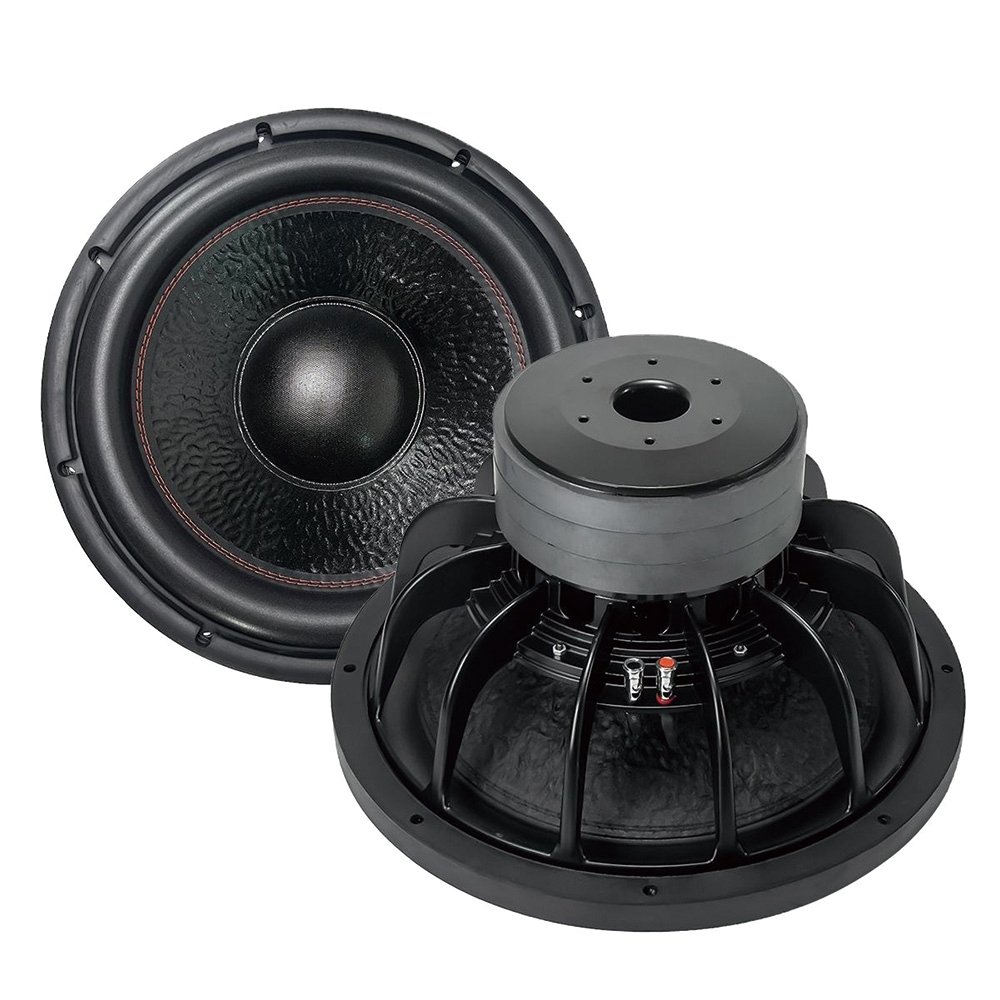
This deep-dive explores the sophisticated production equipment that forms the backbone of top-tier speaker manufacturing, moving beyond basic tools to the systems that ensure acoustic excellence, structural integrity, and consistency at scale.
H2: The Foundation: Design Validation & Acoustic Measurement Systems
Before a single component is cut, its performance is virtually perfected in the digital realm. The first and most critical suite of equipment isn’t found on the factory floor, but in the R&D lab.
Laser Doppler Vibrometers (LDVs) and Scanning Systems are non-contact instruments that measure the microscopic vibration of a driver’s diaphragm, surround, and dust cap. By mapping these vibrations, engineers can identify breakup modes, distortions, and resonances invisible to the eye. Companies like Polytec are industry standards, providing systems that create full 3D deflection maps of cones at various frequencies.
Advanced Acoustic Measurement Chambers. Beyond simple anechoic chambers, leading manufacturers use Klippel measurement systems (like the Klippel Near-field Scanner – NFS). This revolutionary equipment constructs a full 3D polar response map of a speaker in a standard room, effectively simulating an anechoic environment with unparalleled precision. It measures distortion, directivity, and off-axis response with speed and accuracy that traditional methods cannot match.
Finite Element Analysis (FEA) and Computational Fluid Dynamics (CFD) Software. While not physical “equipment,” the high-performance computing clusters running software like COMSOL Multiphysics または ANSYS are vital. They simulate magnetic fields in motor systems, mechanical stress on components, and airflow in ports, optimizing designs before costly physical prototyping.
Table 1: Key Design Validation Equipment & Their Functions
| Equipment/Software | Primary Function | Key Benefit | Example Brand/Model |
| :— | :— | :— | :— |
| Laser Doppler Vibrometer | Measures microscopic surface vibrations of drivers. | Identifies destructive resonances & breakup modes. | Polytec PSV-500 Scanning Vibrometer |
| Klippel NFS | Captures full 3D sound field & polar response. | Enables complete acoustic characterization in a non-anechoic space. | Klippel Near-field Scanner 3D |
| FEA/CFD Software Suite | Simulates physical stresses, magnetic fields, & airflow. | Reduces prototyping cycles; optimizes performance virtually. | ANSYS Maxwell & Mechanical |
H2: Precision Machining: CNC and Material Fabrication
The translation of digital designs into physical parts demands micron-level precision. This is the domain of advanced Computer Numerical Control (CNC) machinery.
Multi-Axis CNC Routers and Mills. High-end cabinet construction uses 5-axis CNC machines from brands like Biesse または Homag. These machines don’t just cut wood; they sculpt complex, curved baffles, precise driver recesses, and intricate port labyrinths from MDF, solid wood, aluminum, or advanced composites. The 5-axis capability allows for cutting complex shapes in a single setup, ensuring perfect alignment and surface finish.
CNC Lathes for Driver Components. The heart of a speaker—its motor assembly—requires extreme precision. CNC lathes craft the critical pole pieces, top plates, and voice coil formers from soft iron, aluminum, or Kapton. Tolerances here are often within ±0.01mm, as even a slight misalignment can induce magnetic field asymmetry and harmonic distortion.
Injection Molding & Composite Layup Systems. For drivers with specialized cones (e.g., B&W’s Continuum, KEF’s MAT), custom injection molding machines with sophisticated tooling create consistent, complex shapes. For carbon fiber, woven Kevlar, or glass-fiber cones, automated fiber placement systems or precision press-forming equipment ensure uniform material density and orientation, which is critical for stiffness and damping.
H2: The Assembly Line: Robotics, Adhesive Dispensing, and Laser Alignment
The assembly process in an advanced factory is a ballet of automation and skilled technician oversight.
Automated Adhesive Dispensing Robots. Applying the exact amount of adhesive to a voice coil, surround, or spider is critical. Too little, and the bond fails; too much, and it adds unwanted mass or stiffness. Programmable robots from companies like Nordson または Fisnar dispense epoxies and cyanoacrylates with pinpoint accuracy, ensuring consistent curing and performance across every unit.
Laser-Guided Alignment Systems. For coaxial drivers (like those from Tannoy or KEF) or complex multi-driver arrays, perfect physical alignment is non-negotiable. Laser alignment jigs ensure that the acoustic centers of drivers are positioned with sub-millimeter accuracy relative to the baffle and to each other, preserving time alignment and directivity.
Automated Magnet Assembly and Charging. Handling powerful neodymium magnets is dangerous and requires precision. Robotic pick-and-place arms assemble magnet structures, followed by fully automated magnetizing stations that charge the assembly with a controlled, powerful pulse. This ensures every driver’s motor has identical magnetic strength.
H2: Quality Assurance: End-of-Line Testing and “Golden Ear” Validation
After assembly, every single speaker undergoes rigorous final testing—a blend of automated systems and human listening.
Automated In-Circuit Testing (ICT) and Acoustic Testing. Each speaker is plugged into a test rig that performs a rapid succession of measurements:
- Impedance Sweep: Checks for proper Thiele/Small parameters and detects voice coil rubs or shorts.
- Frequency Response Snapshot: A quick near-field check against a digital tolerance window.
- Polarity & Rub & Buzz Test: A high-power, low-frequency signal checks for correct wiring and any mechanical defects.
These tests are often performed by systems like the Audio Precision APx555 B Series Analyzer, the industry benchmark for audio measurement.
The Anechoic Chamber Final Verification. A sampling of units from each batch is tested in the company’s primary anechoic chamber for full-spectrum frequency response, harmonic distortion (THD), and intermodulation distortion (IMD) verification against the master reference (“golden unit”) data.
The Human Element: The Listening Room. Despite all the technology, the final seal of approval often comes from seasoned listening panelists. In a dedicated, acoustically treated reference listening room, experts compare production samples to the reference standard, ensuring the measurements translate into musical truth. This subjective “golden ear” test remains an indispensable last step for brands like Focal, Bowers & Wilkins, and Revel.
H2: The Future: Industry 4.0 and Additive Manufacturing
The cutting edge of speaker manufacturing is being reshaped by two key trends:
AI-Powered Quality Control and Predictive Maintenance. Machine vision systems now inspect cones, surrounds, and solder joints for defects faster than any human. More importantly, AI algorithms analyze data from the entire production line—vibration from CNC machines, temperature from curing ovens, test results—to predict equipment failures before they happen and identify subtle correlations that affect final quality.
3D Printing for Prototyping and Complex Parts. Additive manufacturing is revolutionizing prototyping, allowing for overnight production of complex waveguides, baffle designs, and even driver parts. Companies like German Physiks use 3D printing for intricate internal structures. The technology is moving towards final-part production, enabling mass customization and geometries impossible with subtractive machining.
H2: Professional Q&A: Insights into High-End Manufacturing
Q1: What’s the single biggest technological difference between an advanced manufacturer and a mainstream one?
A: The depth of in-process measurement and data integration. While most factories do final QA, advanced manufacturers embed measurement systems like Klippel scanners and Laser Vibrometers directly into the R&D and early production phases. This creates a closed-loop where empirical data constantly refines the design and process, not just catches defects. The entire workflow is data-driven from simulation to final test.
Q2: Is there still a place for “hand-made” in advanced loudspeaker production?
A: Absolutely, but its role has evolved. The “hand-made” element is now focused on final assembly tuning and quality inspection—tasks where human dexterity and judgment excel. For example, the final attachment of a woven surround or the visual inspection of a finish is often done by skilled technicians. The heavy machining and precise measurement are automated, ensuring the artisan works with perfect components.
Q3: With so much automation, why do high-end speakers from different brands sound so distinctively different?
A: The equipment enables consistent execution of a design philosophy, but it doesn’t create the philosophy itself. The “sound” is determined by the original design choices—materials, topology, crossover philosophy, acoustic goals. The advanced equipment simply allows a brand to replicate its unique sonic signature with extreme fidelity across every single unit, eliminating production variance that could obscure their intended sound.
Q4: What real-time data point is most critical for monitoring driver production consistency?
A: The voice coil impedance and inductance profile during the winding and assembly process. Real-time monitoring systems can detect minute variations in wire tension, layer alignment, or former geometry. A deviation of just a few percentage points in inductance can alter the driver’s electrical damping and high-frequency response. Advanced lines use in-process sensors to feed this data back to the winding machines for instant correction.
Data and trends cited are based on industry analysis, manufacturer whitepapers (Klippel, Polytec, Audio Precision), and public disclosures from leading audio brands as of early 2024. Specific equipment models represent current industry standards.