
スピーカードライバー(電気信号を音に変換するコア部品)を評価する際に、最も重要でありながら誤解されている仕様の1つは power handling capacity. Often simplified to a single wattage figure, true power handling is a multifaceted characteristic determined by a complex interplay of thermal, mechanical, and electrical limits. For audio engineers, hobbyists, and consumers, understanding these determinants is key to selecting the right driver, building robust systems, and avoiding the all-too-common “magic smoke” of failure. This article delves into the engineering principles and material science that define just how much power a driver can handle.
The Core Triad: Thermal, Mechanical, and Electrical Limits
A driver’s power handling is not defined by one factor but by its weakest link within a triad of interrelated limits.
1. Thermal Power Handling (Voice Coil Heat Dissipation)
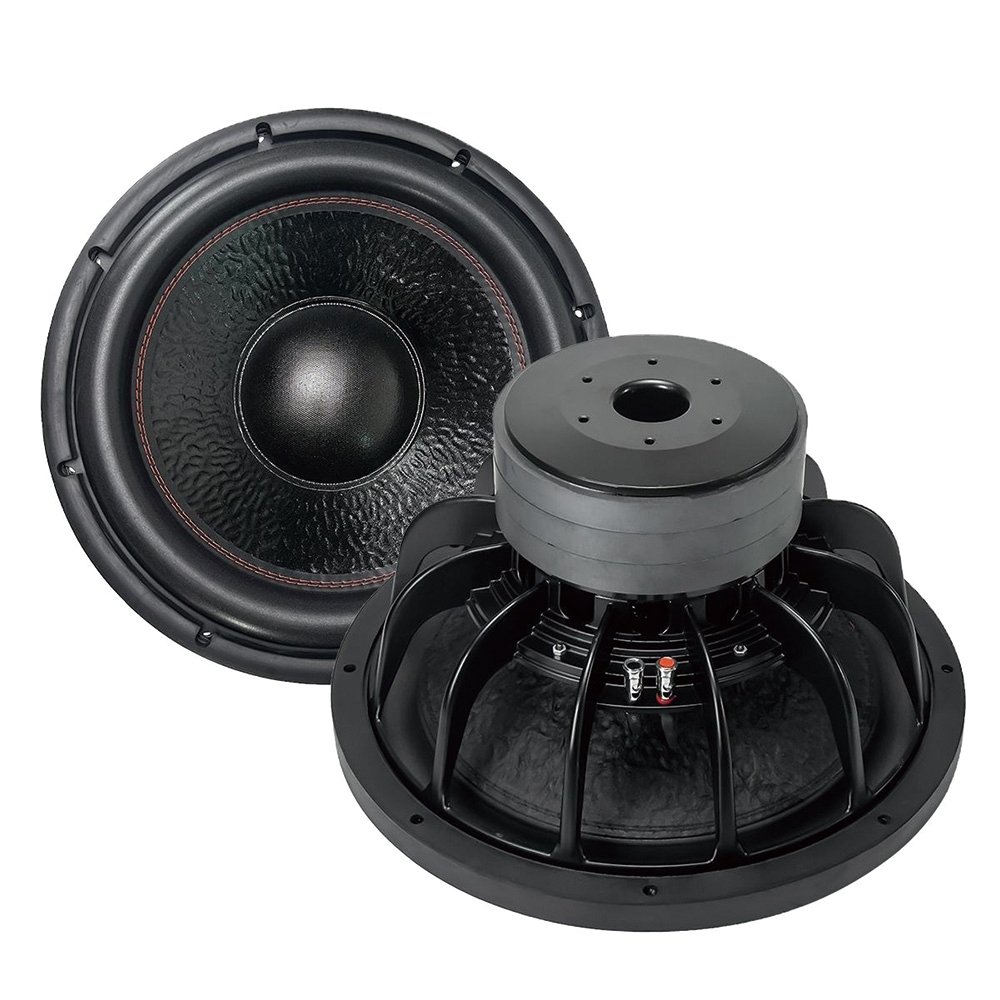
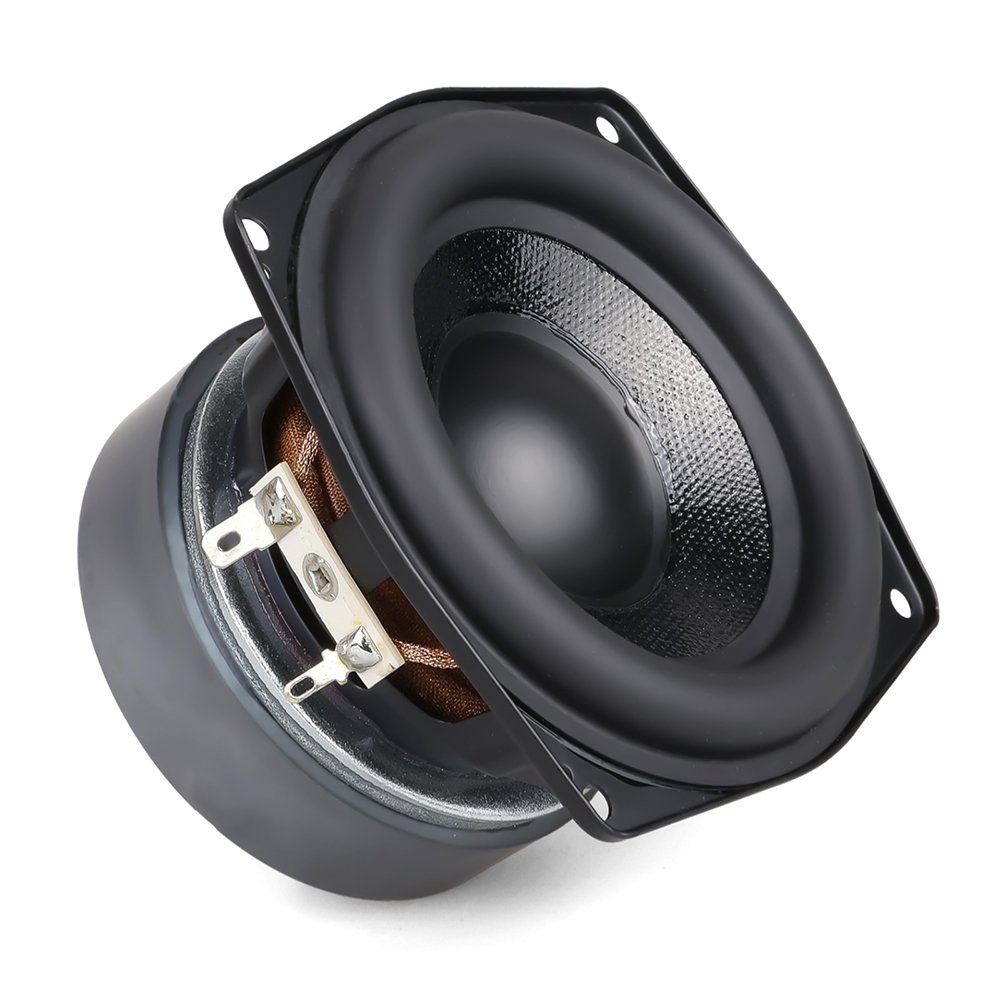
The primary and most common limit is thermal. When electrical power is delivered to the driver, a significant portion is converted into heat within the voice coil, not sound. The ボイスコイル, typically a wound wire (usually copper or aluminum) attached to the diaphragm, sits within a narrow magnetic gap. Its resistance generates heat (I²R losses). The driver’s ability to dissipate this heat determines its thermal power rating.
Key factors include:
- Voice Coil Materials and Design: Larger diameter voice coils (e.g., 3-inch vs. 1-inch) have greater surface area for heat dissipation. Materials matter: copper-clad aluminum wire (CCAW) offers a weight-to-conductivity advantage. High-temperature adhesives and formers (the bobbin the coil is wound on) are critical. Kapton, aluminum, and fiberglass formers withstand higher temperatures than paper.
- Magnetic Structure and Cooling: The motor structure itself acts as a heat sink. Vented pole pieces, aluminum shorting rings, and copper caps not only reduce distortion but also aid thermal conductivity. Advanced designs incorporate forced air cooling channels or heat sinks attached to the back plate.
- Ambient Environment: A driver mounted in a sealed, poorly ventilated enclosure will overheat far faster than one in a well-ventilated baffle.
2. Mechanical Power Handling (Suspension and Diaphragm Integrity)
Before heat becomes an issue, a driver can reach its mechanical limits. This is the maximum physical displacement (excursion) the components can withstand without damage.
Key factors include:
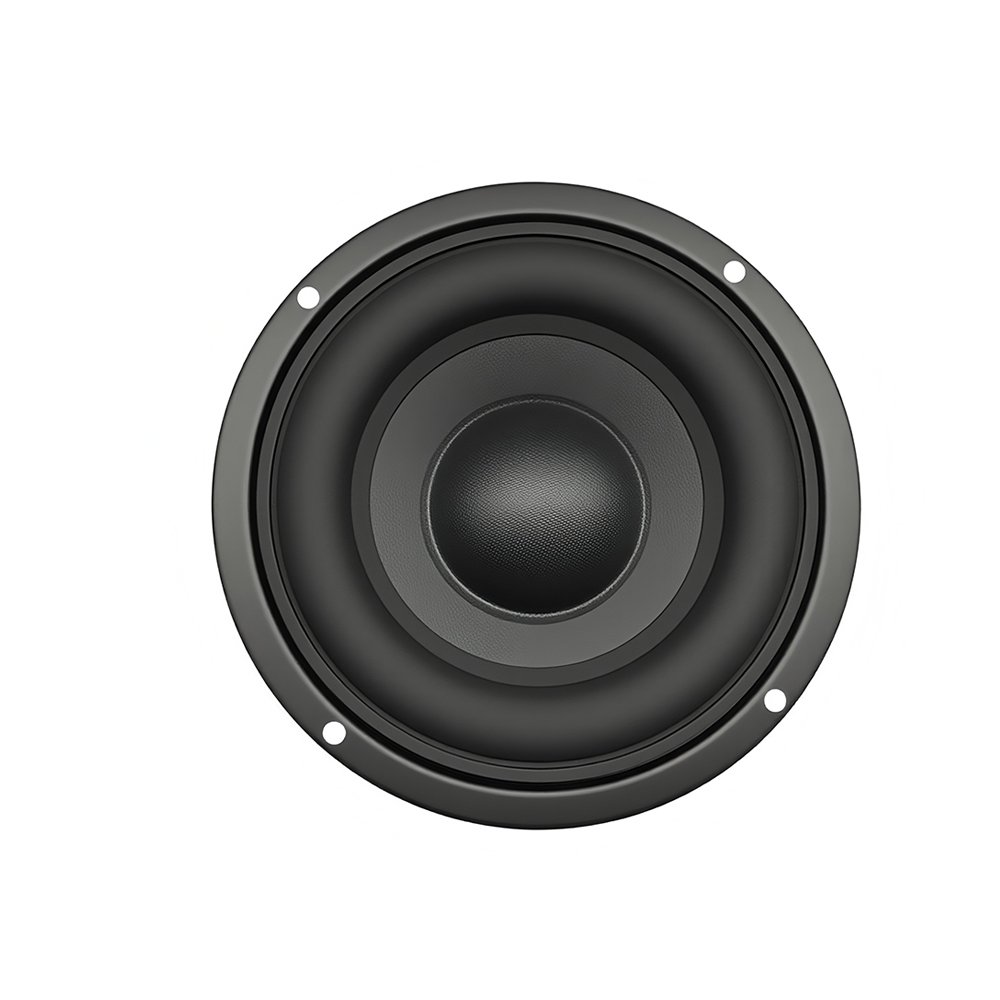
- Suspension System (Spider & Surround): The spider (inner suspension) and surround (outer suspension) must control and center the voice coil. Their stiffness, linearity, and material durability (treated cloth, rubber, foam, Nomex) set the bounds of safe travel. Over-excursion can tear the spider, detach the surround, or cause the voice coil to crash into the back plate.
- Diaphragm (Cone/Dome) Material and Design: The diaphragm must be rigid yet lightweight. Materials like polypropylene, carbon fiber, aluminum, magnesium, and ceramic each have different flexural strengths. A cone can deform, buckle, or tear under extreme force, especially at its connection to the voice coil.
3. Electrical Limits (Inductance and Impedance Dynamics)
The driver’s electrical characteristics under dynamic conditions create practical limits.
- Peak Current Handling: The voice coil wire has a finite current-carrying capacity before it fuses like a fuse wire. This sets an absolute peak power limit, often milliseconds before failure.
- Impedance Curve & Amplifier Matching: A driver’s impedance varies dramatically with frequency. A nominal 8-ohm driver might dip to 3 ohms at resonance. An amplifier struggling to deliver current into a low impedance can clip, producing high-frequency harmonics that can thermally damage a tweeter’s delicate coil.
Table 1: Comparative Analysis of Common Voice Coil & Diaphragm Materials
| Component | 材料 | Key Properties | Impact on Power Handling |
| :— | :— | :— | :— |
| Voice Coil Wire | Copper (Cu) | High conductivity, dense, excellent heat transfer. | Higher thermal capacity, but heavier. |
| | Aluminum (Al) | Lightweight, lower conductivity. | Reduces moving mass, but heats faster. |
| | Copper-Clad Al (CCAW) | Compromise: Al core with Cu cladding. | Good balance of weight and conductivity. |
| Voice Coil Former | Kapton | Lightweight, excellent high-temp stability. | Allows tighter gap, better heat resist. |
| | Aluminum | Superior heat conduction, rigid. | Excellent thermal dissipation, low mass. |
| | Paper/Phenolic | Cost-effective, limited temp tolerance. | Weakest link in thermal handling. |
| Diaphragm | Polypropylene | Damped, lightweight, good consistency. | Good for mid-range, flexes before fail. |
| | Aluminum/Metal Alloys | Very rigid, lightweight. | Excellent for control, can ring if not damped. |
| | Woven Composites (Carbon, Aramid) | Extremely high stiffness-to-weight. | Superior control at high excursion/power. |
The Critical Role of Enclosure Design and System Integration
A driver does not operate in a vacuum. Its power handling is profoundly influenced by the enclosure it is mounted in and the electronic system it is connected to.
Enclosure Type and Thermal Management:
A sealed (acoustic suspension) enclosure provides an air spring that helps control cone excursion, especially at low frequencies, thereby protecting the driver from mechanical bottoming-out. However, it can trap heat around the driver’s rear. A ported (bass reflex) enclosure relieves pressure on the driver near its tuning frequency, reducing excursion and thermal load for a given output in that band, but can leave the driver unprotected below the port tuning frequency. Bandpass and horn-loaded designs further alter the thermal and mechanical stresses on the driver, often allowing for higher efficiency but requiring very precise design to avoid overdrive in specific frequency bands.
Crossover Networks and Signal Bandwidth:
A well-designed crossover network is a guardian of driver health. It ensures high-frequency drivers (tweeters) do not receive destructive low-frequency energy, which can cause over-excursion in a component not designed for it. Similarly, sending high-power, high-frequency content to a subwoofer is wasteful and generates excess heat. The steepness (slope) and accuracy of the crossover filter are thus direct factors in effective power handling.
Amplifier Compatibility:
An underpowered amplifier driven into clipping is a leading cause of driver failure. Clipping creates a square wave, which is rich in high-frequency harmonics. These harmonics can drive excessive energy into tweeters and midrange drivers, leading to rapid thermal failure. A quality amplifier with adequate headroom (power reserves) and robust current delivery into complex loads is essential for safe operation at high levels.
Manufacturer Testing and Real-World Interpretation
How do manufacturers arrive at a single “Power Handling: 150W RMS” spec? It’s typically derived from standardized testing, most commonly the IEC 60268-5 または AES2-1984 standards. These involve feeding the driver with a band-limited pink noise signal (with a crest factor of 6 dB, resembling music) for extended periods (e.g., 8 hours for AES2) without exceeding a predefined allowable degradation (e.g., 10% increase in voice coil resistance or visual damage).
Crucial Distinctions for the User:
- RMS/Continuous/AES Power: The closest to a “real-world, long-term safe” rating. This is the thermal benchmark.
- Peak/Program Power: A short-duration (often milliseconds) maximum that the driver can survive without immediate mechanical or electrical failure. It is often double the RMS rating but is not a guideline for continuous operation.
- The “System” vs. “Driver” Rating: A complete speaker’s power handling is often lower than the sum of its drivers, limited by the crossover components and internal wiring.
Real-World Data Point (2023 Benchmark):
In independent stress tests of 12-inch subwoofer drivers, models employing dual spider suspensions, 4-inch diameter, high-temperature aluminum voice coils, and progressive-roll surrounds consistently sustained over 1000W of continuous AES power in properly tuned ported enclosures. In contrast, drivers with paper formers and standard suspensions showed thermal compression (a >1dB loss in output) at sustained loads above 500W under identical conditions.
Conclusion: A Holistic View for Smart Selection
The power handling capacity of a driver is a dynamic spec, not an absolute one. It is a synthesis of material innovation (better adhesives, composite diaphragms, advanced magnetic cooling), mechanical design (linear suspensions, controlled excursion), and intelligent system integration (proper enclosures, clean amplification, and protective crossovers).
For the end-user, this means looking beyond the biggest wattage number. Consider the application: a high-efficiency driver in a horn-loaded PA system might handle 200W with ease due to superb cooling and low excursion, while a home theater subwoofer driver rated for 500W might be operating at its limits in a compact sealed box. Always respect the thermal and mechanical limits, provide clean power with ample headroom, and understand that the manufacturer’s rating is a guideline under specific test conditions—your real-world mileage will depend on the totality of your system design.
専門家によるQ&A
Q1: Can I use an amplifier rated for higher wattage than my speaker’s RMS handling?
A: Yes, and it is often recommended. An amplifier with higher headroom is less likely to be driven into clipping, which is a major cause of driver damage. The key is to use the amplifier’s gain/volume control responsibly. Distortion from an overdriven, low-power amp is more dangerous than clean, unclipped signal from a high-power amp.
Q2: Why did my speaker driver fail at volumes well below its rated power?
A: This is commonly due to uncontrolled excursion (mechanical failure). If the driver was reproducing frequencies below its designed operating range (e.g., a bookshelf speaker without a high-pass filter receiving deep bass from a movie soundtrack), the cone can over-excursion and fail even with moderate amplifier power. Other causes include a defective or overpowered crossover, or an impedance dip that caused the amplifier to current-limit or clip.
Q3: What is “thermal compression,” and how does it relate to power handling?
A: Thermal compression is the progressive loss of sensitivity (output) as the voice coil heats up during high-power operation. As the coil’s resistance increases with temperature (copper has a positive temperature coefficient), the electrical damping factor drops, and efficiency decreases. This is a precursor to thermal failure. Drivers with better cooling (large coils, vented poles, etc.) exhibit less thermal compression, maintaining their output character more faithfully at high sustained levels.
Q4: How does the “RMS” power rating differ from “program” or “music” power?
A: RMS (Root Mean Square) is a mathematically derived measure of continuous power, aligned with standardized test tones (like pink noise). Program または Music power is a less formal, often inflated rating suggesting a driver can handle short-term peaks typical in music, usually estimated at about twice the RMS rating. For critical comparison and safe system design, always prioritize the Continuous (AES or IEC) RMS rating as your baseline for thermal capacity.