
Understanding the Basics: What is Speaker Impedance?
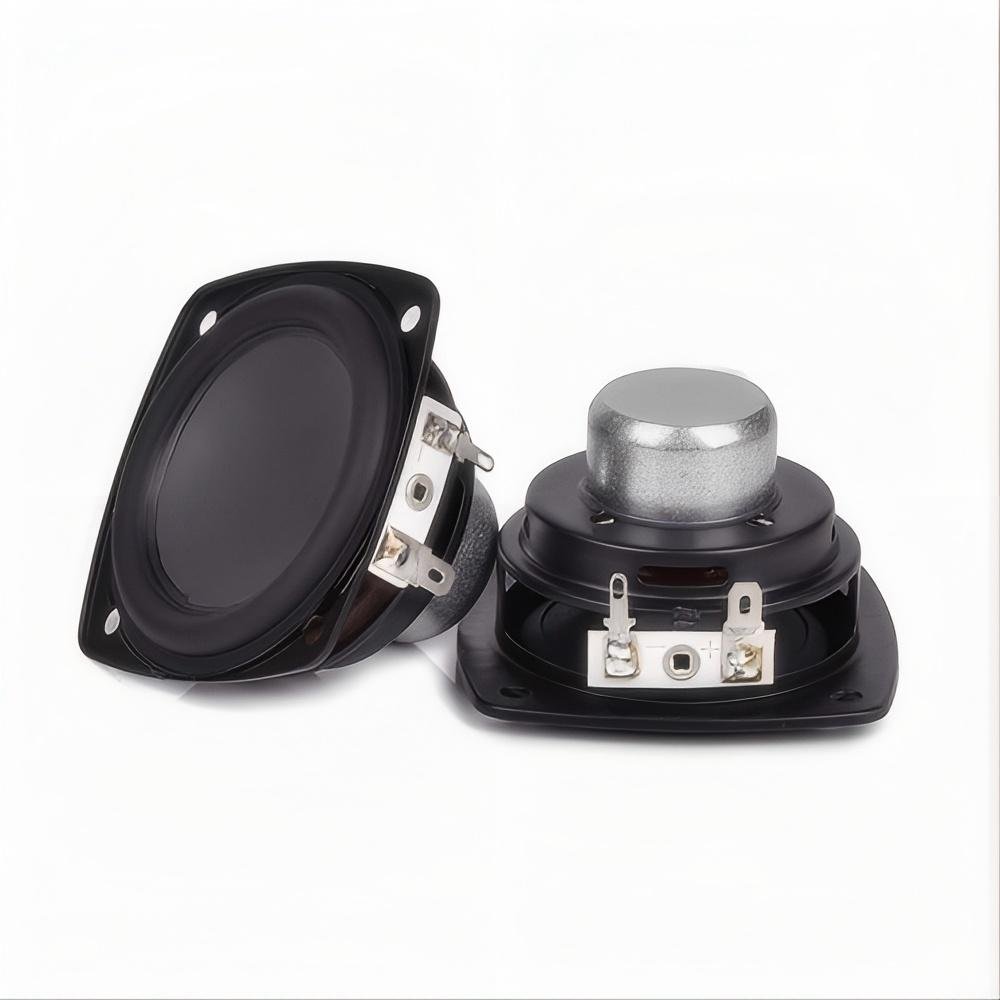
Speaker impedance, measured in ohms (Ω), is one of the most fundamental yet misunderstood specifications in audio. At its core, impedance represents the total opposition a speaker presents to the alternating current (AC) supplied by an amplifier. It’s not a simple fixed resistance like in a direct current (DC) circuit but a complex combination of DC resistance (Re), inductive reactance (from the voice coil), and capacitive reactance (influenced by the driver’s design and crossover).
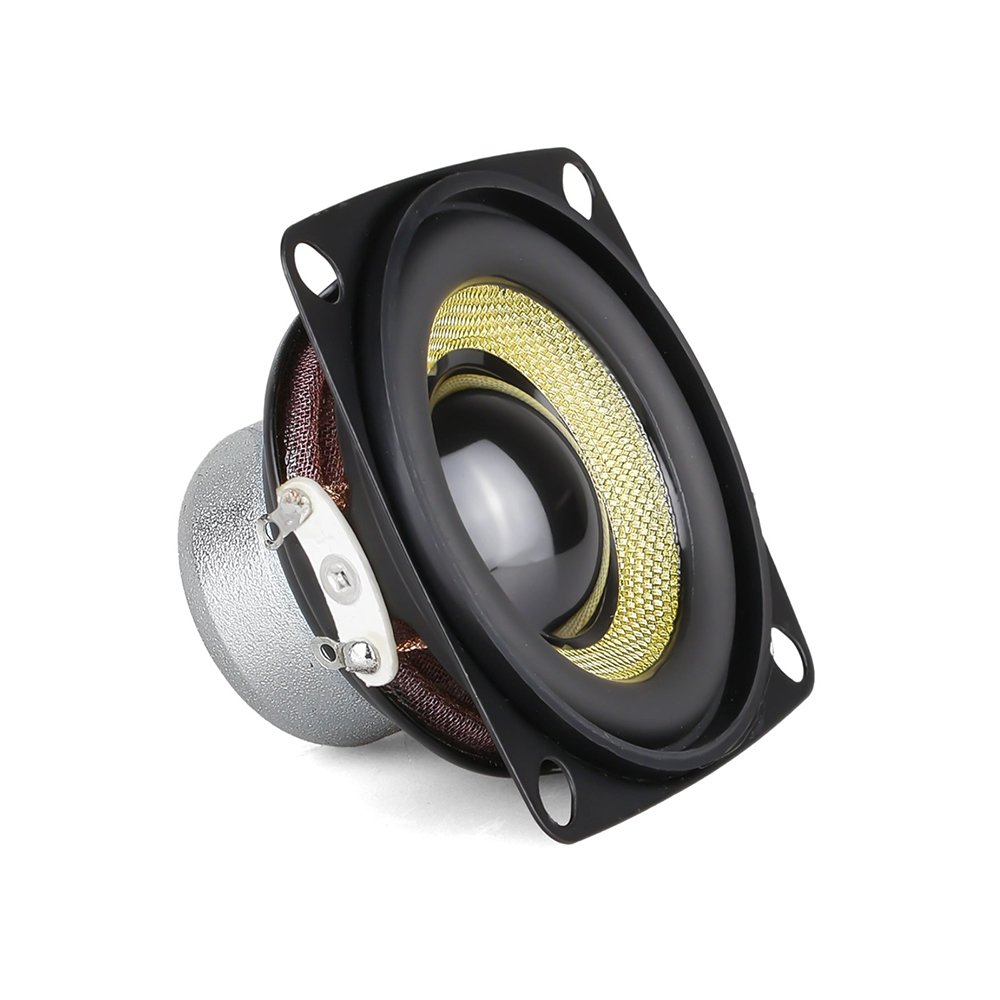
The nominal impedance you see on a speaker’s label—typically 4Ω, 6Ω, or 8Ω—is a simplified average. In reality, a speaker’s impedance curve is a dramatic landscape of peaks and valleys that varies significantly with frequency. A typical 8Ω bookshelf speaker might dip to 5Ω at its bass resonance, soar to 20Ω or higher in the midrange, and present a different load entirely in the treble. This dynamic nature is where the interaction with your amplifier begins and where sound quality can be won or lost.
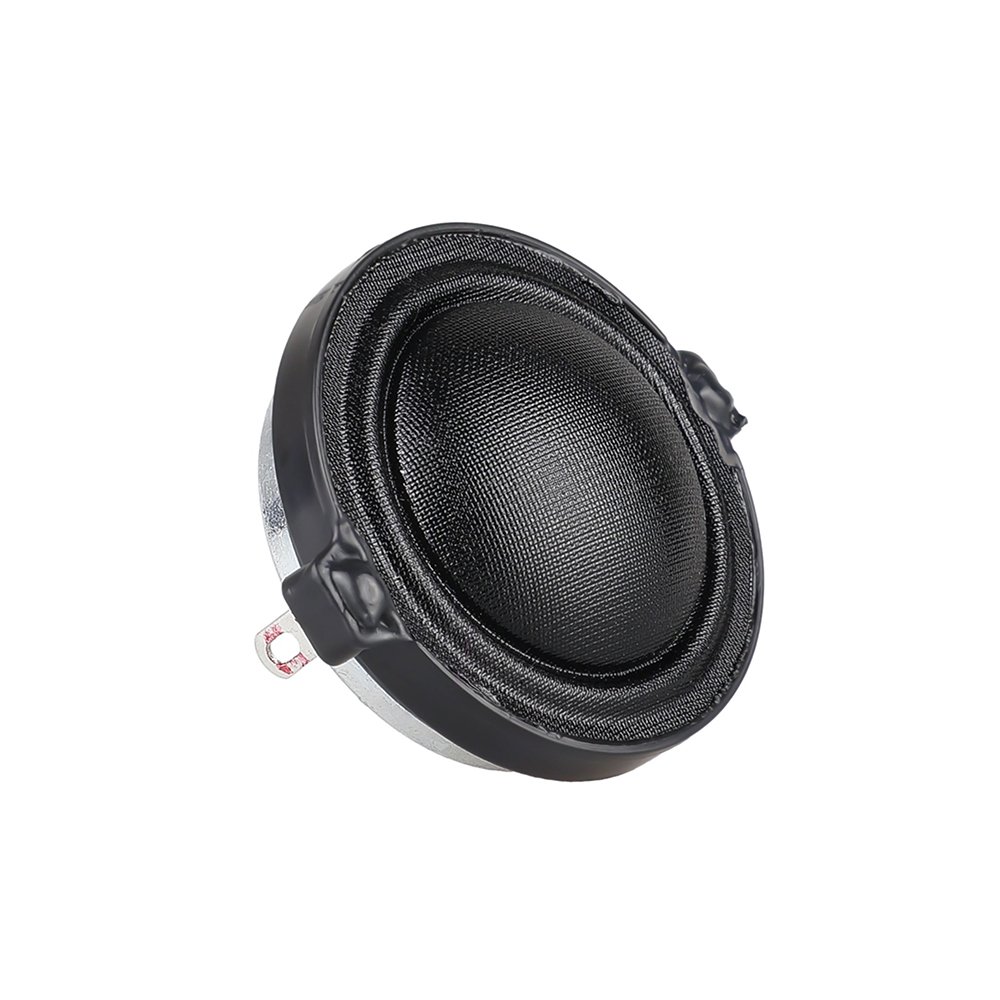
The creation of this impedance curve is a dance of physics. The voice coil’s inductance causes impedance to rise with frequency. The driver’s mechanical resonance in the bass causes a significant peak. The crossover network—the circuit that divides frequencies between drivers—introduces its own complex impedance interactions. Understanding this isn’t just academic; it’s the key to predicting how a speaker will partner with amplification and what the listener will ultimately hear.
The Critical Partnership: Impedance and Amplifier Interaction
A speaker doesn’t exist in isolation; it forms a circuit with your amplifier. This partnership dictates performance, stability, and ultimately, fidelity. Most amplifiers are designed as voltage sources, meaning they try to deliver a constant voltage regardless of load. According to Ohm’s Law (Current = Voltage / Impedance), when impedance halves, current demand doubles. This simple relationship has profound implications.
When a speaker’s impedance dips to a low value—a common scenario with complex crossovers or multiple drivers—the amplifier must deliver significantly more current to maintain the same output voltage. If the amplifier’s power supply or output stage cannot sustain this current, it leads to current clipping. This isn’t the typical voltage clipping (flat, distorted waveform) but a compressed, dynamically lifeless sound, often with increased harmonic distortion in the mid-bass, where many impedance dips occur. High-quality amplifiers with robust power supplies and high current capability are essential for driving low-impedance or complex-load speakers cleanly.
The damping factor, derived from the amplifier’s output impedance and the speaker’s impedance, is another critical interaction. A high damping factor (low amplifier output impedance relative to speaker impedance) gives the amplifier greater control over the speaker driver, especially the bass. It acts as an electromagnetic brake, reducing unwanted cone movement after the signal stops. This typically results in tighter, more articulate bass. However, some argue an excessively high damping factor can lead to an overdamped, “sterile” sound, which is why some tube amplifiers (with higher output impedance) are prized for their “loose” but musically pleasing bass character.
Table 1: Amplifier Output Power vs. Speaker Impedance (for a hypothetical high-current 100W @ 8Ω amplifier)
| Speaker Nominal Impedance | Theoretical Max Continuous Power | Key Amplifier Demand | Typical Sound Characteristic with Adequate Amplification |
|——————————-|————————————–|————————–|————————————————————-|
| 8Ω | 100 Watts | Higher Voltage, Lower Current | Stable, controlled, often with highest damping factor. |
| 4Ω | ~180-200 Watts | High Current Capability | Potentially more dynamic bass; stresses weak amplifiers. |
| 6Ω | ~130-150 Watts | Balanced Demand | A common “safe” compromise for mid-range AV receivers. |
The Direct Path to Your Ears: How Impedance Influences Sound Quality
The technical interactions between impedance and amplifier manifest in clearly audible ways. The most direct impact is on frequency response. Because a speaker’s impedance varies with frequency, and many amplifiers have a non-zero output impedance, the resulting voltage delivered to the driver is not flat. This is called frequency-dependent damping. For example, an impedance peak in the upper bass/lower midrange might receive less power from a tube amp, creating a perceived warmth or softness. A solid-state amp with very low output impedance will minimize this effect, striving for a more accurate response.
Distortion is heavily influenced by the impedance load. When an amplifier is asked for current it cannot provide, distortion rises sharply. This often happens precisely at the frequencies where impedance is lowest (e.g., 200-500Hz), adding grunge and congestion to vocals and fundamental instruments. Furthermore, the impedance curve interacts with the crossover’s transfer function. A poorly designed crossover can have its carefully tuned frequency response and driver blending completely altered by the amplifier’s output impedance, leading to tonal imbalances and phase issues.
Bass performance and transient response are perhaps the most noticeable areas. A speaker with a severe impedance dip in the bass (common in ported designs at tuning frequency) can suck an underpowered amplifier into current limitation, causing flabby, one-note bass. Conversely, a stable, high-current amplifier will maintain control. Transients—the sharp, leading edges of sounds like drum strikes—require massive instantaneous current. A high-impedance speaker (e.g., 16Ω) demands less current for these transients, which can be easier for some amplifiers to deliver cleanly, potentially improving dynamic “snap.”
Navigating the Real World: Measurements, Matching, and Myths
For the critical listener, understanding impedance means going beyond the nominal rating. A savvy approach involves:
- Consulting Impedance Curves: Reviews from sources like Stereophile or Audio Science Review often publish measured impedance curves. A relatively flat curve, even at a lower nominal impedance (like 4Ω), is often easier for an amplifier to drive than an 8Ω speaker with wild swings down to 3Ω.
- Amplifier Specifications: Pay attention to an amplifier’s power rating into both 8Ω and 4Ω loads. A high-quality, high-current design will typically double or nearly double its power as impedance halves (e.g., 100W @ 8Ω → 180W+ @ 4Ω). An amplifier that only increases power by 25-50% likely has a weaker power supply.
- The “Easy to Drive” Myth: An “8Ω compatible” speaker is not necessarily easy to drive. Many classic, high-sensitivity 8Ω speakers from the 70s and 80s have benign, high impedance curves. Many modern “8Ω” speakers, however, are designed for complex, multi-driver arrays and can have punishingly low impedance dips.
Bi-wiring and Impedance: A practical note on bi-wiring: while its sonic benefits are debated, electrically, bi-wiring can slightly alter the impedance presented to the amplifier at the crossover region by separating the return paths for the woofer and tweeter. The effect is usually minor, but it underscores how every connection in the chain matters.
The Wire Gauge Factor: Speaker cable resistance is in series with the amplifier’s output impedance. Using thin, long cables adds resistance, effectively raising the output impedance seen by the speaker. This can dull dynamics and exacerbate frequency response variations. For low-impedance speakers, use thicker gauge wire (e.g., 12AWG or lower) for runs over 10-15 feet.
Professional Q&A: Your Impedance Questions Answered
Q1: Is a lower impedance speaker (4Ω) inherently better or worse than a higher one (8Ω)?
A: Neither is inherently better. A 4Ω design allows the amplifier to deliver more power (theoretically double) for a given voltage, which can be beneficial for achieving high output levels. However, it demands more current, placing greater stress on the amplifier’s power supply. The shape of the impedance curve is far more important than the nominal number. A well-designed 4Ω speaker with a smooth curve can be easier to drive than a poorly designed 8Ω speaker with a dip to 2Ω.
Q2: Can I connect 4Ω speakers to an amplifier rated only for 8Ω?
A: It is not recommended and can be risky. The amplifier will attempt to deliver double the current, which can cause it to overheat, trigger protection circuits, or in extreme cases, cause permanent damage to the output stages. If you must, ensure the amplifier has robust ventilation, avoid high volume levels, and never run it into clipping. Modern AV receivers often have protection circuits that may shut down the unit.
Q3: My AV receiver says it’s rated for 6Ω. Can I safely use 4Ω speakers?
A: Many modern AV receivers have a “6Ω” or “4-6Ω” mode, which typically inserts a current-limiting resistor or alters gain structure to protect the unit. While this may allow you to physically connect the speakers, it often severely compromises dynamic power delivery and can degrade sound quality. For serious listening with 4Ω speakers, a dedicated, high-current external power amplifier is the best solution.
Q4: Do tube amplifiers require specific speaker impedance?
A: Yes, this is critical. Tube amplifiers, particularly those using output transformers, are designed to see a specific optimal load impedance (e.g., 4Ω, 8Ω, 16Ω taps). Using the incorrect tap mismatch can cause reflected impedance issues, increasing distortion, reducing power output, and potentially damaging the output transformers. Always use the correct tap for your speaker’s nominal impedance, and note that tube amps, with their higher output impedance, will interact more audibly with the speaker’s impedance curve.
Q5: How does impedance affect multi-speaker setups, like in home theater?
A: This is a major concern. When you connect multiple speakers in parallel to a single amplifier channel (e.g., for multi-room audio), the total impedance drops dramatically. Two 8Ω speakers in parallel present a 4Ω load; four present a 2Ω load—a near-short circuit for most amplifiers. Always calculate the total load: 1 / Total Impedance = 1/Ω₁ + 1/Ω₂ + … Use an impedance-matching selector switch or separate amplification for multi-speaker setups to avoid damaging your equipment.