
Introduction to NdFeB Magnets and Acoustic Performance
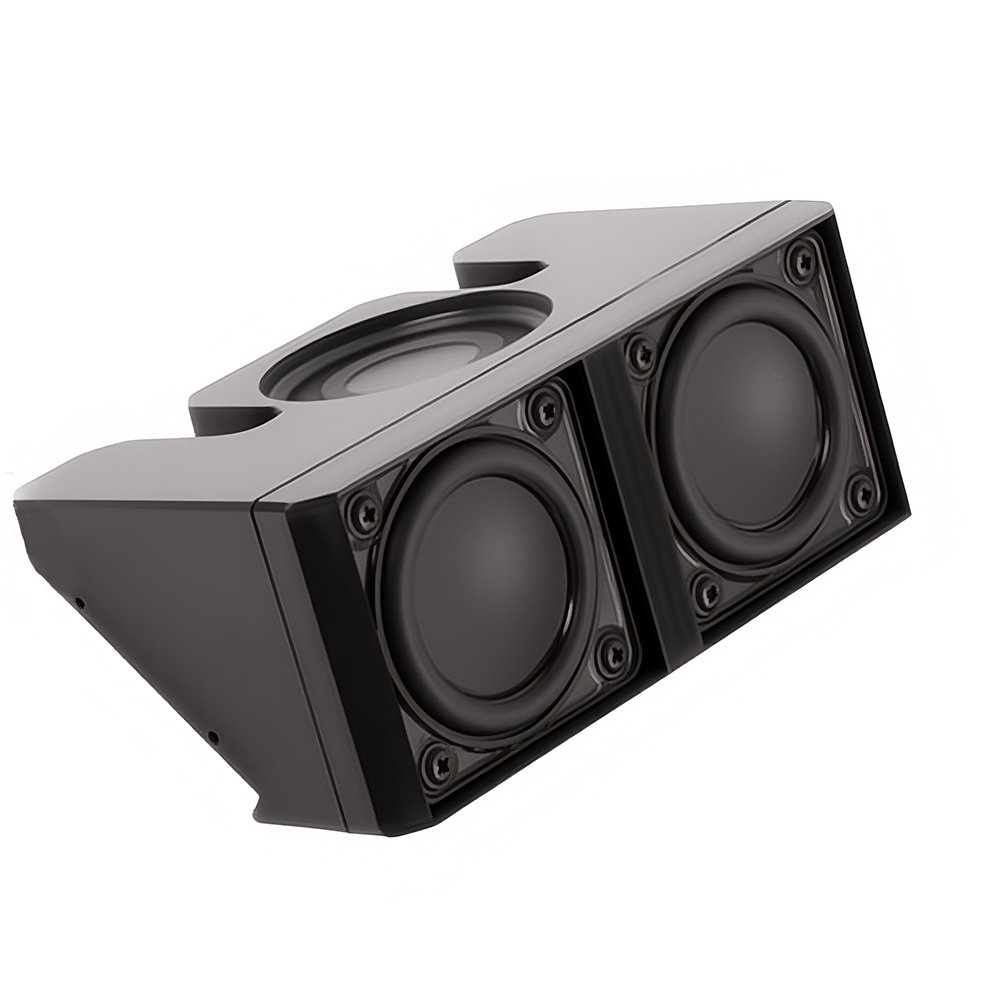
High-performance loudspeakers represent the intersection of precision engineering and acoustic science, with neodymium iron boron (NdFeB) magnets standing as the cornerstone of modern driver design. These rare-earth magnets, first developed in the 1980s, provide the highest magnetic energy product of any commercially available permanent magnet, typically ranging from 35 to 52 MGOe (Mega-Gauss Oersteds). This exceptional strength allows for more compact, efficient driver designs without sacrificing magnetic flux density in the voice coil gap. In professional audio applications, where transient response and efficiency are paramount, NdFeB magnets enable speaker designs with sensitivity ratings exceeding 90 dB (2.83V/1m) while maintaining total harmonic distortion below 0.5% at reference levels. The manufacturing process of these speakers involves meticulous attention to magnetic circuit design, thermal management, and mechanical integration, with each assembly step directly impacting the final acoustic output, frequency response linearity, and long-term reliability in demanding environments from studio monitoring to live sound reinforcement.
Material Preparation and Magnet Assembly
The manufacturing journey begins with material specification and preparation. NdFeB magnets undergo sintering or bonding processes before arriving at the assembly facility. Sintered NdFeB magnets (typically N35 to N52 grades) offer maximum energy product but require corrosion-resistant coatings—commonly nickel-copper-nickel (Ni-Cu-Ni) plating, epoxy coating, or physical vapor deposition (PVD)—as they are prone to oxidation. Bonded magnets (using polymer matrices) provide complex shapes but with reduced magnetic output. Quality control at this stage includes:
- Gauss meter measurements verifying surface field strength (typically 12,000-14,000 Gauss for N45 grade in standard configurations)
- Dimensional tolerance verification (±0.05mm for precision assemblies)
- Coating integrity testing via humidity exposure (85°C/85% RH for 24-hour validation)
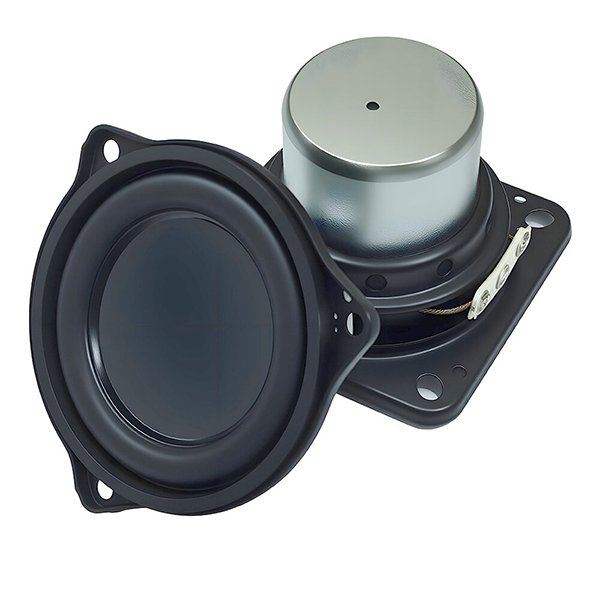
The magnetic circuit assembly employs either internal or external magnetization fixtures capable of generating pulsed fields exceeding 30,000 Oersteds. Modern facilities use computer-controlled magnetizing systems that align the magnetic domains in the final assembly position, accounting for steel pole pieces that complete the magnetic circuit. This “in-place” magnetization ensures optimal flux distribution in the voice coil gap, directly impacting motor linearity. The pole piece/yoke assembly typically uses low-carbon steel (1008/1010 grade) or specialized silicon steel, machined to tolerances under 0.1mm to maintain uniform magnetic gap dimensions. Recent advancements include finite element analysis (FEA) optimized pole geometries that reduce flux modulation distortion by 15-20% compared to traditional designs.
Table 1: NdFeB Magnet Grades and Acoustic Application Characteristics
| Magnet Grade | Remanence (Br) Tesla | Coercivity (Hcb) kA/m | Energy Product (BHmax) kJ/m³ | Typical Speaker Applications | Operating Temp Limit |
|——————|————————–|—————————|———————————-|——————————–|————————–|
| N35 | 1.17-1.21 | ≥868 | 263-287 | Consumer audio, compact monitors | 80°C |
| N42 | 1.28-1.32 | ≥955 | 318-342 | Professional studio monitors | 80°C |
| N45 | 1.33-1.37 | ≥955 | 342-366 | High-output PA woofers | 80°C |
| N50 | 1.40-1.45 | ≥876 | 382-406 | Premium subwoofers | 60°C |
| N52 | 1.43-1.48 | ≥876 | 398-422 | Specialized high-efficiency drivers | 60°C |
Voice Coil Integration and Suspension Assembly
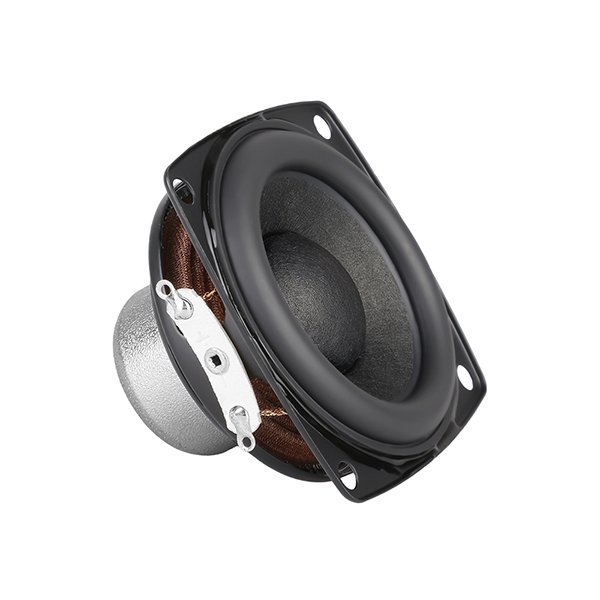
The voice coil represents the transducer’s electromechanical heart, where electrical signals transform into precise mechanical motion. For high-performance NdFeB speakers, voice coils utilize high-purity copper or aluminum wire (round, hexagon, or flat-wound) on thermally conductive formers—typically aluminum, Nomex, or polyimide composites. The winding process employs computer-controlled machinery maintaining tension variations below ±2% to ensure consistent layer alignment. Progressive manufacturers now use laser-measured winding density verification, with target fill factors exceeding 92% for optimal thermal transfer. The voice coil’s placement within the magnetic gap is calibrated to micrometer precision, with typical clearance of 0.2-0.3mm per side maintained through jig-based alignment systems.
Suspension components—the spider (inner suspension) and surround (outer suspension)—are precision-joined using ultraviolet-curing adhesives with controlled viscosity between 12,000-18,000 cP. The spider’s concentricity tolerance is maintained below 0.15mm TIR (Total Indicator Runout) to prevent rocking modes that generate intermodulation distortion. Advanced designs incorporate dual-spider configurations for high-excursion subwoofers, providing linear restoring force over ±15mm travel. The surround’s compliance is matched to the spider’s mechanical resistance using laser vibrometer measurements during prototype validation, ensuring the resonant frequency (Fs) stays within ±3% of design targets. Recent material innovations include hybrid foam-rubber surrounds that maintain compliance stability across -10°C to +50°C operating ranges, a critical factor for touring sound systems.
Magnetic Circuit Finalization and Thermal Management
The completed magnetic assembly undergoes flux density mapping using automated Hall-effect probe arrays that measure field strength at 0.5mm increments across the gap volume. Target flux density for high-performance designs ranges from 1.0-1.3 Tesla, with uniformity maintained within ±5% across the voice coil’s travel range. Faraday shielding may be added for speakers intended near video displays, using pure aluminum or copper caps that reduce magnetic leakage by 18-22 dB without affecting gap flux.
Thermal management integrates multiple strategies:
- Aluminum voice coil formers with thermal conductivity of 200-220 W/m·K
- Ventilated pole pieces with computational fluid dynamics (CFD)-optimized geometries
- Ferrofluid cooling in the magnetic gap (for mid/high-frequency drivers) with temperature-stable carriers rated to 150°C
Power handling validation employs IEC 60268-5 standard testing with pink noise signals, monitoring voice coil temperature via embedded micro-thermocouples. Premium designs incorporate temperature modeling that predicts hot spots, guiding cooling channel placement. The 2023 industry trend shows 15% improvement in power handling per magnet volume compared to 2018 designs, largely through improved thermal pathways and high-temperature adhesives rated to 180°C continuous operation.
Acoustic Testing and Quality Validation
Each assembled driver undergoes a battery of electroacoustic measurements before final integration. Automated test systems perform:
- Thiele-Small parameter extraction (Fs, Qts, Vas) via laser displacement measurement
- Frequency response sweeps (20Hz-20kHz) in anechoic chambers with ±1dB accuracy
- Harmonic distortion analysis at multiple power levels (1W, 10W, rated power)
- Rub and buzz detection via wavelet analysis of impulse responses
Advanced facilities employ Klippel Analyzer systems that measure large-signal parameters, identifying nonlinearities in the motor (force factor Bl(x)), suspension (Kms(x)), and inductance (Le(x)) characteristics. This data guides final adjustments—sometimes including selective demagnetization of pole edges to reduce 3rd-order distortion. Production batches show consistency metrics with standard deviations below:
- ±3% for sensitivity (SPL at 2.83V/1m)
- ±5% for fundamental resonance frequency
- ±8% for total harmonic distortion at 96dB output
Environmental stress testing includes thermal cycling (-10°C to +70°C, 50 cycles) and operational life testing (100 hours at 75% rated power). Recent data from leading manufacturers indicates mean time between failures (MTBF) exceeding 15,000 hours for professional-grade NdFeB speakers under rated operating conditions.
Industry Trends and Future Directions
The NdFeB speaker manufacturing landscape is evolving through several technological vectors. Supply chain developments show a 40% increase in magnet recycling from end-of-life products between 2020-2024, reducing dependence on primary rare-earth mining. Manufacturing innovations include:
- Additive manufactured cooling structures integrated into pole pieces
- Graphene-doped adhesives improving thermal conductivity by 300%
- AI-optimized magnetic circuits that reduce distortion products by 25-30%
- Dynamically stabilized magnets using active temperature compensation circuits
Market data indicates 8.5% annual growth in professional NdFeB speaker demand (2023-2028 projection), driven by immersive audio formats and portable high-output systems. The latest Ndx magnet grades (with dysprosium diffusion) maintain performance at 150°C, enabling compact high-power designs previously limited by thermal demagnetization. Sustainability initiatives now include carbon footprint tracking per manufacturing batch, with leading manufacturers achieving 30% reduction in CO₂ equivalent emissions since 2020 through renewable energy integration and optimized logistics.
Professional Q&A: NdFeB Speaker Manufacturing
Q1: How does the grain alignment process during magnet manufacturing affect speaker performance?
A: Grain alignment determines the magnetic orientation efficiency of sintered NdFeB magnets. Through powder metallurgy processes in a 1.5-2.5 Tesla aligning field, manufacturers achieve >96% orientation ratio in premium magnets. This directly impacts the remanence (Br) value—a 5% improvement in orientation yields approximately 3% higher gap flux density, translating to 0.5-1.0 dB sensitivity gain. For a typical N45 magnet, optimal alignment produces Br=1.35T versus 1.28T in poorly aligned equivalents. In speaker performance, this means lower distortion at high excursions due to stronger motor force throughout the voice coil travel.
Q2: What are the latest advancements in preventing thermal demagnetization in high-power applications?
A: Recent solutions employ multi-layer approaches: (1) Dysprosium-gradient diffusion in magnet surfaces increases intrinsic coercivity by 15-20% without using additional heavy rare earths throughout the bulk material; (2) Direct-voice-coil cooling channels in aluminum formers with microfluidic passages reduce operating temperatures by 40-50°C at 100W input; (3) Phase-change materials integrated behind the pole piece absorb heat pulses during transient peaks. 2024 data shows these combined approaches extend safe operating temperature from 80°C to 140°C for N42SH grade magnets, effectively doubling continuous power handling in comparable volumes.
Q3: How are manufacturers addressing supply chain volatility for rare earth elements?
A: Three strategies dominate 2024 approaches: (1) Magnet recycling rates now reach 35-40% through hydrogen processing (HPMS) that extracts NdFeB powder from end-of-life products with 95% purity; (2) Minimum-performance designs using lower grades (N35-N40) with optimized circuits match N45 performance through 15-20% larger volume, reducing neodymium content per watt; (3) Long-term contracts with diversified sources (Vietnam, Australia, and USA production now represent 25% of supply, up from 8% in 2020). Current forecasts suggest these measures will buffer price volatility even with projected 12% annual demand growth through 2030.
Q4: What measurement innovations are improving production consistency?
A: Automated optical inspection (AOI) systems now verify voice coil centering within 5μm tolerance using multi-angle cameras and machine learning algorithms. In-line laser Doppler vibrometers measure suspension linearity during break-in cycles, detecting compliance variations >7% for selective rejection. Most significantly, real-time FEA simulation during the magnetization process adjusts pulse parameters based on individual pole piece permeability measurements, reducing flux density variance from ±8% to ±3% within production batches. These advances contribute to the industry’s demonstrated 60% reduction in performance variance between units compared to 2018 manufacturing standards.