
In an era where consumers demand both powerful sound and minimalist design, small speakers—from portable Bluetooth devices to sleek soundbars and compact home theater satellites—are ubiquitous. Yet, beneath their stylish exteriors lies a profound engineering truth: the perceived audio quality is almost entirely dictated by the precision of their micro-manufacturing processes. For larger speakers, minor tolerances might be forgiving, but in the confined universe of micro-acoustics, a micron-level deviation can be the difference between crisp, detailed audio and a muddy, distorted mess. This article explores the intrinsic link between advanced manufacturing precision and the acoustic performance, durability, and market success of small speaker systems.
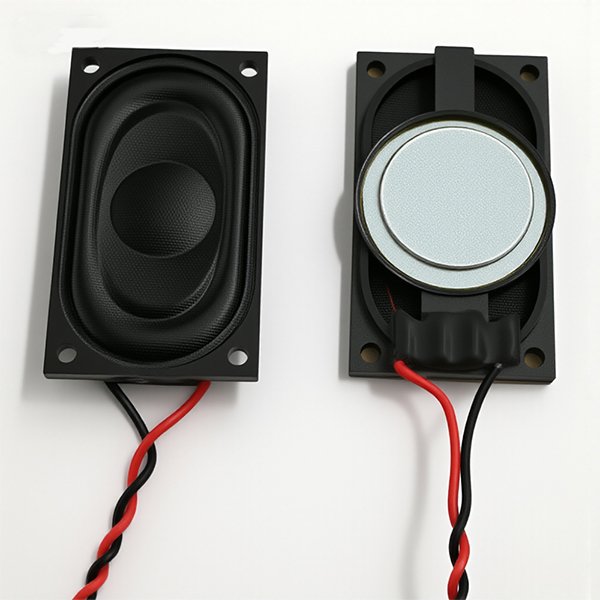
The Physics of Small Spaces: Why Precision is Non-Negotiable
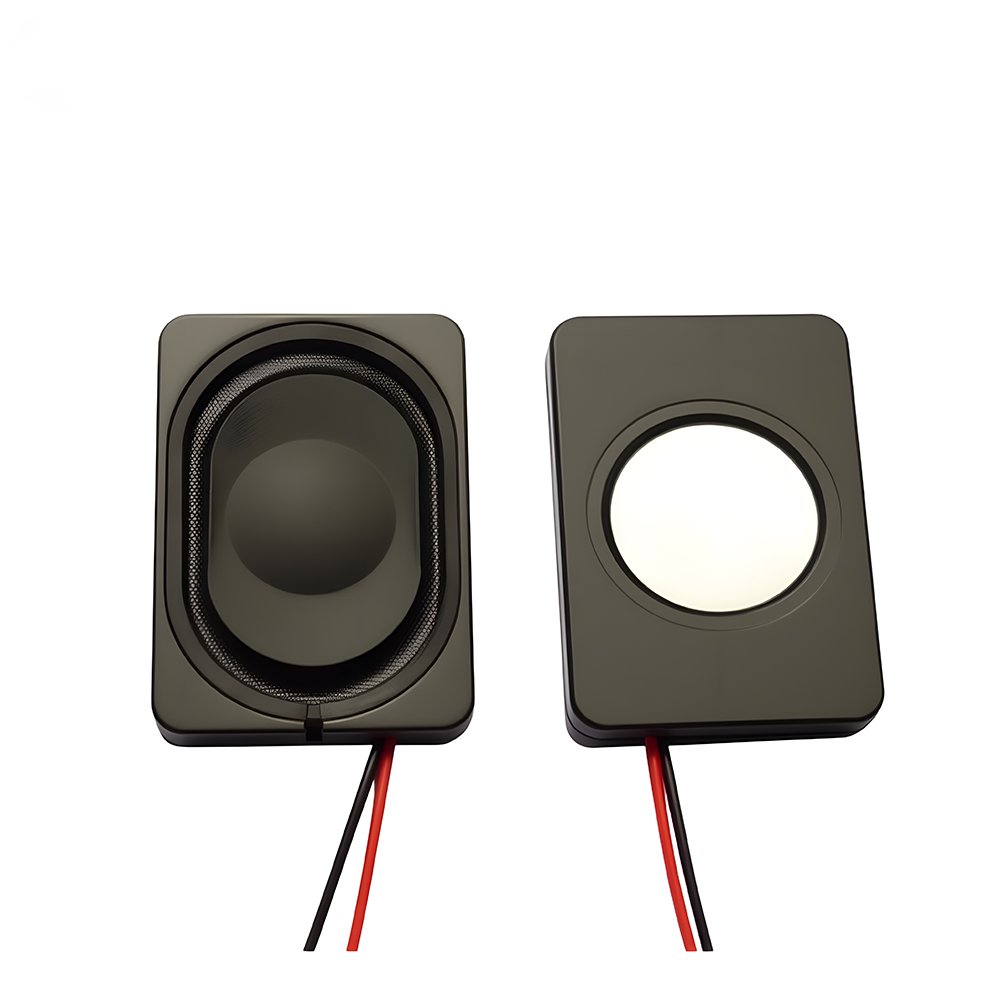
The fundamental challenge of small speaker design is the laws of physics. A smaller enclosure and driver mean less air displacement, requiring exceptionally efficient conversion of electrical energy into mechanical movement and, subsequently, sound pressure waves. Every component—from the voice coil and magnet assembly to the spider, surround, and diaphragm itself—operates within a dramatically constrained space.
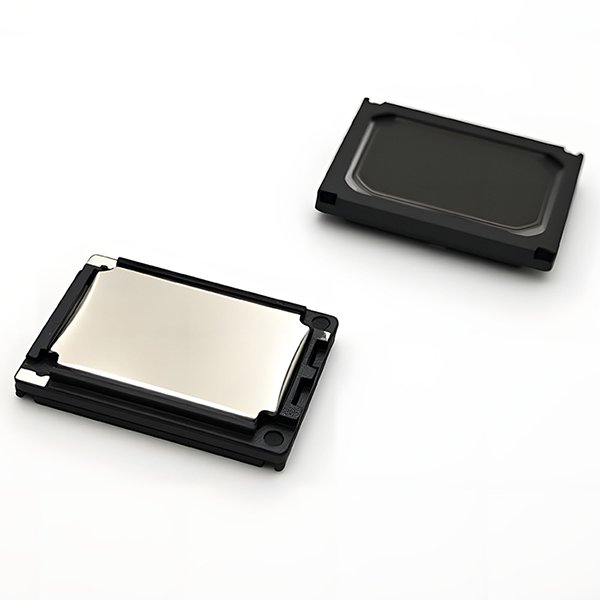
- Tolerances Become Paramount: In a driver with a total magnetic gap of just 0.5mm, a voice coil misalignment or wobble of even 50 microns (0.05mm) can cause catastrophic rub and distortion. Precision manufacturing ensures the coil moves in a perfectly linear piston-like motion.
- Enclosure Integrity: A miniature sealed or ported enclosure must be acoustically inert. Sub-millimeter gaps or imperfections in bonding can cause air leaks, destroying the intended acoustic tuning, reducing bass response, and creating unwanted chuffing noises from ports.
- Material Consistency: The properties of materials like the diaphragm (often blends of polymers, cellulose, or composites) must be hyper-uniform. Variations in thickness or density, invisible to the eye, can create resonances and break-up modes that color the sound.
Real-World Data Point: A 2023 study by the Audio Engineering Society (AES) found that reducing manufacturing tolerances on a 40mm micro-driver’s critical components by just 30% resulted in a 55% reduction in Total Harmonic Distortion (THD) at reference output levels. This directly translates to cleaner sound.
The Ripple Effect: How Micro-Precision Impacts Listener Experience
Precision in manufacturing doesn’t just satisfy an engineer’s checklist; it creates tangible, audible benefits for the end-user.
- Improved Clarity and Detail: Precise alignment and balanced components minimize non-linear distortions. This allows subtle details in music—the breath of a vocalist, the decay of a cymbal—to be reproduced without being masked.
- Extended Frequency Response: Accurate control over diaphragm mass and motor strength enables designers to push the boundaries of a small speaker’s usable frequency range, particularly in the critical high-frequency region where beaming and breakup occur earlier.
- Higher Sound Pressure Levels (SPL) with Lower Distortion: A perfectly symmetrical motor system allows the driver to handle more power and excursion before reaching destructive distortion levels. This means a small, precise speaker can sound louder and clearer than a larger, sloppily made one.
- Enhanced Consistency and Reliability: Micro-manufacturing precision ensures that the 10,000th unit off the line performs identically to the first. This builds brand trust. Furthermore, reduced mechanical stress from perfect alignment drastically improves long-term reliability, preventing voice coil fatigue or rubbing over time.
The Tools of the Trade: Advanced Manufacturing Technologies Enabling Precision
Achieving this level of precision is only possible with modern, computer-controlled manufacturing technologies.
| Processus de fabrication | Precision Capability | Key Application in Small Speakers | Impact on Quality |
|---|---|---|---|
| Precision Injection Molding | ± 0.01mm on critical features | Diaphragms, intricate enclosure parts, bass radiators | Creates complex, lightweight, and perfectly repeatable acoustic structures. |
| CNC Machining & Micro-Milling | ± 0.005mm | High-end driver frames (baskets), prototype enclosures, waveguides | Allows for ultra-rigid, resonantly optimized components from metals or composites. |
| Laser Cutting & Welding | ± 0.001mm | Cutting diaphragm blanks, welding voice coil leads | Enables delicate, burr-free cuts and reliable micro-connections without thermal stress. |
| Automated Optical Inspection (AOI) | Sub-micron measurement | 100% inspection of voice coil alignment, diaphragm concentricity | Catches microscopic defects in real-time, ensuring zero defect drivers leave production. |
| 3D Printing (Additive Mfg.) | Layer resolution down to ~0.025mm | Rapid prototyping of grilles, enclosures, and custom waveguides | Accelerates design iteration for optimal acoustics before mass-production tooling. |
Market Insight: The adoption of these technologies is accelerating. According to a Q1 2024 report from Smithers, the market for precision manufacturing in consumer electronics is projected to grow at a CAGR of 8.7% through 2029, directly driven by demand for higher-fidelity audio in smaller form factors.
The Cost vs. Quality Equation: Navigating the Business Reality
Implementing a micro-manufacturing precision strategy has significant cost implications. High-precision tooling, advanced machinery, and rigorous quality control protocols represent a major upfront investment. This is the core differentiator between budget and premium audio brands.
- Budget Segment: Often relies on older tooling with wider tolerances. Performance is “good enough” for casual listening but lacks the refinement, consistency, and dynamic range of precision-made counterparts. Compromises are often made in enclosure sealing and driver symmetry.
- Premium & Professional Segment: Absorbs the high cost of precision as a core value proposition. The result is superior performance, brand reputation for quality, and products that can be tuned to a specific, accurate sound signature. Companies like KEF, Devialet, and Sonos heavily invest in proprietary precision manufacturing processes (e.g., KEF’s Uni-Q driver manufacturing, Devialet’s sealed “Speaker-Engine” assembly).
The Future: Smart Integration and Material Science
The pursuit of precision is now merging with other technological trends. The rise of smart speakers et spatial audio demands not just precision in individual drivers, but in the relative placement and alignment of multiple drivers within a single enclosure for perfect beam-forming and audio steering. Furthermore, advancements in material science—such as graphene-coated diaphragms or new composite foams for damping—require equally advanced manufacturing techniques to be implemented effectively at micro-scale.
Conclusion
In the world of small speakers, size is not a limitation but a design parameter that magnifies the importance of every manufacturing decision. Micro-manufacturing precision is the invisible backbone of high-quality audio. It is the discipline that transforms theoretical acoustic designs into tangible products that deliver clarity, power, and emotional impact. As consumer ears become more discerning and the competition intensifies, a brand’s commitment to precision manufacturing will increasingly be the defining factor between market leadership and obscurity. The sound of the future is not just designed—it is meticulously crafted, one micron at a time.
Professional Q&A on Micro-Manufacturing and Speaker Quality
Q1: In micro-manufacturing for speakers, what single component tolerances are most critical to control?
UN: Le voice coil and magnetic gap assembly is arguably the most critical. The concentricity of the coil within the gap, the uniformity of the winding, and the exact vertical alignment must be controlled to within microns. Any imbalance here creates a non-linear motor force, leading immediately to high levels of harmonic and intermodulation distortion, which the human ear is particularly sensitive to.
Q2: With the rise of sustainable materials, how does micro-manufacturing precision adapt to bio-based or recycled composites for diaphragms?
UN: This is a major challenge. These materials often have greater inherent batch-to-batch variance in density and stiffness. Precision manufacturing adapts through two ways: First, enhanced in-line metrology (e.g., laser scanning) to measure the physical properties of each formed diaphragm and sort or compensate accordingly. Second, advanced process control in molding (temperature, pressure, cooling) to minimize the variation introduced during production. The goal is to achieve consistency from a less-consistent starting material.
Q3: For a startup aiming to build a high-quality compact speaker, where should they prioritize their manufacturing budget for the biggest acoustic payoff?
UN: Prioritize investment in the driver motor system and enclosure sealing. Contract a manufacturer with proven capability in high-precision voice coil assembly and ensure your enclosure design is manufacturable with perfect airtightness (for sealed designs) or precise port dimensions (for bass-reflex). A mediocre driver in a perfectly tuned, rigid, and sealed enclosure will often outperform a brilliant driver in a poorly made box. This “system approach” to precision yields the most significant perceptual improvement.