
In the world of audio engineering and product design, the speaker housing is far more than a simple container for drivers. It is a critical acoustic component, a brand statement, and a key differentiator in a crowded market. For OEMs, integrators, and brands launching premium audio products, understanding the vast landscape of speaker housing customization is essential. This deep dive explores the materials, manufacturing processes, acoustic enhancements, and finishing options that transform a standard enclosure into a tailor-made audio solution.
The Foundation: Material Selection and Advanced Manufacturing
The choice of material for a speaker housing is the first and most impactful customization decision. It dictates the enclosure’s resonant properties, durability, weight, and ultimately, its sonic character.
Traditional & Advanced Materials:
- Medium-Density Fibreboard (MDF): The industry stalwart for decades. Its high density and low resonance make it an excellent, cost-effective choice for minimizing unwanted cabinet vibrations. Customization here involves specifying thickness (e.g., 18mm for bookshelf, 25mm+ for subwoofers), using moisture-resistant variants for outdoor applications, and implementing complex internal bracing patterns.
- High-Density Polymers & Composites: For portable, Bluetooth, and outdoor speakers, advanced polymers like ABS, polycarbonate blends, and fiber-reinforced composites are king. Customization involves injection molding, which allows for incredibly complex, seamless geometries, integrated handles, waterproof seals (IP67), and uniform wall thickness for consistent performance.
- Aluminum & Die-Cast Alloys: Favored in high-end studio monitors and luxury audio gear for their rigid, non-resonant properties. CNC-machined aluminum housings offer supreme precision, excellent heat dissipation for amplifiers, and a premium aesthetic. The customization process includes intricate milling of waveguides, heat fins, and unique faceted designs.
- Solid Hardwoods & Laminates: For the boutique and hi-fi market, solid woods like oak, walnut, or bamboo offer distinct acoustics and unparalleled aesthetics. Customization is highly artisanal, focusing on joinery, veneer matching, and finish. For a more accessible option, high-pressure laminates (HPLs) or real wood veneers over MDF provide vast aesthetic flexibility.
Manufacturing Techniques:
The material choice often dictates the manufacturing method, each with its own customizability.
- CNC Routing & Machining: Ideal for MDF, wood, and aluminum. Allows for rapid prototyping and production of complex internal baffles, precise driver cutouts, and intricate port designs.
- Injection Molding: The go-to for high-volume polymer housings. While the initial mold cost is high, it enables features impossible with other methods: integrated grille mounts, seamless two-tone coloring, and living hinges.
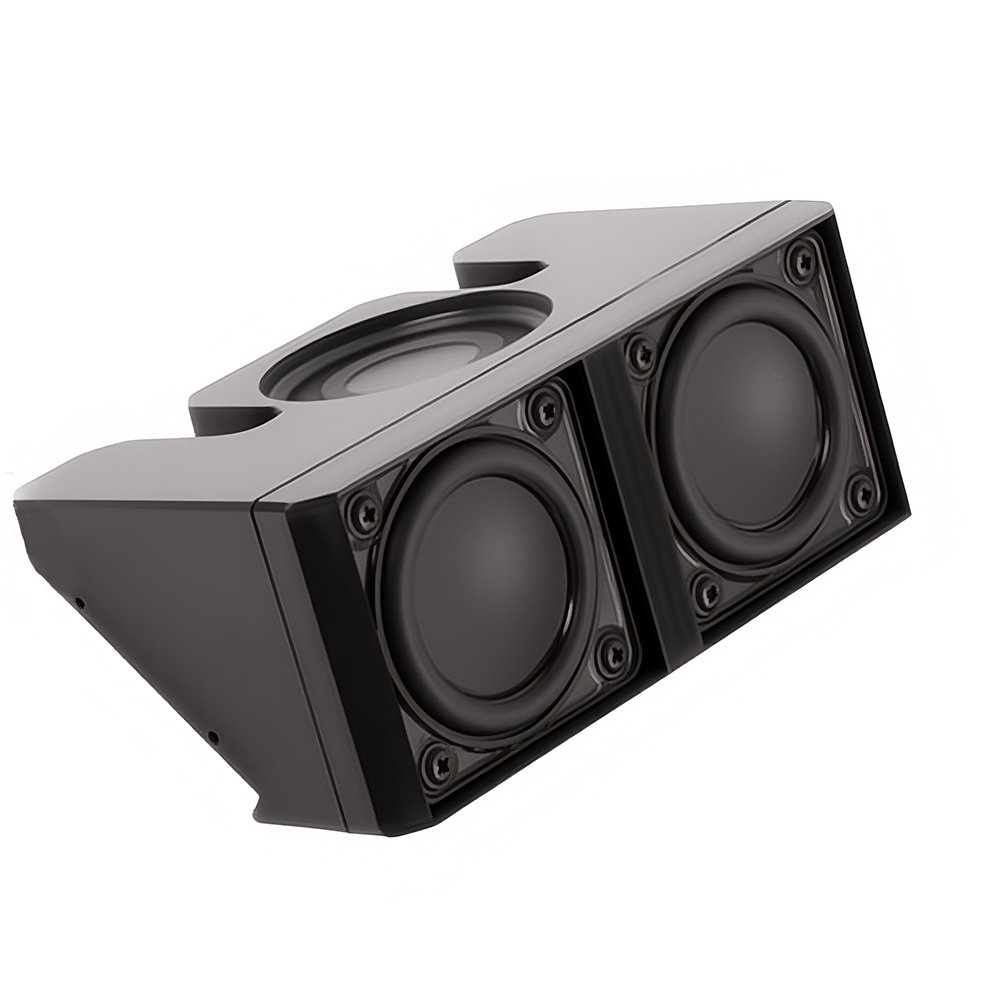
- 3D Printing (Additive Manufacturing): Revolutionizing prototyping and low-volume production. It allows for the creation of organic, acoustically optimized shapes with internal damping structures that would be impossible to machine or mold.
Table: Comparison of Primary Speaker Housing Materials
| Material | Best For | Acoustic Benefit | Customization Strength | Relative Cost |
| :— | :— | :— | :— | :— |
| MDF | Hi-Fi, Home Theater, Studio | High damping, low resonance | Complex internal bracing, finish versatility | Low to Medium |
| Injection-Molded Polymer | Portable, Outdoor, Bluetooth | Durability, sealed designs | All-in-one complex geometry, color integration | High (tooling), Low (unit) |
| CNC Aluminum | Premium Studio, Luxury Audio | Extreme rigidity, no resonance | Precision machining, integrated cooling | High |
| Solid Wood | Boutique Hi-Fi, Art Pieces | Warm, natural resonance | Unique grain patterns, artisan joinery | Very High |
Acoustic Engineering and Performance Enhancements
Beyond the shell, true customization lies in the acoustic engineering integrated into the housing. These features are what separate a “box” from a tuned instrument.
Internal Architecture and Damping: A hollow box resonates. A custom housing is meticulously fortified. This includes:
- Strategic Bracing: Cross-braces, windowpane braces, and asymmetric ribbing are designed using Finite Element Analysis (FEA) to break up large panel areas and raise the enclosure’s resonant frequency beyond the operating range of the driver.
- Damping Materials: The application of bituminous sheets, constrained layer damping (CLD) mats, or acoustic foam liners is a science. Customization specifies coverage area, material density, and placement to absorb specific back-wave frequencies without “over-deadening” the enclosure.
- Port Tuning (Bass-Reflex Designs): For ported speakers, the port is a tuned resonator. Customization involves precisely calculating the port’s diameter, length, and internal shape (flared ends reduce chuffing noise) to achieve a target low-frequency extension and alignment (e.g., Chebyshev, Butterworth).
Integrated Waveguides and Baffle Design: The front baffle profoundly impacts sound dispersion.
- Waveguides: Custom-molded or machined waveguides around the tweeter control directivity, ensuring a smooth transition to the midrange driver and improving off-axis frequency response. This is critical for consistent sound in both near-field (studio) and wide listening areas.
- Baffle Geometry: A slanted or stepped baffle can time-align drivers. Rounded edges or chamfers reduce diffraction, the smearing of sound caused by sharp edges, leading to improved stereo imaging and clarity.
Driver Integration and Sealing: How the driver mates with the cabinet is critical.
- Gasketing and Sealing: Custom closed-cell foam gaskets ensure an airtight seal between the driver frame and the baffle, preventing air leaks that destroy bass response.
- Mounting Systems: Custom designs may use isolation mounting to mechanically decouple the driver from the baffle, preventing vibration transfer to the enclosure itself.
Aesthetics, Finishing, and Functional Integration
The exterior finish is the most visible form of customization, serving both branding and functional purposes.
Surface Treatments and Coatinsg:
- Paints and Powder Coats: From matte black for studio neutrality to vibrant automotive-grade colors for consumer products. Textured powders can provide both a unique feel and scratch resistance. Custom metallics and pearlescent finishes are also possible.
- Veneers and Wraps: Real wood veneers (book-matched for symmetry), vinyl wraps with printed patterns, or even fabric wraps (like on many pro-audio speakers) offer vast aesthetic range.
- Direct Printing: UV-cured digital printing allows for full-color graphics, wood grain simulations, or brand logos to be printed directly onto a prepared MDF or polymer surface.
Grilles and Input Panels:
- Acoustically Transparent Grilles: Custom fabric grilles with custom logos, magnetic attachment systems for a clean look, or perforated metal grilles with specific open-area percentages to minimally impact sound.
- Integrated Connectivity: Custom rear panels with specific layouts for binding posts, XLR inputs, DSP control knobs, LED status indicators, or network ports. These can be customized for specific amplifier modules or system integrations.
The Customization Journey: From Prototype to Production
Navigating the customization process requires a clear partnership with a skilled manufacturer.
- Define Acoustic and Design Goals: Is the priority maximum SPL, deepest bass, widest soundstage, or ultimate portability? This guides all material and engineering choices.
- Collaborative Design and Prototyping: Using CAD software and rapid prototyping (3D printing, CNC mock-ups), the design is iterated. This phase includes initial acoustic testing with prototype drivers.
- Tooling and Pre-Production: For molded parts, the high-cost steel mold is fabricated. For CNC or woodwork, jigs and fixtures are created. A small pre-production run validates the manufacturing process and final acoustics.
- Quality Assurance and Compliance: Custom housings must be tested for structural integrity, aesthetic consistency, and relevant safety/regulatory standards (e.g., RoHS, REACH).
Market Context (2024): The global market for advanced speaker components, including custom enclosures, is projected to grow at a CAGR of over 6.5% through 2027, driven by demand in smart home devices, portable audio, and high-fidelity personal audio. A notable trend is the use of bio-based composites and recycled materials as a key customization request for eco-conscious brands, adding a sustainable dimension to the spec sheet.
Professional Q&A on Speaker Housing Customization
Q: What is the typical lead time for a fully custom speaker housing project, from design to first production units?
A: Lead times vary dramatically by complexity. A simple CNC/MDF design with standard finishes can take 8-12 weeks for prototyping and first production. A complex injection-molded housing requires 14-20+ weeks, as the mold fabrication alone can take 8-12 weeks. Always factor in time for multiple prototype revisions and acoustic testing for optimal results.
Q: How does adding internal bracing affect the internal volume, and how do you compensate for it?
A: Internal bracing does consume valuable internal air volume, which is crucial for tuning the bass response. Good design minimizes this displacement. However, the volume lost must be accounted for in the initial design calculations. The final prototype is always measured for net internal volume, and port tuning or driver parameters may be slightly adjusted to compensate, ensuring the final acoustic target is met.
Q: For outdoor speakers, what specific customization options are critical for durability?
A: Beyond standard IP ratings, key customizations include: specifying UV-stabilized polymers or coatings to prevent fading; using marine-grade stainless steel or aluminum for all hardware; ensuring all seams are sealed with permanent gaskets (not just glue); and implementing integrated drainage channels in port and baffle designs to prevent water pooling. The grille fabric must also be explicitly rated for outdoor use.
Q: What is the minimum order quantity (MOQ) typically required for custom injection-molded housings?
A: MOQs are a function of the high mold cost ($10,000 – $50,000+). Manufacturers typically require an MOQ of 5,000 to 10,000 units per housing half to make the project economically viable. For lower volumes, consider using standardized mold “bases” with custom inserts, or explore high-strength 3D printing (like SLS) for production runs in the hundreds.
Q: Can you integrate passive radiators as effectively as ports in a custom design?
A: Absolutely. Passive radiators (PRs) offer a major customization advantage, especially for compact, sealed wireless speakers. They provide bass enhancement without the potential for port noise (“chuffing”) and allow for a fully sealed front baffle (improving ingress protection). Customization involves precisely tuning the PR’s mass (often with added weights) and suspension to complement the active driver, a process that requires careful measurement and iteration during prototyping.