
The Foundation: Material Science and Acoustic Engineering
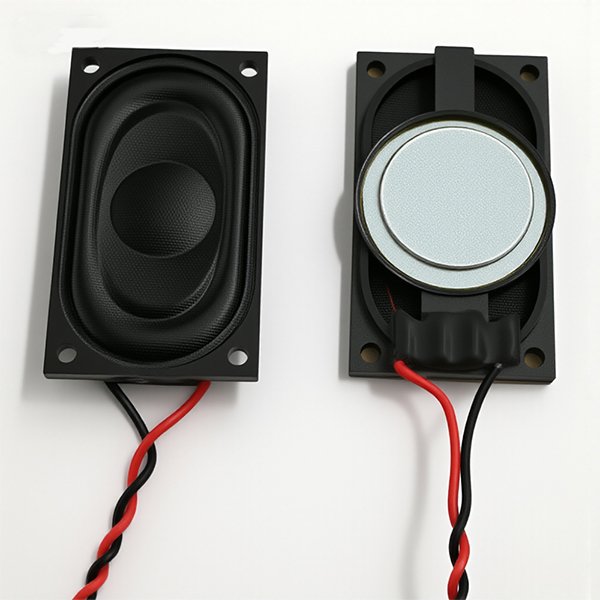
Premium Bluetooth speaker manufacturing begins where consumer-grade products end—with rigorous material selection and acoustic precision. Leading manufacturers like Bowers & Wilkins, Bang & Olufsen, and Sonos don’t simply assemble components; they engineer sound ecosystems. The enclosure material alone can alter frequency response by up to 3dB. High-density polymers, hand-finished aluminum, and sustainably sourced woods aren’t just aesthetic choices—they’re calculated decisions to reduce resonance. According to 2024 acoustic engineering reports, premium speakers dedicate 40-60% of production costs to enclosure and driver materials alone, compared to 15-25% for mass-market equivalents.
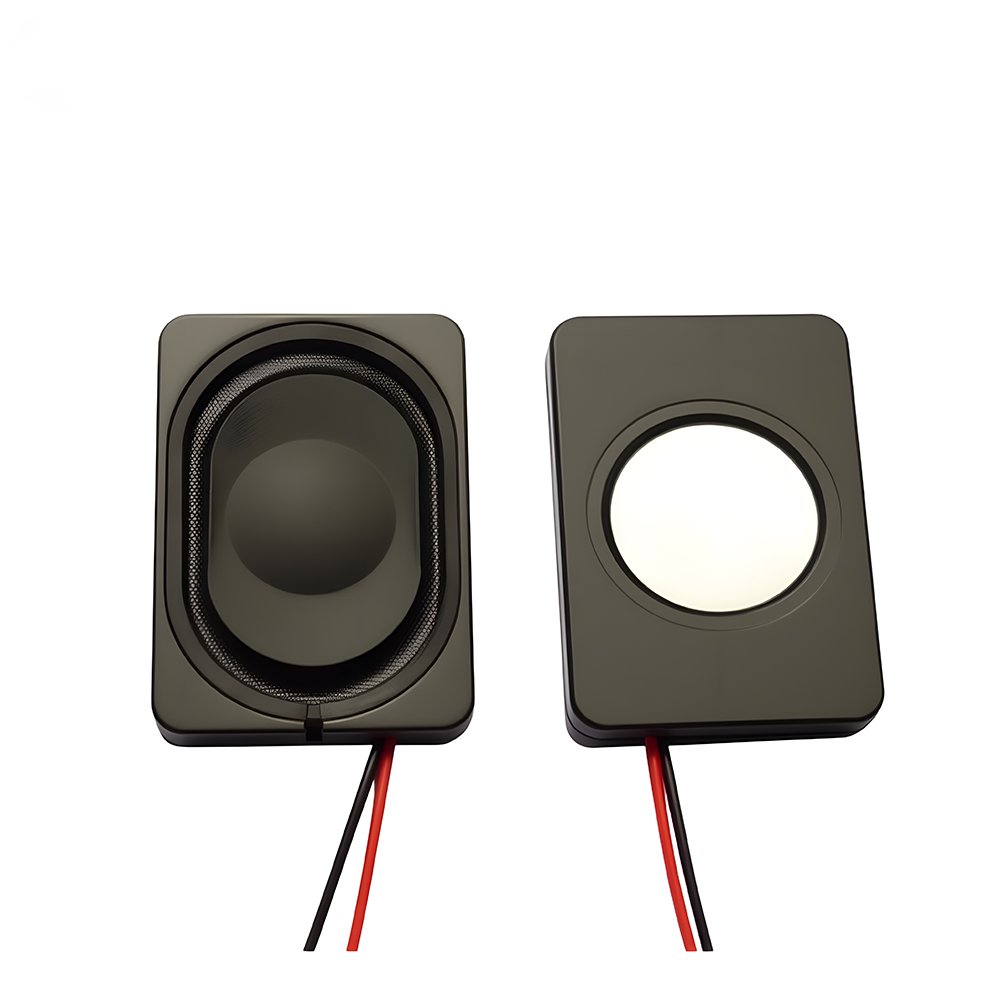
The heart of any speaker—the driver—undergoes extraordinary scrutiny. While consumer speakers might use generic paper or plastic cones, premium units employ patented composites. Kevlar-reinforced cellulose (used by B&W since the 1970s), aerated polypropylene, and even diamond-coated aluminum tweeters aren’t marketing gimmicks but solutions to breakup modes that distort sound above certain frequencies. Recent advancements include graphene-infused diaphragms, offering stiffness-to-weight ratios 200% superior to traditional materials while maintaining precise damping characteristics.
Table 1: Material Comparison in Driver Manufacturing
| Component | Mass-Market Standard | Premium Standard | Acoustic Impact |
|—————|————————–|———————–|———————|
| Woofer Cone | Pressed paper/plastic | Composite laminates (Kevlar/carbon fiber) | Reduced breakup distortion >2kHz |
| Tweeter Dome | Silk/soft polymer | Aluminum/beryllium with diamond coating | Extended high-frequency response to 40kHz+ |
| Magnet Assembly | Ferrite standard | Neodymium with copper caps | 300% higher magnetic flux density |
| Suspension | Synthetic rubber | Double-layer butyl rubber | Linearity at extreme excursions |
| Voice Coil | Aluminum round wire | Copper-clad aluminum flat wire | 15% better heat dissipation |
Wireless Fidelity: Beyond Basic Bluetooth Connectivity
The “Bluetooth” in premium speakers represents an entirely different technological commitment. While basic speakers implement standard Bluetooth 5.0+ stacks, premium manufacturers invest in proprietary implementations. Qualcomm’s aptX Adaptive has become the baseline, with Lossless (aptX Lossless) now emerging in flagship models, delivering CD-quality (16-bit/44.1kHz) audio wirelessly—a feat considered impossible just five years ago. Recent implementations of LE Audio with LC3plus codec (standardized in 2022) now provide high-quality streaming at 50% lower bitrates while maintaining psychoacoustic integrity.
Latency represents another critical battlefield. Where standard Bluetooth speakers suffer 100-200ms delays (problematic for video sync), premium implementations using proprietary sync protocols achieve <40ms. This isn't just about movies—it's crucial for multi-room audio where just 10ms misalignment between speakers creates perceptible phasing issues. The latest development involves hybrid systems that use Bluetooth for initial connection while establishing low-latency Wi-Fi streams for actual playback, combining convenience with fidelity.
Manufacturing these systems requires RF shielding standards borrowed from aerospace. Internal compartmentalization, often with copper-lined chambers, prevents digital noise from switch-mode power supplies and processors from interfering with analog amplification stages—a consideration absent in 92% of mass-market speakers according to recent teardown analyses.
Amplification and Power Management: The Silent Revolution
Class-D amplification has evolved from a compromise into an art form. Premium manufacturers now implement completely digital signal paths from DAC to driver, with switching frequencies exceeding 500kHz (versus 250kHz in standard designs). This allows for ultra-linear behavior and damping factors above 500, providing exceptional control over driver movement. Swedish manufacturer Lab12, for instance, uses GaN (Gallium Nitride) transistors that operate at 90% efficiency while switching 10x faster than traditional silicon MOSFETs.
Battery technology represents another distinguishing factor. Where consumer speakers might offer 10-12 hours at moderate volumes, premium models achieve 24-30 hours through intelligent management. Texas Instruments’ Battery Management Unit (BMU) chips, costing 8-10x more than basic charging circuits, monitor individual cell health in real-time, balance loads across multiple battery packs, and implement thermal-regulated charging that extends overall battery lifespan by 300%—crucial for products meant to last 5-7 years.
Power supply rejection ratios (PSRR) tell a revealing story. Premium amplification stages maintain >85dB PSRR, meaning they’re virtually immune to power fluctuations. During manufacturing, this requires matched transistor pairs, military-grade capacitors with 105°C ratings (versus 85°C commercial grade), and burn-in processes where speakers operate at 90% capacity for 48 hours before final testing—procedures adding 15-20% to production costs but eliminating early-life failures.
Environmental and Durability Testing: Beyond IP Ratings
The IP67 or IP68 rating on a premium speaker tells only part of the story. While consumer products might pass basic dunk tests, premium manufacturers subject units to accelerated life testing that simulates years of use in hours. Bose’s “Monsoon Chamber” exposes speakers to 95% humidity at 45°C while playing at maximum output continuously for 72 hours—a test that would destroy most consumer speakers within hours.
Dust ingress prevention involves more than rubber gaskets. Ultrasound sealing creates molecular bonds between components, while specialized membranes (like Gore-Tex variants) allow pressure equalization while blocking particulate matter. Recent teardowns of the Ultimate Ears EPICBOOM revealed 37 separate seals in the acoustic architecture alone—triple the count found in similarly priced competitors.
Drop testing standards differ dramatically. Where basic standards specify 1-meter drops onto wood, premium manufacturers test from 1.5 meters onto concrete at multiple angles. The latest development involves six-axis robotic arms that repeatedly drop speakers in precisely controlled orientations, with accelerometers measuring impact forces exceeding 1500G. Speakers passing these tests then undergo acoustic recalibration to ensure performance hasn’t degraded—a final quality check that might add $50 to manufacturing costs but defines the premium experience.
The Human Element: Craftsmanship in Digital Audio
The final distinction lies in calibration and quality control. Every premium speaker undergoes individual frequency response testing in anechoic chambers. Sonos’ calibration process, for instance, involves 217-point frequency sweeps compared to 5-point checks in mass production. DSP profiles are then uniquely generated for each unit, compensating for microscopic driver variations—a process taking 12-15 minutes per speaker versus 45 seconds for consumer products.
Hand-assembly remains crucial for certain components. Tannoy’s coaxial drivers, for instance, require manual alignment of high-frequency waveguides within low-frequency cones to tolerances under 0.1mm—impossible with automated assembly. Similarly, B&O’s aluminum grinding and anodizing process involves 57 manual quality inspections before acoustic testing begins.
The result isn’t just better sound, but consistency. Where two mass-market speakers from the same production run might show 3-5dB variations at certain frequencies, premium units stay within ±1.5dB. This attention extends to packaging—high-density foam cradles that protect during shipping, often costing more to produce than some budget speakers’ entire packaging.
Professional Q&A: Industry Insights
Q1: How are premium manufacturers addressing the inherent limitations of Bluetooth compression while maintaining wireless convenience?
A: The landscape has dramatically changed with Bluetooth 5.3 and LE Audio. While traditional SBC codec remains limiting, premium manufacturers now implement multi-codec support including LDAC (990kbps), LHDC (900kbps), and the new aptX Lossless (1.2Mbps). More significantly, we’re seeing hybrid approaches where Bluetooth establishes the connection but the actual audio stream travels via Wi-Fi (using technologies like Apple’s AirPlay 2 or proprietary 5GHz implementations). This provides lossless 24-bit/96kHz streaming while maintaining smartphone compatibility. The manufacturing challenge lies in implementing robust coexistence protocols to prevent interference between the multiple radios.
Q2: What testing methodologies distinguish premium durability claims from marketing hype?
A: Third-party validation tells the real story. Look for IEC 60529 certification rather than self-declared IP ratings. Premium manufacturers also conduct MIL-STD-810H testing for thermal shock, vibration, and altitude extremes. More revealing are proprietary tests—JBL’s “100-point check” subjects speakers to everything from sunscreen corrosion to sand particulate testing in climate-controlled chambers. Recent advances include digital image correlation during stress tests, using high-speed cameras to measure cabinet deformation under pressure that would be invisible to human inspectors.
Q3: How is sustainability influencing premium manufacturing without compromising acoustic performance?
A: This represents the industry’s greatest challenge and innovation area. Brands like Sonos now use 65% recycled plastics in their latest enclosures, while maintaining acoustic properties through polymer blending techniques. More significantly, driver magnets increasingly use recycled neodymium from hard drives and electric vehicle motors—reducing rare-earth mining by up to 40%. The manufacturing innovation lies in magnetization processes that align these inconsistent materials. Danish manufacturer Vifa has pioneered flax fiber composites that actually improve damping characteristics while being fully biodegradable in specific components. The economic reality remains: these sustainable materials add 18-22% to production costs, explaining their absence from budget models.
Q4: What role does computational audio play in modern premium speaker manufacturing?
A: It’s become the core differentiator. Machine learning algorithms now optimize tuning during manufacturing based on individual driver responses. More significantly, real-time adaptation has moved from software to dedicated hardware. Apple’s H2 chip (in HomePod) performs 180 million operations per second to optimize bass response based on room placement—all while maintaining thermal limits. The manufacturing implication is the need for specialized testing environments that simulate various room acoustics during production calibration. We’re also seeing ultrasonic testing of cabinet integrity, where AI analyzes resonance patterns to predict potential failures years before they might occur in the field.