
Choosing the right speaker manufacturer in China is a critical decision that can define the success of your audio product, brand, and business. China remains the global epicenter for consumer electronics manufacturing, producing over 70% of the world’s audio equipment and exporting $32.4 billion worth of audio and video equipment annually (2023 China Customs Data). However, the market is a vast landscape of incredible innovation alongside significant pitfalls. This comprehensive guide provides a step-by-step framework, leveraging real-time industry data and professional insights, to navigate this complex ecosystem and partner with a manufacturer that aligns with your quality, ethical, and commercial goals.
Understanding the Chinese Speaker Manufacturing Landscape in 2024
The Chinese speaker manufacturing sector is not monolithic; it is stratified into distinct tiers, each serving different market segments. Recognizing where a factory sits within this hierarchy is your first crucial step.
Top-Tier (ODM/OEM for Global Brands): These are often large, sophisticated operations with annual revenues exceeding $50 million. They frequently produce for renowned brands like Harman (JBL, AKG), Bose (select lines), Sony, and premium European marques. Their facilities boast advanced R&D labs, full anechoic chambers for acoustic testing, automated SMT lines for precision PCB assembly, and stringent quality management systems (ISO 9001, IATF 16949). They excel in materials science, working with composites, advanced polymers, and proprietary driver designs. However, their Minimum Order Quantity (MOQ) can be substantial, often starting at 5,000 to 10,000 units per model, and they primarily engage in deep ODM partnerships.
Mid-Tier (The “Sweet Spot” for Most Importers): This tier represents the most dynamic and diverse segment. Factories here typically have revenues between $10-$50 million. They are agile, capable of both OEM (your design) and ODM (their design) work, and often specialize in certain product categories—e.g., Bluetooth portable speakers, high-performance home audio drivers, professional PA systems, or soundbars. Their MOQs are more accessible, ranging from 500 to 3,000 units. They possess competent in-house engineering, reliable quality control (QC) protocols, and are generally more responsive to SMEs and startups. Due diligence here is most critical, as capability varies widely.
Lower-Tier (Volume-Driven Price Players): These manufacturers compete almost solely on cost. They may lack in-house design capability, advanced testing equipment, or consistent QC processes. While unit prices are low, the risks—inconsistent quality, intellectual property (IP) leakage, reliability issues, and potential compliance failures (e.g., RoHS, REACH)—are high. They are suited for ultra-high-volume, commoditized products where margin is the only driver.
Table: Comparison of Chinese Speaker Manufacturer Tiers
| Aspect | Top-Tier | Mid-Tier (Recommended for Most) | Lower-Tier |
| ———————— | ——————————————— | ———————————————— | ————————————— |
| Client Examples | Global audio brands, Fortune 500 companies | Established SMEs, growing brands, savvy startups | Discount retailers, white-label resellers |
| MOQ (Typical) | 5,000 – 50,000+ units | 500 – 3,000 units | 100 – 1,000 units (but inconsistent) |
| Primary Focus | Innovation, Quality, Global Compliance | Flexibility, Value-Engineering, Reliability | Lowest Cost |
| R&D Capability | Extensive, with acoustic labs & patent portfolios | Strong, with practical design-for-manufacturing | Limited to copying/modifying existing designs |
| Risk Profile | Low | Medium (Manageable with due diligence) | Very High |
The Step-by-Step Supplier Screening and Vetting Process
A systematic approach replaces luck with strategy. Follow this proven process to create a shortlist of credible partners.
1. Deep-Dive Sourcing & Initial Contact:
Move beyond Alibaba. While B2B platforms are a starting point, leverage industry-specific directories, attend trade shows (virtually or in-person, such as the Canton Fair or Hong Kong Electronics Fair), and seek referrals from your professional network. When you identify potential candidates, analyze their digital footprint: a professional website, detailed product catalogs, technical specifications, and certifications. Your first inquiry should be a detailed RFQ (Request for Quotation). Include: target price range, project timeline, key specifications (power output, frequency response, connectivity, battery life), estimated annual volume, and any unique design requirements. A generic “how much for a Bluetooth speaker?” email will yield a generic—and often unhelpful—response.
2. The Critical Technical and Facility Audit:
Before discussing price, assess capability. Request a virtual factory tour via video call. Insist on seeing:
- SMT (Surface-Mount Technology) Workshops: Look for organized, clean lines from reputable brands like Yamaha or Fuji.
- Acoustic Testing Facilities: Even a basic anechoic box and testing software (like CLIO or Klippel) signal a commitment to performance.
- Driver Production: Do they wind their own voice coils? Assemble their own cones and surrounds? In-house driver production is a major indicator of quality control and cost control.
- Assembly and QC Lines: Observe final assembly, aging test racks (where units are burned-in), and packaging. Is the workflow orderly?
3. Sample Procurement and “Teardown” Evaluation:
Never skip this step. Order 2-3 production-ready samples (not pre-made demo units) of a product similar to your target. Pay for them—this is an investment. Upon receipt:
- Perform Acoustic Tests: Measure frequency response, total harmonic distortion (THD), and maximum SPL if you have the tools.
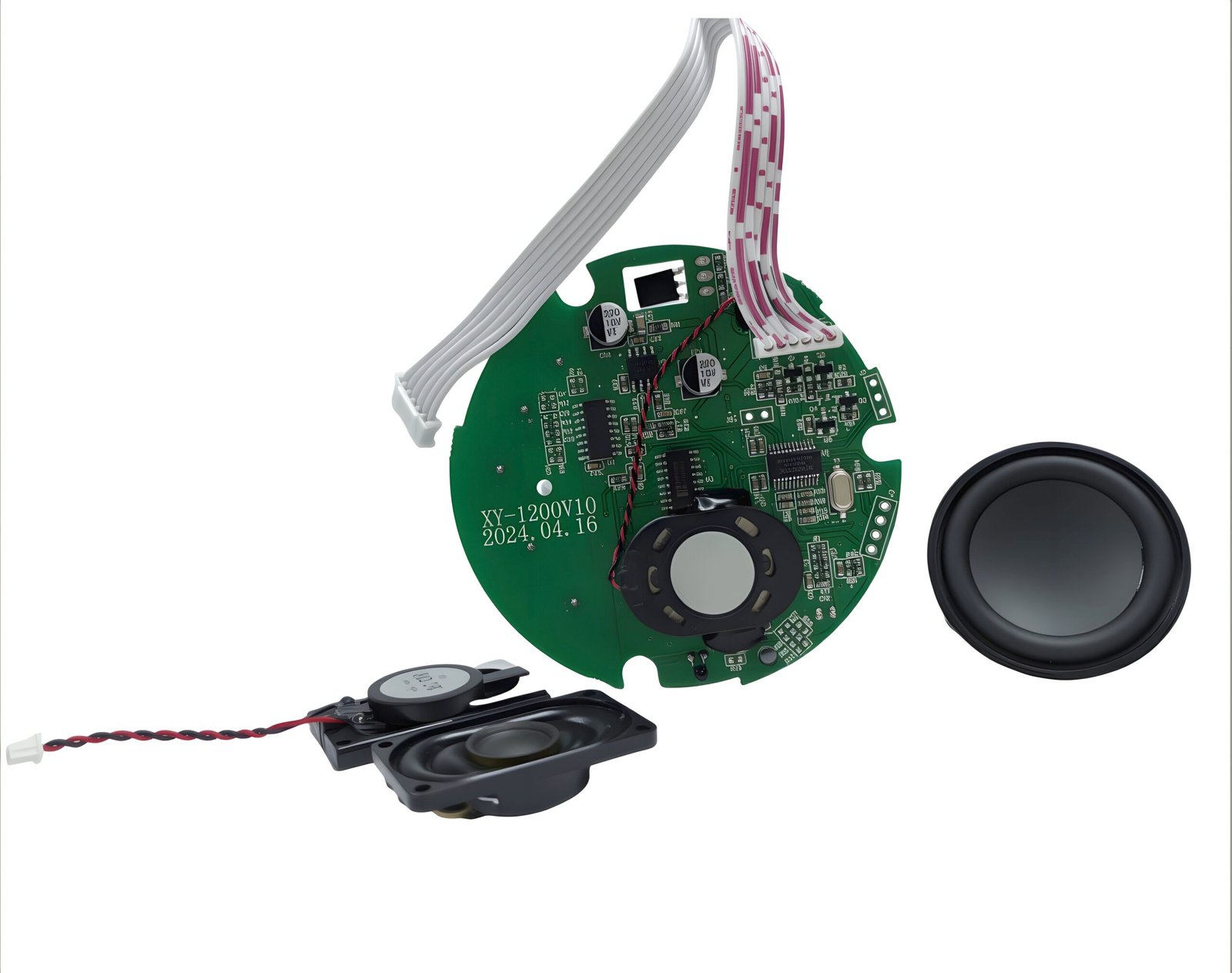
- Conduct a Physical Teardown: Open the unit. Examine the internal layout, solder joint quality, wire management, glue application, and component branding. Are the PCBs clean? Are connectors securely mounted? Is the battery from a known brand (e.g., LG, Samsung, Murata) or unbranded?
- Stress Test: Cycle the product through its functions for 48-72 hours. Test Bluetooth pairing reliability, button durability, and battery charge cycles.
Navigating Communication, IP Protection, and Contracts
The commercial and legal framework of your partnership is as important as the technical one.
Effective Communication: Assign a single, dedicated point of contact on both sides. Use clear, simple English in all written communication. For complex technical discussions, utilize diagrams, screenshots, and marked-up photos. WeChat is indispensable for daily communication in China, but formalize all agreements and change orders via email. Be mindful of the time zone difference and plan calls accordingly.
Protecting Your Intellectual Property: IP concerns are valid but manageable. Before sharing any proprietary design files, ensure a Mutual Non-Disclosure Agreement (NDA) is signed. For custom designs, your manufacturing agreement must include strong IP clauses stating that all tooling, designs, and developments are your sole property. For an added layer of protection, consider filing for design or utility model patents in China. While enforcement can be challenging, it provides a legal baseline. Many reputable mid-tier and top-tier factories respect IP—it’s integral to their business with Western clients.
The Manufacturing Agreement: This is non-negotiable. A robust contract should cover:
- Product Specifications: Appendix with every detail, down to the part number of key ICs.
- Pricing and Payment Terms: Typical terms are 30% deposit, 70% before shipment (for new relationships). For established partners, LC at sight is common.
- Quality Standards & Acceptance Criteria: Define AQL (Acceptable Quality Level) for pre-shipment inspections. Reference specific test standards.
- Delivery Schedule & Penalties: Include clear milestones for tooling, sample approval, and production.
- Warranty & Liability: Spell out responsibilities for defective units, including return logistics and corrective action plans.
Implementing Rigorous Quality Control and Logistics Planning
Your involvement cannot end with a signed contract. Proactive oversight is the key to receiving products that meet your expectations.
Staged QC Milestones:
- Pre-Production Sample (PPS): Approve this sample before mass production begins. It should be from the final production line with all correct components.
- During Production Inspection (DPI): Conducted when 20-30% of the order is assembled. This catches issues early, like incorrect component substitution or assembly line flaws.
- Pre-Shipment Inspection (PSI): The most critical check, performed on 100% packed units ready for shipment. A professional third-party QC agent will randomly sample against your AQL (e.g., Level II, Major defects: 0.65%, Minor: 1.5%) to determine if the entire lot passes or fails. The cost ($300-$500) is insignificant compared to the risk of receiving faulty goods.
Logistics and Compliance: Understand Incoterms. FOB (Free On Board) Shenzhen is most common, where you own the goods once they’re loaded on the ship and handle main shipping and insurance. Ensure all necessary documentation is provided: commercial invoice, packing list, bill of lading, and CE/FCC/RoHS certification for your specific product model. Plan for lead times: 45-60 days from order to loaded container is standard for a mid-complexity product.
Common Pitfalls and How to Avoid Them
Pitfall 1: Choosing Based on Price Alone. The cheapest quote often becomes the most expensive choice due to rework, returns, and brand damage.
Avoidance: Conduct a total cost analysis, factoring in reliability, warranty claims, and your time. Value engineering with a good partner can reduce cost without sacrificing core quality.
Pitfall 2: Skipping the Factory Audit. Assuming capabilities from a glossy brochure.
Avoidance: Invest the time in a virtual or, ideally, in-person visit. It is the single most revealing step in the process.
Pitfall 3: Vague Specifications. Ambiguity leads to cost-cutting and substitutions.
Avoidance: Provide exhaustive, clear, and legally-binding specifications. Specify exact model numbers for critical components (amplifier ICs, Bluetooth modules, battery cells).
Pitfall 4: No On-The-Ground QC. Relying solely on the manufacturer’s “golden samples.”
Avoidance: Budget for and mandate independent third-party inspections at the DPI and PSI stages.
Professional Q&A: Speaker Manufacturing in China
Q1: How can I genuinely protect my speaker design from being copied or sold to other clients?
A: A multi-layered approach is essential. Start with a strong NDA and manufacturing agreement with explicit IP ownership clauses. Physically, you can use programmed, proprietary ICs (like a custom DSP or amplifier chip) that are not readily available on the open market. For the enclosure, design complex internal geometries that are difficult to copy without exact CAD files. Finally, build a relationship with a reputable mid or top-tier factory whose business model relies on long-term partnerships, not short-term IP theft. The reputational risk for them is too high.
Q2: What are realistic Minimum Order Quantities (MOQs) for a custom-designed Bluetooth speaker, and what drives them?
A: For a custom plastic enclosure, the MOQ is primarily driven by mold (tooling) costs. A high-quality mold for a complex speaker shell can cost $15,000 – $30,000. Factories amortize this cost over the initial order. A typical MOQ to justify this investment is 1,000 to 3,000 units. If you use a standard or modified existing enclosure, MOQs can drop to 500 units or even lower. For truly bespoke products with custom tooling for drivers, expect MOQs at the higher end or beyond. Always discuss modular or “family mold” designs to share tooling costs across related products.
Q3: We’re a startup with a great idea but limited capital. How do we approach manufacturers without being dismissed due to our small initial volume?
A: Transparency and a compelling roadmap are key. Be upfront about your initial pilot order size (e.g., 500-1,000 units) but present a credible 2-3 year business plan with forecasted growth. Emphasize your design’s uniqueness and market potential. Consider starting with a manufacturer that offers “shared mold” services or has a catalog of existing enclosures you can customize with your own grille, colors, and internals. This drastically reduces the entry cost. Focus on partnering with a agile mid-tier factory that is more willing to grow with a startup, rather than a giant tier-1 supplier.
Q4: What are the latest 2024 trends in speaker technology that competitive Chinese manufacturers are mastering?
A: The leading edge in China is focused on: 1) Hybrid Active Noise Cancellation (ANC) for headphones and portable speakers, using multi-feedforward and feedback microphones. 2) High-Resolution Audio Support with codecs like LDAC and LHDC becoming standard in mid-range products. 3) Voice Assistant Integration, moving beyond basic Bluetooth to full-fledged Alexa Built-in or Google Assistant solutions. 4) Sustainable Materials, with R&D into recycled plastics, bamboo composites, and biodegradable packaging in response to global demand. 5) Multi-room Audio Ecosystems, where factories are developing their own affordable, app-controlled Wi-Fi mesh systems to compete with Sonos. A manufacturer actively engaged in these areas is likely to be a forward-thinking partner.