
La comunicación efectiva con su Fabricante de Equipos Originales (OEM) es el factor más crítico que determina el éxito de su producto de altavoces. Un diseño acústico perfectamente concebido puede quedar inutilizado por especificaciones ambiguas, incompletas o mal estructuradas. Esta guía proporciona un marco integral y paso a paso para traducir su visión en un plano preciso y viable que su socio de fabricación pueda ejecutar sin problemas.
El Alto Costo de la Ambigüedad: Por Qué las Especificaciones Precisas No Son Negociables
El recorrido desde un archivo de diseño hasta un producto empaquetado listo para su envío está plagado de posibles malinterpretaciones. En la industria del hardware de audio, donde las experiencias subjetivas de escucha se basan en la ingeniería objetiva, las suposiciones son su enemigo. Una encuesta de 2024 realizada por la Consumer Technology Association reveló que más del 34% de los retrasos en proyectos de hardware se atribuyen a “revisiones y aclaraciones de especificaciones” durante la fase de creación de prototipos. Para la fabricación de altavoces, estos retrasos se ven agravados por los largos plazos de entrega de componentes especializados como controladores personalizados, imanes y componentes de cruce.
Considere la instrucción: “El altavoz debe sonar cálido”. Para un ingeniero acústico, esto podría implicar un ligero aumento en los medios graves (200-400 Hz), una atenuación suave por encima de 10 kHz, o perfiles específicos de distorsión armónica. Sin cuantificación, el OEM hará su mejor suposición, y usted recibirá un prototipo que no cumple con la firma sonora de su mercado. El costo no es solo tiempo; son múltiples rondas de herramientas de prototipado, envío y pruebas, que fácilmente añaden decenas de miles de dólares y de 3 a 6 meses a su cronograma.
Las especificaciones claras actúan como un plano técnico legalmente vinculante y una fuente de verdad compartida. Alinean los objetivos acústicos de su marca con las capacidades de ingeniería y producción del fabricante, asegurando que cada parte interesada, desde su gerente de producto hasta el técnico de línea, comprenda los entregables exactos.
Desglosando el Documento de Especificaciones Perfecto para Altavoces
Su paquete de especificaciones debe ser un documento vivo y controlado por versiones. Debe contener las siguientes secciones principales, cada una con detalles exhaustivos.
1. Especificaciones de Rendimiento Acústico (La “Voz”):
Este es el corazón de su producto. Proporcione métricas de rendimiento objetivo con tolerancias aceptables (±).
| Parámetro | Especificación Objetivo | Tolerancia | Estándar / Condiciones de Prueba |
|---|---|---|---|
| Respuesta de frecuencia | 50 Hz – 20 kHz | ±3 dB | IEC 60268-5, 2.83V/1m, en eje |
| Sensibilidad | 87 dB SPL (2.83V/1m) | ±1.5 dB | El estándar |
| Distorsión Armónica Total (THD) | <1% (100 Hz – 20 kHz a 90 dB) | N/A | Medido a la salida de referencia |
| Impedancia | 8 ohmios nominales (6 ohmios mínimo) | — | El estándar |
| Potencia de Amplificador Recomendada | 20 – 100 vatios RMS | — | — |
| Frecuencia(s) de Cruce | 2.2 kHz (Linkwitz-Riley de 2º orden) | ±50 Hz | — |
Incluya objetivos gráficos: Curvas de respuesta en frecuencia idealizadas, diagramas de dispersión polar (por ejemplo, pérdida a 30° fuera del eje) y gráficos de caída (waterfall plots) para características de decadencia si son críticas para su diseño.
2. Especificaciones de Diseño Mecánico e Industrial (El “Cuerpo”):
Proporcione planos de ingeniería 2D completamente acotados (DXF, DWG) y modelos 3D (STEP, IGES). Cada detalle importa:
- Gabinete: Volumen interno (litros), ubicación de refuerzos, tipo/ubicación del material amortiguador, sintonización del puerto (diámetro, longitud, abocinamiento si aplica).
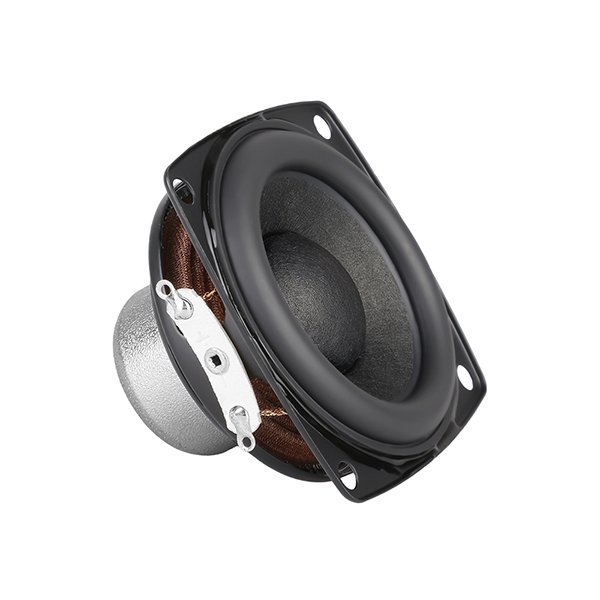
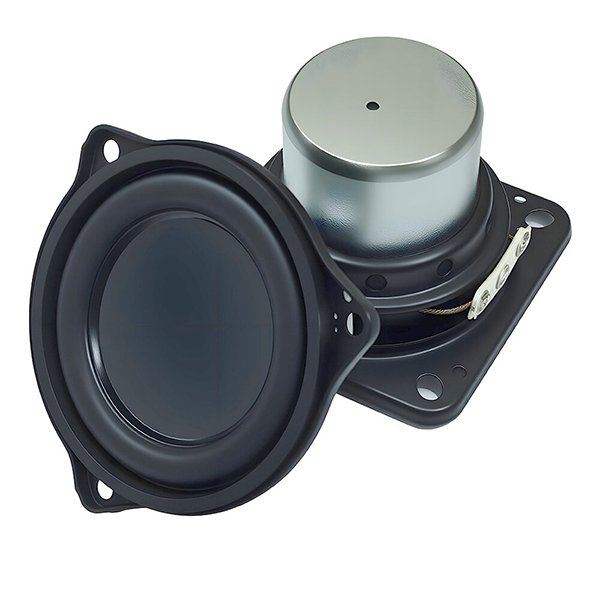
- Detalles del Controlador: Tamaño del marco, diámetro de corte, patrón de orificios de montaje, espacio libre del conjunto del imán, tipo de junta.
- Placas Frontales / Rejillas: Número de malla, material, método de fijación (imanes, clips de plástico, insertos roscados).
- Conexiones: Tipo de terminal (postes de conexión, clips de resorte), tamaño del receptáculo, calibre del cableado interno.
- Acabados: Códigos Pantone exactos, números RAL o muestras físicas de acabado para chapa de madera, pintura (nivel mate, brillo) o recubrimiento vinílico. Especifique la textura (por ejemplo, “PVC mate de veta ligera”).
3. Lista de Materiales (BOM) con Cumplimiento Normativo y Abastecimiento:
Es obligatoria una BOM jerárquica a nivel de componentes. Para componentes clave, especifique proveedores preferidos o alternativas aprobadas.
- Componentes del Controlador: Material de la bobina móvil (por ejemplo, aluminio revestido de cobre), material del formador, grado del imán (por ejemplo, Neodimio N42), material del cono (mezcla de papel, polipropileno, aluminio), composición del surround (caucho, espuma).
- Cruce (Crossover): Tipo de núcleo del inductor (aire, hierro, ferrita), dieléctrico del condensador (película, electrolítico), potencia del resistor. Proporcione un diagrama esquemático.
- Cumplimiento Normativo y Pruebas: Enumere todas las certificaciones de seguridad (UL, CE), EMC (FCC) y de materiales (REACH, RoHS) requeridas. Especifique el estándar de auditoría de fábrica (por ejemplo, ISO 9001).
El Protocolo de Comunicación: Fases, Herramientas y Comprensión Compartida
Las especificaciones no son un documento de “configurar y olvidar”. Son la base para un diálogo continuo y estructurado.
Fase 1: Revisión técnica previa a la cotización. Comparta una versión resumida de su documento de especificaciones con los OEM potenciales. Realice una Reunión de alineación técnica para revisar cada sección. Sus preguntas revelarán su experiencia y señalarán áreas de ambigüedad. Un fabricante competente preguntará de inmediato sobre los costos objetivo, los volúmenes anuales y las condiciones de prueba.
Fase 2: La muestra dorada y la inspección de primera pieza (FAI). Tras la entrega del prototipo, realice un Informe formal de inspección de primera pieza (FAIR). Esto es una verificación línea por línea contra cada especificación en su documento. Mida el rendimiento acústico en un entorno controlado. Inspeccione la calidad del acabado, las tolerancias de ensamblaje y el embalaje. Documente cualquier desviación con fotos y datos de medición. Comunique los comentarios a través de un formulario estructurado de Solicitud de cambio de ingeniería (ECR) , no mediante correos electrónicos dispersos.
Fase 3: Validación del proceso de producción. Antes de que comience la producción en masa, acuerde Puntos de control de calidad en proceso (IPQC) . ¿Qué pruebas se realizarán en cada unidad (por ejemplo, función básica, polaridad)? ¿Cuáles sobre una base de muestreo (por ejemplo, barrido de frecuencia completo)? Defina Nivel de Calidad Aceptable (AQL) límites para defectos cosméticos y funcionales.
Herramientas para la claridad: Utilice imágenes y videos anotados para ilustrar problemas. Emplee carpetas compartidas en la nube (Google Drive, Dropbox) con un historial de versiones claro para todos los documentos. Para discusiones complejas, las sesiones de CAD compartidas en pantalla son invaluables. Recuerde que las barreras de zona horaria e idioma son reales; sea paciente, repita los puntos clave y siempre resuma los elementos de acción por escrito después de las llamadas.
Preguntas y respuestas profesionales: Cómo navegar los desafíos comunes de comunicación con OEM
P1: ¿Cómo protejo mi propiedad intelectual (PI) al compartir especificaciones detalladas con un OEM?
A: Comience siempre con un Acuerdo de Confidencialidad (NDA) y un Acuerdo de fabricación acuerdo de confidencialidad (NDA) sólido que establezca explícitamente su propiedad de toda la PI del diseño. Para la máxima seguridad, considere compartimentar sus especificaciones. Proporcione los planos mecánicos completos del gabinete, pero para un controlador propietario, podría compartir solo los parámetros de rendimiento y las dimensiones de la interfaz física, adquiriendo el controlador usted mismo o haciéndolo fabricar por un proveedor especializado separado. Realice la debida diligencia sobre la reputación del OEM y su historial de clientes.
P2: ¿Debo proporcionar archivos CAD o son suficientes los dibujos en PDF?
A: Para la creación de prototipos y la producción, debe proporcionar archivos CAD 3D nativos (el formato STEP es el estándar de la industria) y y dibujos 2D en DXF/DWG. Los PDF son solo para referencia y revisión. El OEM necesita archivos legibles por máquina para la programación CNC, la creación de moldes y el diseño de plantillas de ensamblaje. Asegúrese de que su modelo 3D esté “limpio” (sin errores de superficie) y que los dibujos 2D incluyan todas las dimensiones críticas, tolerancias y especificaciones de materiales.
P3: ¿Cómo manejo una situación en la que el OEM dice que mi objetivo acústico es imposible o demasiado costoso de alcanzar?
A: Este es un momento crucial de colaboración. Primero, solicite una explicación técnica detallada. ¿Es una limitación del controlador, una restricción del tamaño del gabinete o un problema de costo? A menudo, un ingeniero experimentado puede proponer una alternativa viable (un material de controlador diferente, un ajuste leve al volumen del gabinete o una topología de cruce modificada) que lo lleve al 95% de su objetivo de sonido con el 70% del costo. Esté abierto a compromisos basados en datos, sabiendo qué atributos de rendimiento centrales (por ejemplo, “extensión de graves hasta 55 Hz”) son innegociables para la posición de mercado de su producto.
P4: ¿Cuál es el elemento más pasado por alto en los documentos de especificaciones de altavoces?
R: Las condiciones de prueba ambientales y de confiabilidad. No se trata solo de cómo suena el primer día, sino de cómo funciona y sobrevive en el mundo real. Su especificación debe definir:
- Rangos de temperatura y humedad de funcionamiento/almacenamiento.
- Pruebas de ciclo: Por ejemplo, “El controlador debe someterse a 100 horas continuas de ruido rosa a 85 dB SPL”.”
- Pruebas climáticas: Choque térmico, ciclos de congelación-descongelación por humedad.
- Durabilidad mecánica: Pruebas de caída para altavoces portátiles, pruebas de vibración para automoción.
- Pruebas de embalaje: Pruebas de caída ISTA para garantizar que sobreviva al envío.
Descuidar estos aspectos conduce a fallas en el campo, devoluciones y daños a la marca.
Al tratar su documento de especificaciones como el contrato fundamental de su asociación y adherirse a un protocolo de comunicación disciplinado y documentado, transforma la relación con el OEM de una transacción de proveedor a una verdadera colaboración de ingeniería. Este enfoque meticuloso es lo que separa los productos de audio exitosos y líderes en el mercado de aquellos que no logran lanzarse o caen en el olvido.