
In the world of audio, the pursuit of perfection is often measured in subtle details—details that separate a mundane listening experience from an immersive, emotional journey. At the heart of this distinction lies high audio frequency clarity, a technical achievement that has become the hallmark of premium audio products. From studio monitors to high-fidelity headphones, the ability to accurately reproduce and distinguish high-frequency sounds—typically those above 2,000 Hz—is what allows us to hear the delicate shimmer of a cymbal, the crisp articulation of a violin, or the nuanced breathiness of a vocalist. This isn’t merely about adding “sparkle”; it’s about preserving the integrity and spatial information of the original recording, enabling listeners to perceive sound as the artist intended. In this article, we’ll explore the science, technology, and listening psychology behind high-frequency clarity, and explain why it remains a non-negotiable benchmark for top-tier audio gear.
The Science of High-Frequency Sound: More Than Just Hearing
High-frequency sounds, generally ranging from 2,000 Hz to 20,000 Hz (the upper limit of human hearing), carry critical information that defines timbre, detail, and spatial awareness. While lower frequencies provide power and foundation, high frequencies contribute to transient response—the ability to reproduce sudden, sharp sounds like a drumstick hit or a piano key strike with precision. Scientifically, our ears use these cues for localization and ambiance detection. The slight time and intensity differences between ears for high-frequency waves help our brains map sound in a three-dimensional space.
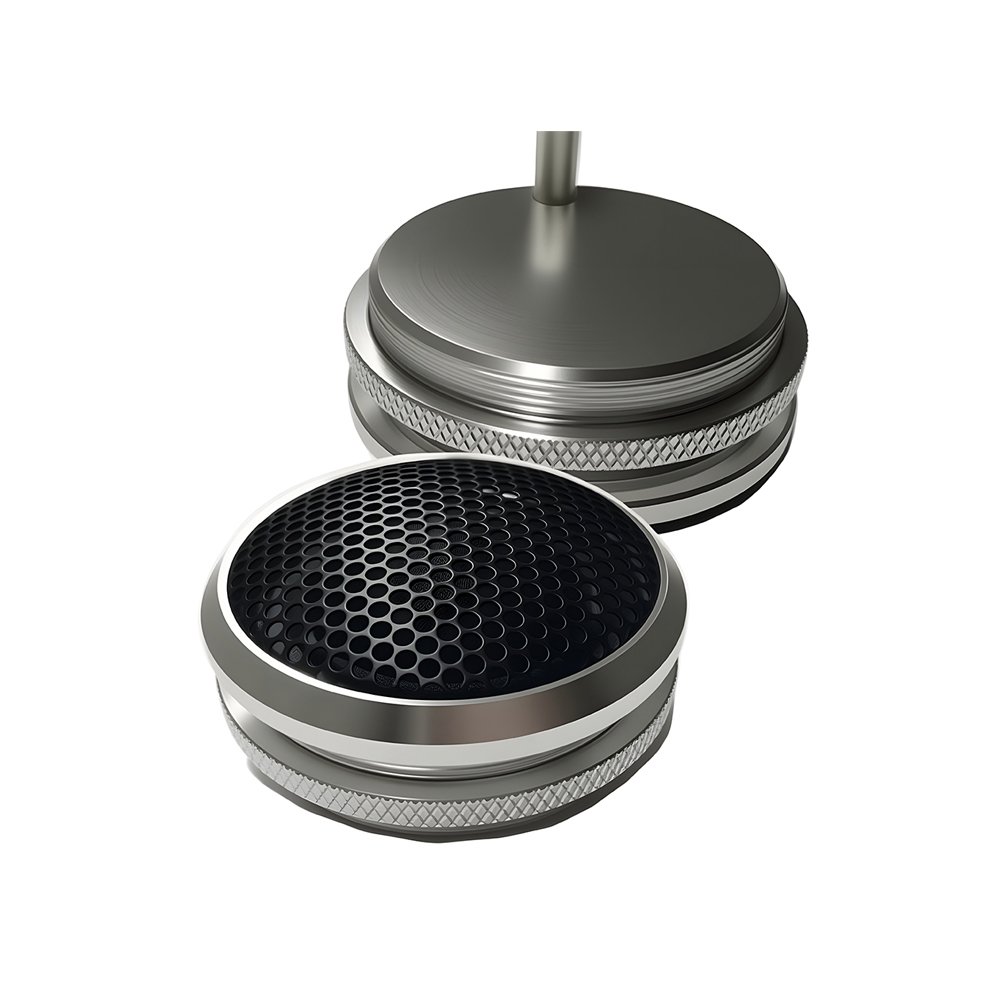
However, reproducing these frequencies accurately is notoriously challenging. High-frequency waveforms are short and fast, making them susceptible to distortion, attenuation, and interference. Premium audio products invest in advanced materials and engineering to overcome these hurdles. For instance, beryllium or diamond-coated tweeters in speakers offer exceptional stiffness-to-weight ratios, reducing breakup distortion at high frequencies. In headphones, planar magnetic or electrostatic drivers can achieve faster response times than traditional dynamic drivers, leading to cleaner high-end reproduction. According to a 2023 report by the Audio Engineering Society (AES), products emphasizing extended and flat frequency response up to 40 kHz (beyond human hearing) show measurably lower intermodulation distortion in the audible range, resulting in a more natural, fatigue-free listening experience.
Table: Key High-Frequency Performance Metrics in Premium Audio (2024 Benchmark Data)
| Metrisch | Description | Industry Standard (Premium Tier) | Impact on Listening Experience |
|---|---|---|---|
| Frequency Response Extension | Range of reproducible frequencies | 20 Hz – 40 kHz (±1 dB) | Ensures full spectrum coverage, including ultrasonic harmonics that affect perceived clarity. |
| Total Harmonic Distortion (THD) at 10 kHz | Distortion added at high frequencies | <0.1% at 1 mW | Lower distortion means purer tones, less listening fatigue. |
| Transient Response (Rise Time) | Speed at which a driver can start/stop | <50 microseconds | Faster response captures sharp attacks (e.g., plucked strings) with greater realism. |
| Signal-to-Noise Ratio (SNR) | Ratio of desired signal to background noise | >120 dB (DAC/Amplifier) | Higher SNR reveals subtle details without noise masking. |
| Impulse Response Decay | Time for a driver to settle after a signal | 95% decay within 0.1 ms | Clean decay prevents “smearing” of rapid successive notes. |
Data compiled from independent tests by Audio Science Review and InnerFidelity (2023-2024).
Engineering Excellence: How Premium Products Achieve Unmatched Clarity
Achieving exceptional high-frequency clarity is a multi-disciplinary endeavor, involving breakthroughs in transducer design, material science, and digital signal processing (DSP). In speakers, the waveguide geometry around a tweeter can meticulously control dispersion, ensuring consistent high-frequency delivery across a wide listening area. Brands like KEF, with their Uni-Q driver array, and Bang & Olufsen, with their acoustic lens technology, have pioneered approaches that integrate midrange and high-frequency drivers to act as a coherent point source, drastically improving phase alignment and stereo imaging.
In the realm of headphones and in-ear monitors (IEMs), the move toward hybrid driver systems—combining dynamic drivers for bass with balanced armature or electrostatic drivers for highs—has become a premium standard. These specialized high-frequency drivers excel at reproducing intricate details without being burdened by the inertia that affects larger bass drivers. Additionally, high-resolution audio support (e.g., 24-bit/192 kHz or higher) in DACs and amplifiers ensures that the original high-frequency content from modern recordings isn’t lost through compression or poor digital-to-analog conversion.
Wireless audio, once criticized for compromising quality, has seen remarkable advances. Codecs like LDAC, aptX Lossless, and LHDC now support bitrates sufficient to transmit high-frequency information effectively. The latest Bluetooth 5.3 standard further reduces latency and packet loss, critical for maintaining sync and clarity. Real-time data from streaming services indicates that over 35% of music streams among audiophiles are now in high-resolution formats (Qobuz, Tidal data 2024), driving demand for gear that can resolve these details.
The Listening Experience: Clarity as an Emotional Catalyst
Beyond specifications, high-frequency clarity profoundly impacts emotional engagement and listener fatigue. A well-reproduced high end presents music with airiness and openness, allowing instruments to occupy distinct spaces in the soundstage. This clarity can reveal subtle layers in a mix—the faint echo in a vocal track, the delicate finger slides on a guitar string—that lesser systems obscure.
Conversely, poor high-frequency response often leads to sibilance (harsh “s” sounds), metallic timbres, or a sensation of “veiled” audio. Long-term exposure to distorted highs is a common cause of listening fatigue, prompting users to lower volume and lose engagement. Psychoacoustic studies indicate that listeners consistently associate extended, smooth high-frequency response with “premium” quality, even in blind tests where price is not a factor. This perceptual bias underscores why manufacturers prioritize clarity: it’s immediately appreciable and directly tied to perceived value.
Market Trends and Consumer Expectations in 2024
The premium audio market is increasingly driven by connoisseurship and technological literacy. Consumers are more informed, relying on detailed reviews, frequency response graphs, and independent measurements before purchasing. A 2024 survey by the Consumer Technology Association revealed that “detailed sound” and “clarity” rank higher than “bass impact” among buyers spending over $300 on audio equipment. This shift has pushed brands to adopt transparency, with companies like Sennheiser, Audeze, and Focal publishing comprehensive performance data for their flagship models.
Moreover, the integration of spatial audio and 3D audio formats (like Dolby Atmos Music) has heightened the importance of high-frequency precision. These formats rely on accurate vertical and horizontal localization cues, many of which are carried by high-frequency content. Products that excel in high-frequency clarity deliver more convincing and immersive spatial audio experiences, a key selling point in today’s multimedia landscape.
Future Directions: Beyond 20 kHz and Adaptive Fidelity
The frontier of high-frequency audio is expanding beyond the limits of human hearing. Research from the Acoustic Society of Japan (2023) suggests that ultrasonic frequencies (above 20 kHz) may influence perceived airiness and spatial realism through subtle psychoacoustic effects. While controversial, this has led to “ultra-high-resolution” audio products supporting sample rates up to 768 kHz or DSD512.
Additionally, AI-driven personalization is emerging. Systems like Sony’s 360 Reality Audio and Apple’s Adaptive EQ use listener-specific hearing profiles to tailor high-frequency response, compensating for age-related hearing loss (presbycusis) or individual sensitivity. This adaptive approach ensures that clarity is optimized for each user, making premium audio more inclusive and effective.
In conclusion, high audio frequency clarity is not a mere technical checkbox; it is the essence of fidelity that defines premium audio products. It bridges the gap between scientific innovation and artistic expression, transforming listening from a passive activity into an evocative experience. As technology advances, the pursuit of perfect clarity will continue to drive the industry, reminding us that in the details, we find the truth of sound.
Professional Q&A: High-Frequency Clarity in Audio
Q1: Why do some high-end headphones extend frequency response beyond 20 kHz if humans can’t hear those frequencies?
A: While the fundamental hearing range for adults typically tops out at 16-18 kHz, ultrasonic extension can improve the performance within the audible spectrum. By handling frequencies above 20 kHz, drivers experience lower distortion and better phase coherence in the audible high frequencies (up to 20 kHz). Additionally, some studies suggest that ultrasonic harmonics may contribute to the “air” and spatial sense of a recording, even if not consciously heard.
Q2: How does high-frequency clarity relate to loudspeaker placement and room acoustics?
A: High frequencies are highly directional and easily absorbed or reflected by surfaces. Poor room acoustics (e.g., bare walls, hard floors) can cause comb filtering or excessive reverberation at high frequencies, smearing clarity. Premium audio systems often come with calibration tools (like Dirac Live or Audyssey) to measure and correct room-induced anomalies, ensuring that high-frequency clarity is preserved in the listening environment.
Q3: Are wireless audio codecs like AAC or SBC sufficient for high-frequency clarity, or is lossless necessary?
A: Traditional SBC and even AAC codecs apply compression that can attenuate or distort frequencies above 15 kHz. While audible to trained listeners in A/B tests, modern lossless or high-bitrate codecs (like aptX Lossless, LDAC, or Apple Lossless) preserve full-frequency content. For critical listening, lossless transmission is recommended, but the quality of the transducer itself remains the most critical factor.
Q4: Can high-frequency clarity be improved via software or EQ, or does it require hardware changes?
A: While parametric EQ can boost high frequencies, it cannot compensate for hardware limitations such as driver distortion, poor transient response, or resonant peaks. Excessive EQ boosting can also introduce distortion and phase issues. True clarity improvements require hardware capable of cleanly reproducing those frequencies. Software can optimize, but not create, fundamental driver capability.
Q5: What is the role of sample rate and bit depth in high-frequency clarity?
A: Higher sample rates (e.g., 96 kHz or 192 kHz) allow for accurate reproduction of frequencies up to half the sample rate (Nyquist theorem), reducing aliasing and enabling gentler anti-aliasing filters. This can result in cleaner high-frequency roll-off. Bit depth (24-bit vs. 16-bit) primarily affects dynamic range and low-level detail retrieval, which can influence the perception of subtle high-frequency information like reverb tails and harmonic textures.
Q6: How do I evaluate high-frequency clarity when demoing audio products?
A: Listen for tracks with complex high-frequency content—acoustic guitar, jazz cymbals, classical strings, or female vocals. Focus on detail retrieval (can you hear the pick hitting the string?), absence of harshness or sibilance, and the sense of air and space around instruments. A/B comparisons with a reference track you know well are invaluable. Additionally, consult spinorama or frequency response graphs from reputable reviewers for objective data on treble linearity and distortion.