
Imagine listening to your favorite album on a premium pair of headphones. The first track is perfect—deep, resonant bass, crystal-clear highs, and a soundstage that feels immersive. You switch to another pair, the same model from the same brand, and something is subtly off. The bass feels slightly weaker, the midrange a touch hollow. This isn’t a design flaw or a broken product; it is the ghost in the machine for the entire audio industry: inconsistency in speaker driver unit manufacturing.
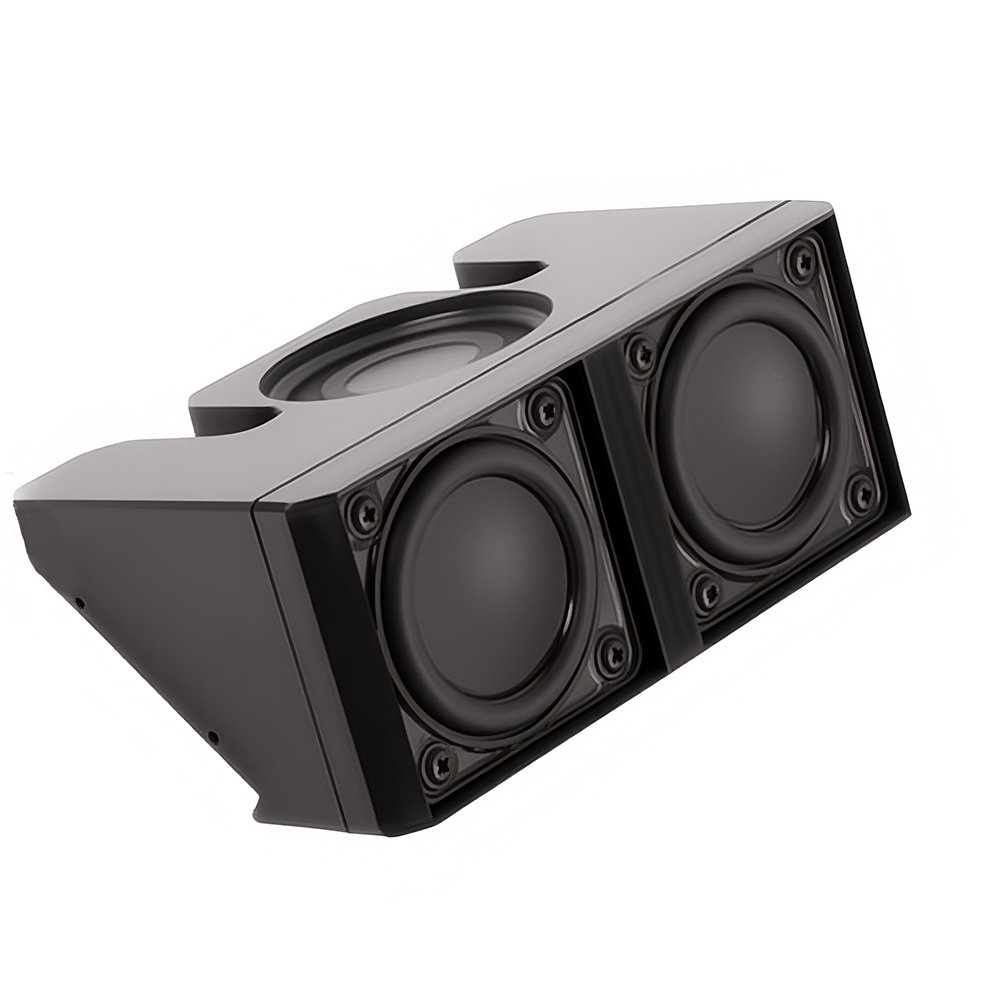
For suppliers of these critical components—the transducers that convert electrical signals into sound—achieving and maintaining consistency is not just a quality goal; it is an existential challenge. It sits at the intersection of advanced material science, precision engineering, and meticulous process control. While innovation in driver technology captures headlines, the relentless, unglamorous pursuit of unit-to-unit uniformity is what truly defines a top-tier supplier and dictates the performance of the final audio product.
The Core of the Problem: Materials, Tolerances, and Human Factors
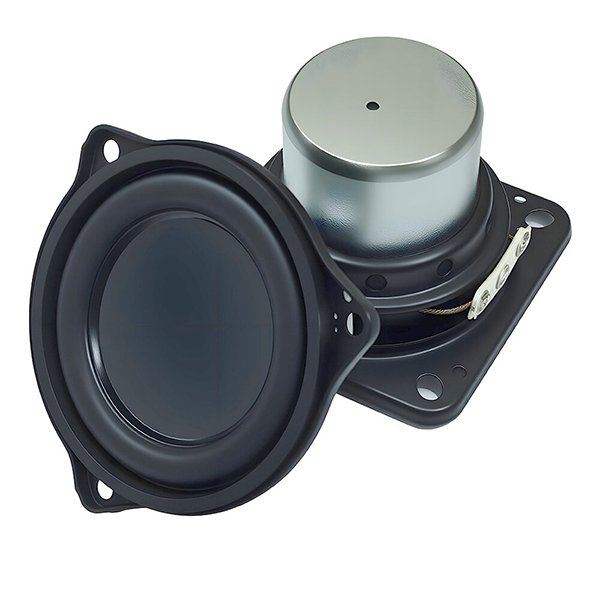
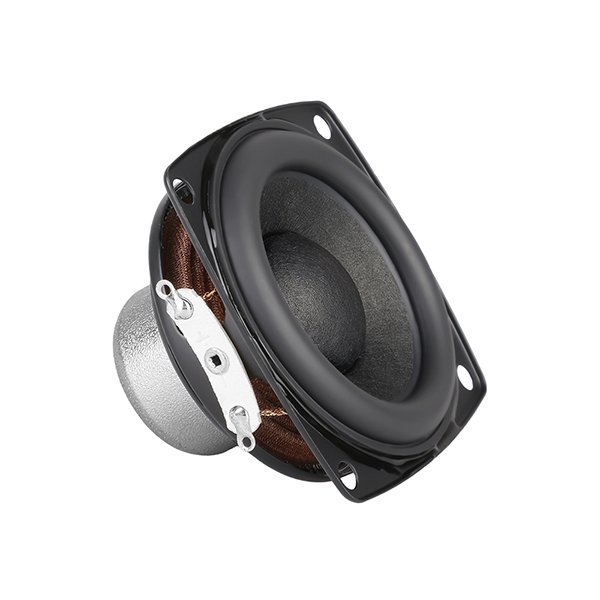
A speaker driver is a deceptively simple device. At its heart, it consists of a magnet assembly, a voice coil, a diaphragm (cone, dome, etc.), and a suspension system (spider and surround). Yet, each of these elements is a potential source of variance.
Material Science is Not an Exact Science: The properties of key materials are inherently variable. For instance, the magnetic flux density of neodymium magnets can vary between batches. The stiffness, density, and damping characteristics of diaphragm materials—be it paper pulp, polypropylene, or advanced composites like PEN or Beryllium—are susceptible to environmental conditions during production and sourcing inconsistencies. Even the adhesives used to assemble these parts have cure times and bond strengths that can fluctuate with humidity and temperature.
Microscopic Tolerances, Macroscopic Impact: The voice coil must be perfectly centered in the magnetic gap, with tolerances often measured in micrometers (µm). A deviation of just a few microns can cause rub and buzz, distorting the sound. The alignment of the diaphragm, the consistency of the glue application for the coil, and the exact tension of the spider—all these “micro” variations add up to measurable differences in Thiele-Small parameters (like resonance frequency Fs, total Q factor Qts, and equivalent compliance Vas). These parameters directly predict a driver’s low-frequency performance and its interaction with an enclosure.
The Human Element in a High-Precision World: Despite increasing automation, many critical steps, such as final assembly, inspection, and even some winding processes, may involve human operators. This introduces potential for variance in technique, pressure applied, and alignment. A supplier’s ability to train personnel and design foolproof processes (poka-yoke) is paramount.
The table below summarizes key variables in the driver manufacturing process and their impact on consistency:
| Manufacturing Variable | Impact on Driver Performance & Consistency |
|---|---|
| Magnet Flux Density Variance | Alters motor strength (BL product), affecting sensitivity and bass response. |
| Voice Coil Winding Consistency | Impacts electrical impedance, power handling, and thermal performance. |
| Diaphragm Material Density/Stiffness | Changes breakup modes and frequency response, especially in midrange. |
| Glue Cure Time & Amount | Influences damping, longevity, and can cause mass variance. |
| Voice Coil Centering in Gap | Causes distortion, rub & buzz, and reduced excursion capability. |
| Suspension (Spider/Surround) Stiffness | Directly alters Fs و Qms, changing low-end tuning. |
The High-Stakes Consequences of Inconsistency
The ripple effects of driver inconsistency are felt across the entire audio supply chain, with serious financial and reputational costs.
For the OEM (Headphone/Speaker Brand):
- Product Performance Variance: End products from the same production run can have audible differences, leading to a higher rate of customer returns and negative reviews.
- Increased Production Costs: To compensate for variance, OEMs may need to implement 100% unit testing and “binning” (sorting drivers into performance-matched pairs), a slow and expensive process. A 2024 report from the Audio Engineering Society highlighted that up to 15% of assembly line time for premium headphones is dedicated to driver matching and QA rework due to supplier variance.
- Design Compromise: Engineers must design circuits and enclosures to be tolerant of a wider performance window, potentially sacrificing peak performance for the sake of yield.
For the Supplier:
- Eroded Trust and Lost Contracts: Inconsistency is the fastest way to lose business with major brands. Contracts often include strict Acceptable Quality Level (AQL) standards with severe penalties for non-compliance.
- Scrap and Rework: Failed units mean wasted materials and labor, directly hitting the bottom line.
- Stifled Innovation: Resources that could be directed toward R&D for new materials or designs are instead poured into solving basic quality control fires.
For the End Consumer:
- The “Lottery” Effect: The customer experience becomes a gamble. They may receive a “golden” pair that performs exceptionally or a mediocre one, undermining brand loyalty.
- Undermined Value: Inconsistency devalues the entire proposition of high-fidelity audio, which is based on precise and reproducible sonic reproduction.
The Path to Consistency: Technology, Process, and Culture
Leading suppliers attack the consistency challenge on multiple fronts, transforming their operations from artisanal workshops to data-driven precision factories.
1. Advanced Process Automation and Robotics: Automating repetitive and critical tasks is key. Robotic arms for glue dispensing ensure identical bead size and placement every time. Automated voice coil winding machines with laser measurement feedback guarantee consistent turn count, layer alignment, and tension. CNC machining for motor structures (plates and poles) ensures sub-micron tolerances.
2. In-Line Real-Time Measurement and AI-Powered QA: The paradigm is shifting from “test at the end” to “measure at every step.” Laser scanners measure diaphragm profiles; computer vision systems inspect coil alignment before and after assembly; automated test jigs measure Thiele-Small parameters and frequency response for every single unit as it comes off the line. The latest trend, as seen at industry leaders like Tymphany and Peerless by Tymphany, is the use of machine learning algorithms to analyze this torrent of production data. These AI systems can predict final performance based on early-stage measurements and identify subtle correlations between process variables and outcomes that human engineers might miss, allowing for pre-emptive corrections.
3. Statistical Process Control (SPC) and Traceability: SPC isn’t new, but its implementation with modern sensors and Manufacturing Execution Systems (MES) is. Every critical component can be barcoded or RFID-tagged, linking it to its source batch, the machine that processed it, and the operator. If a drift in Fs is detected, the system can trace it back to a specific batch of spider material or a change in ambient humidity on the factory floor at a specific time. According to a 2023 benchmark study of Asian driver manufacturing hubs, top-quartile suppliers now have over 95% traceability for key components, compared to less than 60% for average performers.
4. Supplier Partnership and Co-Engineering: The best OEMs don’t just buy drivers; they co-develop them with their suppliers. This involves sharing detailed target performance windows, collaborating on material selection, and often funding or co-investing in the supplier’s precision manufacturing equipment. This deep partnership aligns incentives and makes consistency a shared, funded mission rather than a procurement demand.
The Future: Consistency as a Platform for Innovation
Ultimately, conquering consistency is not an end goal but a foundational platform. Once a supplier has mastered predictable, repeatable production, it can unlock true innovation.
- Mass Customization: With perfect process control, it becomes feasible to produce smaller batches of highly specialized drivers (e.g., for hearing aids, specific VR/AR headsets, or professional studio monitors) economically.
- New Material Adoption: The risk of integrating novel materials like graphene composites or metamaterials is drastically lowered when the baseline process is stable. Engineers can isolate the variable of the new material itself.
- “Digital Twin” Drivers: Each physical driver could be shipped with a precise digital model of its measured performance, allowing OEMs to use DSP (Digital Signal Processing) to tailor the sound signature with unprecedented accuracy, turning minor physical variances into a software-correctable non-issue.
For speaker driver suppliers, the quest for consistency is a relentless engineering marathon, not a sprint. It demands investment in cutting-edge technology, a culture obsessed with data and detail, and a commitment to deep collaboration with partners. In the high-fidelity audio world, where the pursuit of perfection is the very product, the supplier who masters consistency doesn’t just deliver components—they deliver trust, and in doing so, become the silent, indispensable conductor of the entire industry’s symphony.
Professional Q&A on Driver Unit Consistency
Q1: For an audio product OEM, what are the key metrics to scrutinize in a potential driver supplier’s quality control report?
أ: Look beyond the standard “pass/fail” rate. Demand data on Cp/Cpk (Process Capability Index) for critical parameters like Fs, Re (DC resistance), and sensitivity. A Cp/Cpk > 1.33 indicates a capable process. Ask for histograms showing the distribution of these parameters—you want a tight, normal distribution. Also, inquire about their AQL (Acceptable Quality Level) sampling plans and their track record on PPM (Defective Parts Per Million). Real-time data from 2024 shows that elite suppliers now achieve PPM rates below 500 for critical performance parameters.
Q2: How is the rise of DSP and active speakers changing the consistency challenge?
أ: DSP is a double-edged sword. On one hand, it offers powerful tools to correct for some driver variances (e.g., EQ to smooth out frequency response deviations). This can allow OEMs to use drivers with slightly wider tolerances. However, it increases the importance of electrical parameter consistency (especially Re و Le (inductance)), as these directly affect how the amplifier and DSP algorithms perform. Inconsistent Re can lead to thermal and power distribution issues in multi-driver active systems. The challenge thus shifts from purely acoustic consistency to electro-acoustic predictability.
Q3: What emerging technology holds the most promise for solving the material variance problem?
أ: Additive manufacturing (3D printing) for critical components is gaining serious traction. While not yet viable for mass-producing all parts, it shows immense promise for creating highly consistent, complex motor structures and even diaphragms with graded properties. By building parts layer-by-layer from a digital file, it eliminates many variances introduced by traditional molding or stamping processes. Companies like ARE (Audio Reproduction Experts) are pioneering the use of printed magnets and coils. The real-time industry adoption curve suggests that within 5-7 years, printed driver elements will move from niche prototyping to volume production for premium segments.