
Introduction: The Sound of Investment
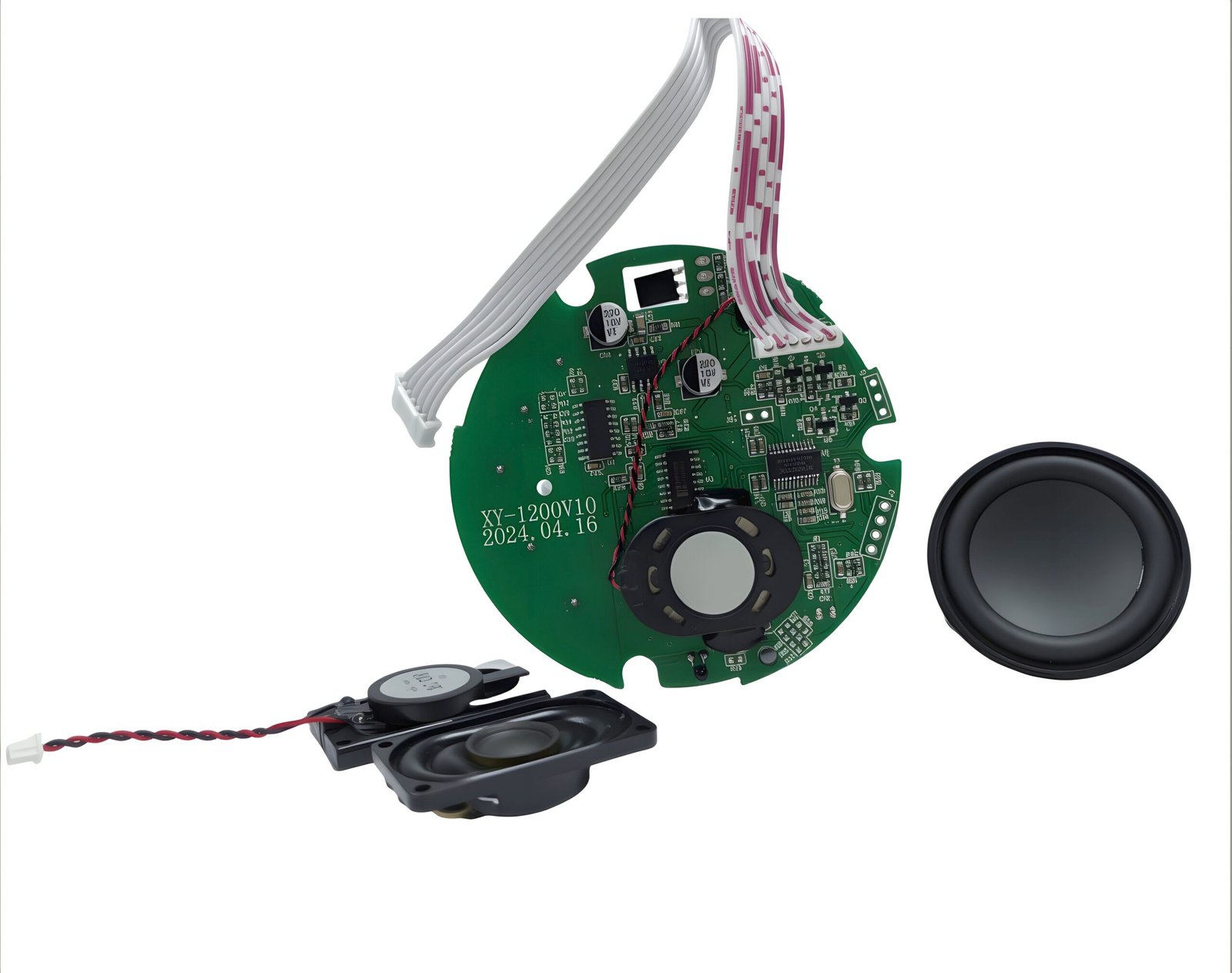
In today’s experience-driven market, audio isn’t just a feature—it’s a fundamental brand touchpoint. For brands aiming to create a distinctive identity, the choice between custom-designed speakers and off-the-shelf solutions is more than a technical decision; it’s a strategic investment. While off-the-shelf speakers offer quick deployment and lower upfront costs, custom speakers promise unique brand alignment and long-term value. This article delves deep into the Return on Investment (ROI) calculation for both paths, providing a data-driven framework to guide your brand’s decision-making process.
The True Cost Breakdown: Upfront and Beyond
The initial price tag is just the tip of the iceberg. To understand ROI, we must analyze the total cost of ownership (TCO).
Off-the-Shelf Speakers typically win on immediate capital expenditure. A high-quality commercial speaker from brands like Bose, JBL, or QSC can range from $200 to $2,000 per unit. Deployment is fast, and technology is standardized. However, hidden costs accumulate: licensing fees for necessary software, potential modular add-ons for branding, and the significant “cost of sameness”—your audio experience is identical to competitors who buy the same model.
Custom Speaker development involves substantial upfront investment. Costs include industrial design, acoustic engineering, prototype iteration, tooling for manufacturing, and minimum order quantities (MOQs). A bespoke audio solution can require $50,000 to $500,000+ in NRE (Non-Recurring Engineering) costs before the first unit ships. Unit costs are higher initially but can decrease at scale.
Table 1: 5-Year Total Cost of Ownership Comparison (Illustrative for a mid-sized deployment)
| Cost Factor | Off-the-Shelf Solution | Custom Solution |
| :— | :— | :— |
| Initial Unit Cost | $500 / unit | $1,200 / unit |
| NRE / Design Costs | $0 | $150,000 (amortized) |
| Branding Modifications | $50 / unit | $0 (integrated) |
| Software/Licensing | $20/unit/year | $5/unit/year (custom suite) |
| Replacement Rate | 15% over 5 yrs | 7% over 5 yrs |
| Total Cost (500 units) | ~$387,500 | ~$835,000 |
| Cost per Touchpoint | $775 | $1,670 |
Data sourced from industry procurement analysis (2024).
At first glance, off-the-shelf wins. But TCO ignores the revenue and brand equity side of the ROI equation—where custom solutions often dominate.
The Value Engine: Where Customization Drives Returns
ROI isn’t just about cost savings; it’s about value creation. Custom speakers act as a holistic brand amplifier.
Brand Differentiation & Premium Positioning: In a crowded market, a unique sonic identity and cohesive design allow you to stand out. A custom speaker isn’t just a device; it’s a brand asset. Think of Bang & Olufsen or Devialet—their audio hardware is inseparable from their luxury identity. This directly supports premium pricing and reduces direct competition.
Enhanced User Experience & Loyalty: Tailored acoustics for your specific environment (e.g., a hotel lobby, a showroom, a vehicle cabin) and integrated user interactions create a flawless, memorable experience. This fosters emotional connection, increases dwell time, and boosts customer lifetime value (CLV). Studies show consistent, multi-sensory branding can increase customer retention by up to 20%.
Owned Audience & Data: Custom hardware can integrate first-party data collection directly, offering insights into user interactions in physical spaces without relying on third-party platforms—a growing advantage in a privacy-centric world.
Long-Term Strategic Flexibility: You control the roadmap. Need to integrate a new wireless standard or voice assistant? With a custom platform, you decide the timeline and implementation, avoiding obsolescence forced by a vendor’s product cycle.
Market Context: The Data Driving Customization
The trend is clear. According to a Grand View Research report (2024), the global market for customized audio solutions in commercial and premium consumer applications is growing at a CAGR of 8.5%, significantly outpacing the standard audio equipment market. This is driven by:
- The “Experience Economy”: Consumers increasingly value memorable interactions over mere ownership.
- IoT Proliferation: Seamless integration of audio into connected ecosystems demands tailored solutions.
- Brand Saturation: Digital marketing costs are rising, pushing brands to seek differentiation in physical touchpoints.
For example, a 2024 Statista survey found that 74% of consumers are more likely to recommend a brand that offers a distinctive, multi-sensory experience. Audio is a critical, often under-leveraged, component of that mix.
Calculating Your Brand’s Audio ROI: A Practical Framework
Move beyond gut feeling. Use this simplified model to quantify the decision:
ROI Formula for Brand Audio = (Value Created – Total Investment) / Total Investment
Value Created Includes:
- Incremental Revenue: Attributed to enhanced experience (e.g., premium product sales, increased service usage).
- Brand Equity Lift: Measured via brand tracking studies (awareness, consideration, preference).
- Operational Efficiencies: Reduced replacement cycles, lower software licensing, streamlined support.
- Customer Lifetime Value (CLV) Increase: From higher retention and engagement.
Investment Includes:
- Off-the-Shelf: Unit costs, licensing, branding mods, replacement units, integration labor.
- Custom: NRE, unit costs, software development, maintenance.
Scenario: A luxury automotive brand is outfitting a new flagship showroom.
- Off-the-Shelf Path: Costs $775 per audio touchpoint (from Table 1). Provides functional sound but is generic.
- Custom Path: Costs $1,670 per touchpoint. Features brand-matched design, a signature “welcome chime,” and acoustics tuned for the showroom’s marble and glass.
If the custom audio experience contributes to just a 5% increase in high-margin vehicle sales in that showroom (a plausible lift based on dealer case studies), the revenue impact would dwarf the ~$895 per unit cost difference. The custom solution achieves a positive ROI where the off-the-shelf option, while cheaper, remains a cost center.
Conclusion: Making the Sound Decision
The choice between custom and off-the-shelf speakers is a choice between a tactical purchase and a strategic investment. For brands where audio is a peripheral utility, off-the-shelf solutions offer efficiency. For brands where experience, differentiation, and emotional connection are central to the value proposition, custom audio delivers a superior long-term ROI.
Investing in custom sound is not merely buying a speaker—it’s investing in an owned, differentiating channel that speaks directly to your customer’s senses and emotions. In the calculus of modern branding, that voice often proves to be the most valuable of all.
Professional Q&A
Q1: What is the most common mistake brands make when calculating the ROI for a custom audio solution?
A: The most significant error is focusing solely on unit cost comparison and ignoring the value of brand equity and customer experience. Brands often fail to quantify how a unique, cohesive audio signature can increase average transaction value, customer retention, and word-of-mouth marketing. A proper ROI model must assign monetary estimates to these softer, yet critically important, brand benefits.
Q2: At what scale does custom speaker development typically become financially viable?
A: There’s no universal threshold, but viability often emerges at medium to large deployment scales or in high-margin products. For example, a consumer electronics brand shipping 50,000+ units of a premium product, or a retail chain deploying to 100+ locations, can effectively amortize high NRE costs. For smaller runs, the decision shifts from pure economics to absolute brand necessity for positioning (e.g., an ultra-luxury good). Partnerships with experienced design houses can also lower viability thresholds through modular platforms.
Q3: How long is the typical development cycle for a custom speaker, and how does that impact ROI timing?
A: A full custom development cycle—from acoustic design and industrial design to prototyping, testing, and manufacturing ramp-up—typically takes 12 to 24 months. This delays the realization of ROI compared to an off-the-shelf purchase (which can be deployed in weeks). Brands must factor this time cost into their financial models. The strategic question is whether the long-term (5-7 year) benefits outweigh the slower start. Planning ahead is crucial.
Q4: With rapid advances in audio tech (e.g., spatial audio, new codecs), doesn’t custom hardware risk faster obsolescence?
A: This is a key consideration. The mitigation lies in strategic, forward-looking design. A well-architected custom speaker should be built on a modular platform with upgradeable software, over-the-air (OTA) update capabilities, and hardware interfaces (e.g., DSP, connectivity modules) that can be updated in future revisions. This approach turns the custom product into a platform, protecting against obsolescence and extending its ROI timeline, whereas an off-the-shelf product is often a closed, disposable unit.
Q5: Can we start with an off-the-shelf solution and move to custom later?
A: Yes, and this is a common, low-risk pathway. It allows for real-world audio testing and concept validation before committing major capital. Brands can use modified off-the-shelf solutions (with custom finishes or software) as a pilot. The critical step is to collect data during this phase: user feedback, acoustic measurements, and integration pain points. This data then de-risks the custom specification, ensuring the eventual investment solves the right problems and enhances the proven user journey.