
Introduction: The Foundation of Sound
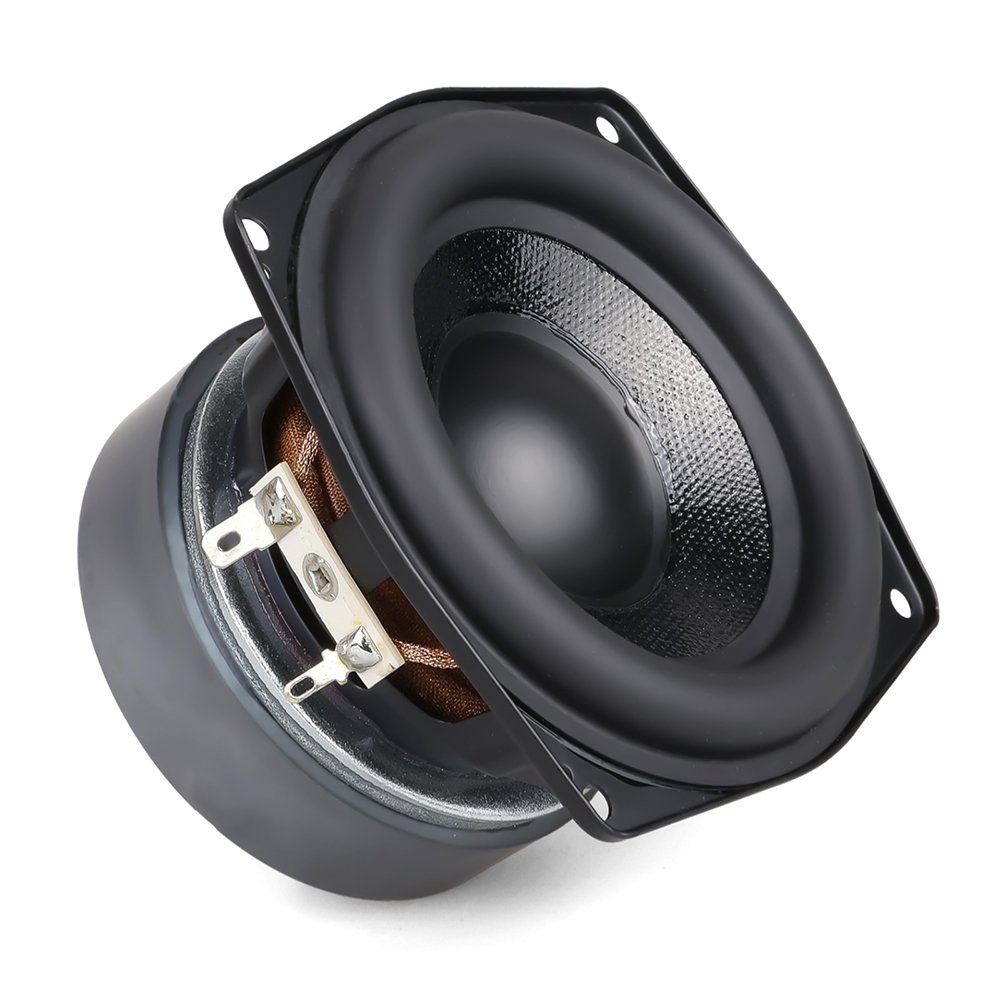
When it comes to building the perfect box speaker, the choice of enclosure material isn’t just a minor detail—it’s a fundamental decision that shapes the very soul of your audio experience. In the world of speaker design, the enclosure does far more than simply house the drivers; it actively participates in the acoustic performance, influencing clarity, resonance, and tonal character. For decades, two materials have dominated this conversation: Medium-Density Fibreboard (MDF) and Acrylonitrile Butadiene Styrene (ABS) plastic. MDF, the traditional workshop favorite, is renowned for its acoustic damping and solidity. ABS plastic, a champion of modern manufacturing, offers durability and design flexibility. As of 2024, the global speaker market continues to evolve, with innovations in material science and manufacturing pushing the boundaries of what’s possible. This deep dive will dissect these two contenders, providing you with the latest data and insights to inform your next build or purchase.
The Classic Contender: MDF Wood in Speaker Design
Medium-Density Fibreboard has been the gold standard for high-fidelity speaker enclosures for over half a century. Its reign is built on a compelling set of physical and acoustic properties that directly translate to superior sound quality in many applications.
Acoustic Properties and Performance:
MDF is an engineered wood product made by breaking down hardwood or softwood residuals into wood fibres, combining them with wax and a resin binder, and forming panels under high temperature and pressure. The resulting material is incredibly dense and homogeneous, with no natural grain like solid wood. This uniformity is its acoustic superpower. It exhibits excellent damping characteristics, meaning it absorbs vibrational energy from the drivers rather than resonating sympathetically. This damping minimizes “box coloration,” where the enclosure itself adds its own sonic signature to the output, resulting in cleaner, more accurate bass response and midrange clarity. For a purist seeking a neutral, uncolored sound where the driver and crossover are the sole determinants of tone, MDF is often the preferred choice.
Manufacturing and Practical Considerations:
Working with MDF is a craft. It machines beautifully, allowing for precise cuts, intricate routing for ports and baffles, and a perfectly smooth surface that is ideal for a variety of finishes—from veneers and paints to high-gloss lacquers. However, it is heavy. A substantial bookshelf speaker enclosure can easily weigh 15-25 lbs (7-11 kg) empty, making shipping and placement a consideration. It is also hygroscopic, meaning it absorbs moisture from the air. In humid environments, unprotected MDF can swell and degrade, and it offers zero inherent resistance to water or impacts. From a sustainability angle, MDF can be made from recycled wood content, but the urea-formaldehyde resins used in some boards have raised environmental and indoor air quality concerns, though low-emission (E0/E1) variants are now widely available.
The Modern Challenger: ABS Plastic in Speaker Design
ABS plastic represents the modern, industrial approach to speaker manufacturing. A thermoplastic polymer, ABS brings a different set of advantages to the table, aligning with the needs of mass production, portable audio, and durable consumer goods.
Acoustic Properties and Performance:
ABS is inherently stiffer and lighter than MDF on a per-volume basis. However, its damping factor is significantly lower. A thin-walled ABS enclosure is far more prone to resonant ringing than a properly braced MDF box. To combat this, high-quality ABS speakers employ several strategies: internal ribbing and baffling to increase rigidity, the addition of constrained layer damping materials internally, or the use of composite blends. When well-designed, an ABS enclosure can sound very clean, particularly in smaller form factors. Its strength allows for the creation of complex, curved shapes that are difficult or impossible with MDF, which can be used to mitigate internal standing waves and create aesthetically striking designs.
Manufacturing and Practical Considerations:
This is where ABS shines. It is the material of injection molding, enabling the cost-effective, high-volume production of identical, complex enclosures with integrated features. It is exceptionally tough, resistant to dents, scratches, and moisture, making it ideal for portable speakers, outdoor models, or products meant for rigorous use (e.g., in a car door). Its low weight is a major logistical advantage, reducing shipping costs and improving portability. From an environmental standpoint, ABS is derived from petroleum and is recyclable (resin ID code 7), though its end-of-life cycle is a topic of discussion. Modern advancements include the use of recycled ABS and bio-based alternatives, though these are not yet mainstream in speaker manufacturing. The finish is typically molded-in color, which is extremely durable, though it lacks the warm, deep aesthetic of a wood veneer.
Head-to-Head Comparison: A Data-Driven Analysis
The choice between MDF and ABS isn’t abstract; it’s quantifiable. The following table, based on industry-standard metrics and 2024 material data, breaks down the critical differences.
| Characteristic | MDF (18mm Standard Grade) | ABS Plastic (Injection Molded) | Acoustic & Practical Implications |
|---|---|---|---|
| Density | ~45-50 lbs/ft³ (720-800 kg/m³) | ~38 lbs/ft³ (610 kg/m³) | MDF’s higher mass improves inertia, reducing enclosure vibration. |
| Acoustic Damping (Loss Factor) | High (~0.01-0.02) | Low (~0.001-0.005) | MDF naturally absorbs vibrational energy, reducing resonance. ABS requires added damping. |
| Young’s Modulus (Stiffness) | ~3-4 GPa | ~2.0-2.5 GPa | MDF is stiffer in panel form, but molded ABS with ribs can achieve high local stiffness. |
| Moisture Resistance | Very Poor (swells) | Excellent | ABS is suitable for bathrooms, outdoors; MDF requires careful sealing/climate control. |
| Impact Strength | Poor (dents, chips) | Excellent | ABS survives drops and bumps; MDF is easily damaged. |
| Weight (for a 1 ft³ box) | ~10-12 lbs (4.5-5.5 kg) | ~4-6 lbs (1.8-2.7 kg) | Major factor for portability, shipping costs, and wall-mounting. |
| Manufacturing Process | Subtractive (cut, route) | Additive (injection mold) | MDF allows for prototyping/custom work; ABS requires expensive molds for volume. |
| Cost (Raw Material) | Low to Moderate | Moderate | Mold tooling for ABS is a high initial capital cost, but per-unit cost drops at scale. |
| Aesthetic Finish | Excellent (veneer, paint) | Good (molded color, texture) | MDF offers a premium, furniture-grade finish; ABS offers durability and molded detail. |
| Typical Application | Hi-Fi home audio, studio monitors, premium DIY | Portable speakers, automotive audio, consumer multimedia, outdoor speakers |
Application in the Real World: Matching Material to Mission
Understanding the data is one thing; applying it is another. The “best” material disappears when you ask the right question: “Best for what?”
Choose MDF Wood If:
- Your primary goal is achieving the highest possible acoustic neutrality and bass accuracy for critical listening in a home or studio environment.
- You are a DIY enthusiast or a boutique manufacturer building in small batches, where the flexibility of workshop fabrication is key.
- The speaker is a permanent fixture in a controlled, indoor environment and you desire a furniture-quality finish (real wood veneer, piano gloss).
- You are building a large, high-power subwoofer where cabinet mass and damping are critical to control massive driver forces.
Choose ABS Plastic If:
- Durability, portability, and moisture resistance are top priorities (e.g., Bluetooth speakers, outdoor speakers, marine audio).
- You are a volume manufacturer producing tens of thousands of units, where the economies of scale from injection molding are essential.
- The design calls for complex, curved, or seamless shapes that would be prohibitively expensive or weak to fabricate from MDF.
- Weight is a major constraint, such as in ceiling-mount installations, automotive doors, or luggage-friendly travel speakers.
The Cutting Edge:
The landscape isn’t binary. Innovations are blurring the lines. We now see:
- Composite MDF: Boards coated with polymer or acrylic layers for improved moisture resistance.
- Advanced Composites: Enclosures using carbon fiber or mineral-loaded polypropylene for stiffness and lightness.
- Hybrid Designs: An internal skeleton of MDF for bracing housed within an ABS shell for durability and finish.
- 3D-Printed Prototypes & Niche Materials: For ultra-high-end or custom one-offs, materials like HDPE, solid aluminum, or even concrete are explored, though they fall outside mainstream production.
Conclusion: A Harmonious Balance of Priorities
The debate between ABS plastic and MDF wood for box speakers is a profound illustration of engineering trade-offs. There is no universal winner. MDF remains the sovereign of pure, uncompromised sound reproduction in fixed installations, cherished by audiophiles and professionals for its predictable, inert acoustic behavior. ABS plastic is the champion of the modern, mobile, and durable audio world, enabling robust, lightweight, and creatively shaped products that fit seamlessly into active lifestyles.
Your choice ultimately resonates with your priorities. Is it the last 2% of acoustic purity, or the ability to take your music anywhere without worry? Is it the warm, natural feel of wood, or the sleek, resilient finish of modern polymer? In 2024, with both materials being refined and improved, we as listeners are the true beneficiaries, able to select the perfect instrument for our sonic and practical needs.
Professional Q&A
Q1: With advancements in internal bracing and damping materials, can a well-designed ABS speaker now match the acoustic performance of a comparable MDF speaker?
A: It can come remarkably close, especially in smaller enclosures and for mid-range frequencies. High-end ABS designs use extensive internal ribbing, bituminous damping sheets, and even internal sand-filled compartments to add mass and damping. However, for large enclosures and very low frequencies (sub-50Hz), the inherent mass and self-damping of thick MDF still provide a measurable advantage in minimizing resonant coloration. The gap has narrowed, but for ultimate low-distortion performance at high SPLs, MDF retains an edge.
Q2: From a sustainability perspective, which material is the “greener” choice for speaker enclosures?
A: This is complex and lifecycle-dependent. MDF’s pros: Can be made from fast-growing, managed forests or post-industrial recycled wood waste. It is biodegradable at end-of-life. MDF’s cons: Traditional binders may off-gas VOCs; production is energy-intensive. ABS’s pros: Highly durable, leading to a potentially longer product lifespan. It is recyclable. ABS’s cons: Derived from non-renewable petroleum; recycling infrastructure is not universally effective, and it is not biodegradable. The “greenest” choice is often a high-quality, repairable speaker that lasts for decades, regardless of material. Look for manufacturers using low-emission (NAF/ULEF) MDF or post-consumer recycled ABS.
Q3: I see many high-end studio monitors still using MDF. Is this just tradition, or is there a technical reason ABS hasn’t taken over this segment?
A: It is overwhelmingly technical. Studio monitors are tools for critical audio judgment. Their primary design goal is absolute sonic accuracy and neutrality. The acoustic damping and mass of MDF provide a predictable, inert foundation that makes the speaker’s response easier to model and control. Any resonance from the enclosure is an unwanted variable. While ABS could be engineered to be very good, MDF is predictably excellent right out of the gate for this specific, measurement-driven application. The tradition exists because the physics continue to favor it.
Q4: For a DIY hobbyist building a one-off speaker, why is MDF almost always recommended over ABS?
A: The recommendation centers on accessibility and workability. A DIYer with a table saw, router, and clamps can precisely fabricate a complex MDF enclosure in a garage workshop. Working with ABS plastic at this scale typically requires thermoforming or constructing a mold—skills and equipment far beyond standard woodworking. MDF is readily available at hardware stores, easy to glue and finish, and forgiving to modify. For prototyping and custom builds, MDF’s “subtractive manufacturing” workflow is perfectly suited to the DIY process.