
Achieving exceptional acoustic performance is the paramount goal of any loudspeaker design. It’s a precise alchemy of physics, material science, and auditory psychology, where every component and design decision directly impacts the final sound that reaches the listener’s ears. Moving beyond marketing buzzwords, true acoustic optimization is a meticulous engineering process. This guide explores the core principles and cutting-edge techniques in speaker design that directly translate to superior sound accuracy, clarity, and immersion.
The Foundation: Core Acoustic Principles in Driver Design
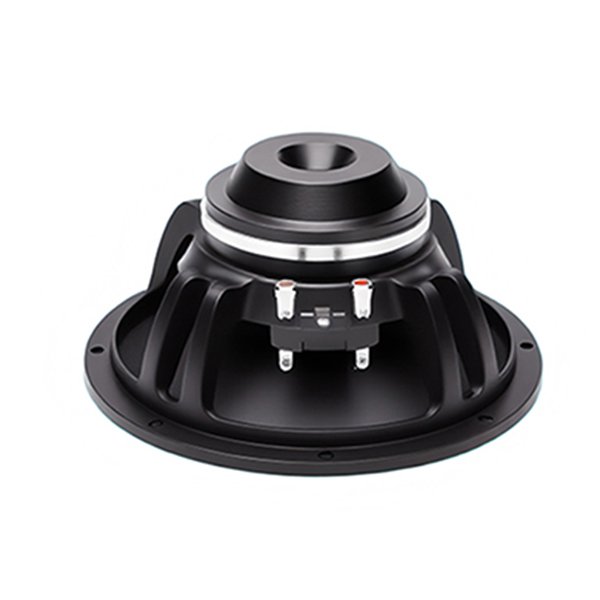
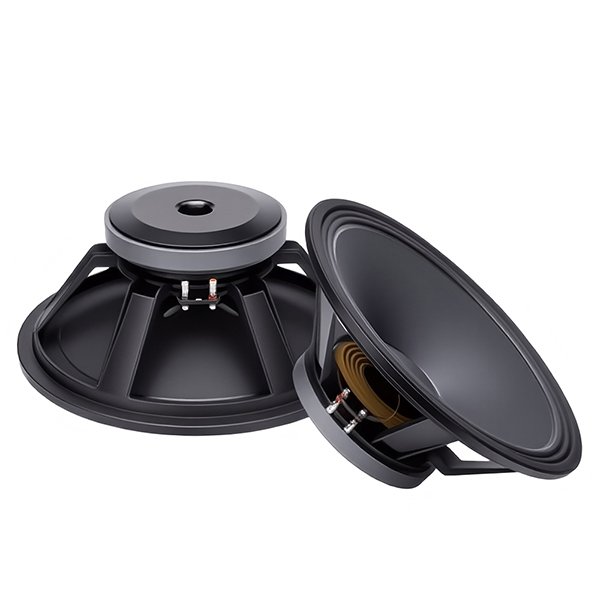
At the heart of every speaker lies the driver—the transducer that converts electrical signals into sound waves. Its design is the first and most critical frontier for acoustic optimization.
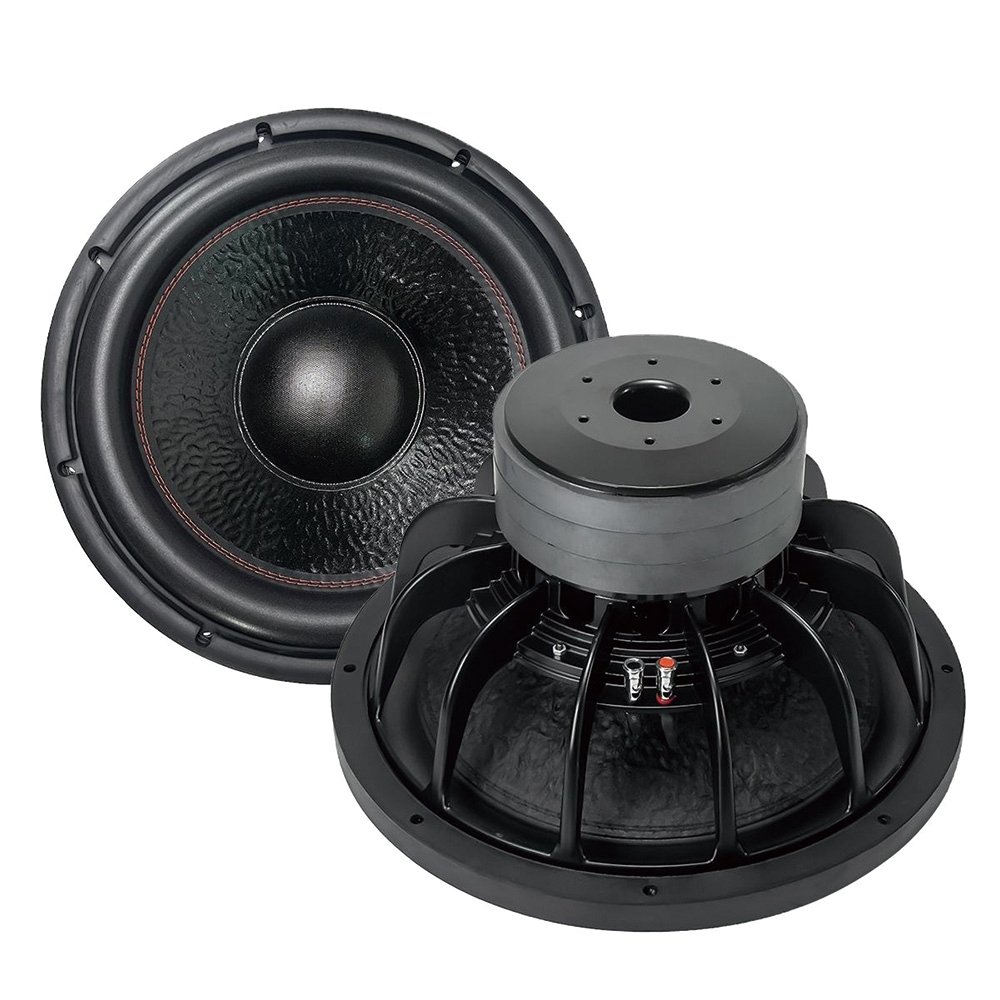
The Transducer Mechanism: The fundamental operation involves a voice coil suspended in a magnetic field. When an audio signal passes through the coil, it creates a fluctuating magnetic field that interacts with the static field of the permanent magnet, causing the coil and attached diaphragm to move rapidly, pushing air to create sound. Optimization here focuses on linearity, efficiency, and control.
Key Driver Design Elements:
- Diaphragm (Cone/Dome) Material: The choice material determines rigidity, internal damping, and weight—a critical triad. Traditional materials like paper pulp offer good natural damping but can lack rigidity. Modern composites like polypropylene, aluminum, magnesium, carbon fiber, and ceramic each present unique trade-offs. For instance, Beryllium, used in high-end tweeters, offers an exceptional stiffness-to-weight ratio, extending high-frequency response and reducing distortion.
- Motor System (Magnet & Voice Coil): A strong, symmetric magnetic field (often from neodymium magnets today) provides precise control over diaphragm movement. The voice coil’s size, wire material (e.g., copper-clad aluminum for weight savings), and former material (e.g., Kapton for heat resistance) influence power handling, sensitivity, and thermal compression.
- Suspension (Spider & Surround): These components keep the coil centered and provide the restoring force. Their compliance and linearity are vital for controlling large excursions (especially in woofers) and preventing distortion. Modern surrounds use advanced polymers for long-term stability.
Recent data underscores the industry’s focus on material innovation. According to a 2023 market analysis by Grand View Research, the global advanced acoustics materials market, driven by demand for high-performance speakers in consumer electronics and automotive sectors, is projected to grow at a CAGR of 9.5% from 2024 to 2030. This investment directly fuels research into better diaphragm and damping materials.
Table: Comparison of Common Diaphragm Materials
| Material | Stiffness-to-Weight Ratio | Internal Damping | Typical Application | Key Advantage |
| :— | :— | :— | :— | :— |
| Paper Pulp | Moderate | High | Mid-range Woofers | Natural, musical sound; cost-effective |
| Polypropylene | Low-Moderate | High | General-purpose | Good damping; resistant to humidity |
| Aluminum | High | Low | Tweeters, Mid-woofers | Detailed high-frequency reproduction |
| Carbon Fiber | Very High | Low-Moderate | Woofers, Mid-range | Extreme rigidity for low coloration |
| Beryllium | Exceptional | Low | High-end Tweeters | Lightest & stiffest; pristine highs |
Enclosure Engineering: Taming the Unwanted Energy
A driver operating in free air suffers from “acoustic short-circuit,” where front and rear sound waves cancel each other out, especially at low frequencies. The enclosure’s primary role is to isolate these waves, but its design profoundly affects efficiency, bass response, and overall sonic character.
Enclosure Types and Their Acoustic Impact:
- Sealed (Acoustic Suspension): Air-tight boxes use the internal air spring to control the woofer’s movement. They are known for accurate, tight, and well-damped bass response with slower roll-off (12 dB/octave). The design minimizes time-domain errors (group delay), crucial for transient accuracy.
- Ported (Bass-Reflex): By incorporating a tuned port, designers harness the rear wave’s energy to reinforce low frequencies near the tuning point, improving efficiency and extending bass response. However, improper design can lead to port noise (chuffing) and less controlled bass below the tuning frequency. Computational Fluid Dynamics (CFD) software is now standard for optimizing port geometry to minimize turbulence.
- Advanced Architectures: Transmission Line enclosures use a long, damped pathway for the rear wave to delay and phase-align it with the front wave, aiming for exceptionally deep, clean bass. Passive Radiator designs replace the port with an unpowered diaphragm, offering port-like benefits without air noise, ideal for compact systems.
Internal Considerations: No enclosure is perfectly inert. Internal standing waves can cause resonant colorations. Strategic bracing (cross-bracing, windowpane bracing) dramatically increases panel stiffness, raising the resonant frequency to a less problematic range. The use of damping materials like acoustic fiberglass, wool, or specialized foam absorbs rear waves and breaks up internal reflections. The goal is a “quiet,” non-resonant box that disappears acoustically.
The Critical Link: Crossover Networks and System Integration
A multi-driver speaker relies on a crossover network to divide the frequency spectrum appropriately between drivers. This is not merely a division of labor but a vital tool for acoustic optimization, ensuring drivers operate within their ideal range and blend seamlessly.
Crossover Design Philosophy: The crossover’s slope (e.g., 12 dB/octave, 24 dB/octave), type (e.g., Linkwitz-Riley, Bessel), and component quality are paramount. Steeper slopes better protect drivers from frequencies that cause distortion or damage but introduce greater phase shifts. Advanced digital signal processing (DSP) in active speakers allows for incredibly precise, linear-phase crossovers and real-time driver correction that passive components cannot achieve.
Driver Integration & Time Alignment: For perfect point-source behavior, sound from all drivers should reach the listener simultaneously. This is addressed through time alignment—physically staggering driver positions on a slanted baffle or using DSP to introduce electronic delays. Furthermore, acoustic center calculation ensures the crossover network accounts for the physical depth difference between drivers (e.g., a tweeter’s voice coil sitting behind a woofer’s).
Baffle Design and Diffraction: The front panel (baffle) itself is a source of distortion. Sound waves radiate from the driver and reflect off the baffle edges, creating secondary wavefronts that interfere with the direct sound—an effect called baffle diffraction. This causes frequency response irregularities, typically in the upper midrange. Mitigation strategies include rounded or chamfered baffle edges, irregular-shaped baffles, and strategically placed absorptive materials.
The Final Frontier: Measurements, Listening Tests, and Advanced Technologies
The final stage of optimization bridges objective data with subjective perception.
The Role of Measurements: Comprehensive anechoic chamber or gated near-field measurements provide the objective roadmap. Key performance indicators include:
- On-axis and Off-axis Frequency Response: A smooth, extended response on-axis is the goal, but controlled, predictable off-axis behavior (directivity index) is equally critical for soundstage and consistent tonal balance in a room.
- Total Harmonic Distortion (THD) & Intermodulation Distortion (IMD): Quantifies non-linear artifacts, indicating clarity and dynamic capability.
- Impedance & Phase: Reveals electrical load and crossover performance.
- Waterfall/Cumulative Spectral Decay Plot: Visualizes how quickly a speaker stops resonating after the signal stops, indicating “smearing” or clarity in the time domain.
The Necessity of Listening Trials: Measurements cannot capture the entirety of the auditory experience. Controlled double-blind listening tests in treated rooms are irreplaceable for assessing soundstage, imaging, dynamic expressiveness, and long-term listenability. The designer’s ear is the final arbiter.
Leveraging Modern Tech: Today’s designers have unprecedented tools. Finite Element Analysis (FEA) simulates magnetic field linearity and diaphragm breakup modes. Laser Interferometry visually maps driver cone vibration. DSP not only manages crossovers but can also correct for inherent driver irregularities and even adapt performance to room placement (e.g., boundary gain compensation).
Professional Q&A on Acoustic Optimization in Speaker Design
Q1: With the rise of compact wireless speakers, what are the biggest acoustic design challenges for small enclosures, and how are engineers overcoming them?
A: The primary challenges are limited bass extension, efficiency, and controlling cabinet resonances at high sound pressure levels. Engineers are combatting this through several cutting-edge methods: 1) Advanced DSP: Using sophisticated bass management algorithms like psychoacoustic bass enhancement (which exploits the “missing fundamental” effect) and dynamic equalization to protect drivers while maximizing perceived bass. 2) Passive Radiators: These are increasingly common as they allow for greater diaphragm area and lower tuning in a small volume without port noise. 3) High-Strength Composite Materials: For both drivers and cabinets to allow thinner, stiffer walls, maximizing internal volume. 4) Multi-driver Arrays: Strategically using multiple small drivers to increase output and control directivity.
Q2: How significant is the shift towards DSP-based “active” designs versus traditional “passive” crossovers in high-fidelity speakers?
A: The shift is substantial and accelerating, particularly in professional monitoring and the high-end consumer market. DSP offers definitive advantages: perfect linear-phase crossover slopes, individual driver correction for flat response, real-time protection limiting, and room adaptation features. Companies like Dutch & Dutch, KEF (in their KC62 subwoofer), and Genelec have demonstrated its potential. While purists may still favor the simplicity of passive networks for certain amplifiers, the objective optimization capabilities of active DSP designs make them the unequivocal choice for achieving maximum measured and often perceived accuracy. The barrier has been cost and complexity, which is rapidly diminishing.
Q3: What is the role of the listening room in the final “acoustic performance,” and how can speaker design mitigate room-related issues?
A: The room is arguably 50% of the final sound. It introduces colorations from standing waves (room modes), early reflections, and reverberation. Speaker design can mitigate this through controlled directivity. By carefully managing off-axis energy (e.g., using waveguides for tweeters, coaxial driver designs like KEF’s Uni-Q, or constant directivity horns), designers can limit sound hitting problematic room surfaces (side walls, ceiling) early in the reflection pattern. This reduces the room’s sonic “fingerprint” and makes the speaker more placement-tolerant. Some active speakers now incorporate auto-room-correction (e.g., via Dirac Live, Audyssey, or proprietary systems) where a microphone measures room response and the internal DSP creates a corrective filter, representing the ultimate convergence of speaker and environment optimization.